
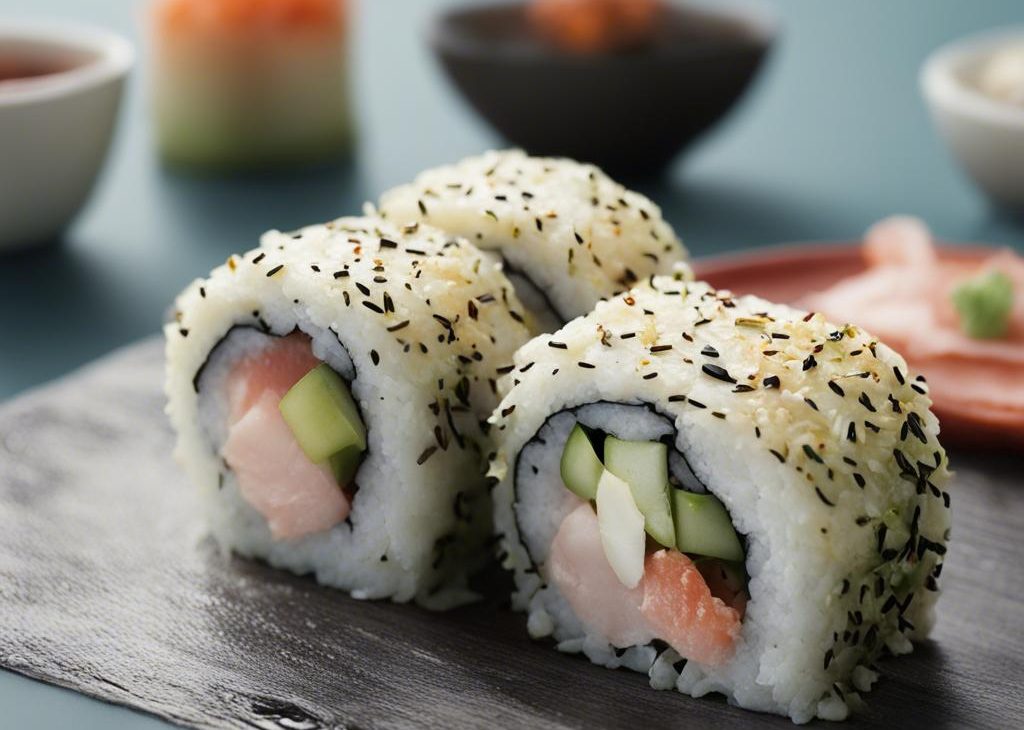
Alaska rolls are the sushi rolls I make when I want a little bit of everything: seasoned rice, nori, creamy crab salad, avocado, cucumber, sushi-grade salmon, and a spoonful of ikura on top. They feel restaurant-style, but the process is mostly careful prep and a confident roll.
I do not pretend homemade sushi is faster than takeout. The rice needs rinsing, cooking, seasoning, and cooling, and the knife needs to be sharp. But once the station is set, rolling is calm and satisfying. My first few rolls were lopsided, and they still tasted good; clean edges come with repetition.
Food safety matters here because the salmon is served raw. I buy sushi-grade salmon from a fishmonger I trust, keep it cold, and use it the same day. If I cannot get good salmon, I make the roll with cooked shrimp or extra avocado instead.
I rinse the 3 cups sushi rice in cold water until the water runs mostly clear. Then I combine the rice with 4 cups water in a medium pot, bring it to a boil, reduce the heat to low, and simmer 30 minutes or until the water is absorbed.
I turn off the heat and let the rice sit 5 minutes. Then I transfer it to a wide bowl, drizzle with 3 tablespoons sushi vinegar, and fold gently. The rice needs to cool before rolling, but I do not refrigerate it because cold rice gets hard.
In a separate bowl, I mix the 8 pieces imitation crab with the 2 tablespoons mayonnaise. I keep it lightly creamy, not drenched, so the roll does not slide apart.
I trim the 4 nori sheets to 3/4 size with kitchen scissors. I slice the 2 avocados thinly, cut the 2 cucumbers into matchsticks, and keep the 1/2 lb sushi-grade salmon cold until I need it.
I place one sheet of nori on a bamboo mat, spread a thin layer of rice over it, leaving about 1/2 inch open at the sides, then add the crab mixture, avocado, cucumber, salmon, and a little ikura. I roll from one side, using the mat to guide and lightly press the roll into shape.
I use a sharp damp knife to slice the rolls into 16 equal pieces total. I wipe the blade between cuts. The rolls go to the table with wasabi, pickled ginger, and soy sauce, and I keep any raw fish chilled below 40°F until serving.
Sushi is best right after rolling. If I must store it, I cover the pieces tightly and refrigerate for no more than 1 day. The rice firms up and the nori softens, so I do not make this far ahead.
I store leftover components separately when possible: rice covered at cool room temperature for a short window, vegetables chilled, crab salad chilled, and salmon kept cold and used promptly.
I serve Alaska rolls with soy sauce in shallow dishes, a small dab of wasabi, pickled ginger between bites, and something simple on the side like miso soup, edamame, or cucumber salad.
I plan the rice first because it controls the whole pace of homemade sushi. Hot rice steams the nori and can warm the salmon, while cold refrigerated rice turns firm and hard to spread. I like it slightly warm to room temperature, glossy from the vinegar, and sticky enough to hold without being mashed.
Sushi-grade salmon is the usual choice in this recipe. If I cannot buy salmon I trust for raw use, I switch to cooked shrimp or make a vegetable version.
I look for clear labeling and ask the fishmonger directly. It should be handled for raw consumption and kept very cold. When in doubt, I do not serve it raw.
Yes. A clean kitchen towel wrapped in plastic can help, or I roll carefully on a cutting board. A mat is easier, but not mandatory.
It is usually overfilled, the rice layer is too thick, or the nori seam did not seal. I use less filling and press gently as I roll.
Not as written because it has crab and salmon. For a vegetarian roll, I use avocado, cucumber, bell pepper, mushrooms, and a creamy sauce instead.
If you make Alaska rolls at home, tell me whether you kept the salmon or tried a cooked filling.
Homemade Alaska roll sushi with seasoned sushi rice, nori, imitation crab, avocado, cucumber, sushi-grade salmon, and ikura. It makes 4 rolls cut into 16 pieces.
Use safe fish. Buy sushi-grade salmon from a trusted source and keep it cold.
Wet hands help. Sushi rice spreads better with damp fingers.
Do not overfill. A modest roll slices cleaner.
Wipe the knife. Clean cuts need a damp, sharp blade.


