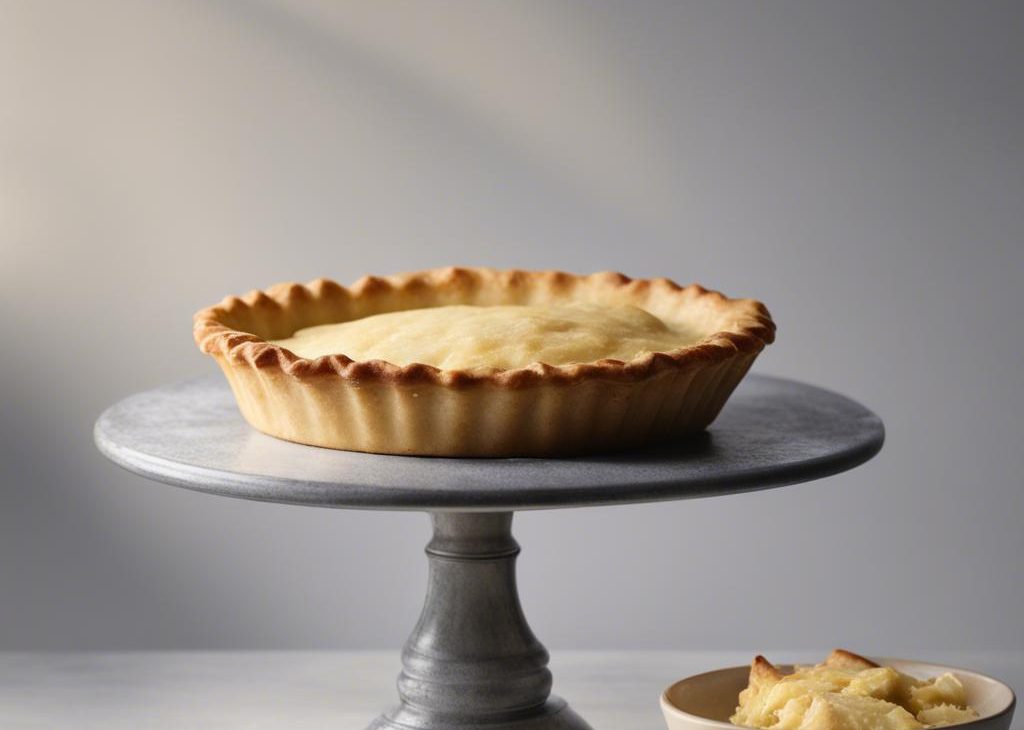
This all-butter pie crust is the dough I make when I want flavor first. Shortening has its place, but butter gives the crust that rich, toasted aroma that makes the whole kitchen smell like pie before the filling even has a chance to show off.
Pie dough can make people nervous because it looks simple and still finds ways to misbehave. I have made dough that cracked, dough that slumped, and dough that turned tough because I kept adding flour. What finally helped me was learning what the dough should feel like: cool, moist, a little shaggy, and full of visible butter pieces.
This recipe makes 2 crusts from 5 ingredients: flour, sugar, salt, cold butter, and ice water. The dough needs at least 2 hours in the refrigerator before rolling, even though the source prep time is 20 minutes. I count that chill as non-negotiable resting time.
Why I use an all-butter crust
- Butter gives the crust a flavor I can taste even under a bold filling.
- Visible butter pieces create steam pockets, which become flaky layers in the oven.
- A small amount of sugar helps browning without making the crust sweet.
- The dough can chill up to 5 days, so I can make it before pie day.
- It works for fruit pies, custard pies, quiche, galettes, and hand pies.
- The recipe makes 2 discs, enough for a double-crust pie or two single crusts.
What you need (and what each one is doing)
- All-purpose flour, 2 1/2 cups (313g). I measure carefully because too much flour makes the dough dry before the water is even added.
- Granulated sugar, 2 teaspoons. This helps browning and balances salty fillings. It does not make the crust taste sweet.
- Salt, 1 teaspoon. Butter needs salt to taste full. If I use salted butter, I still add some salt but reduce slightly.
- Unsalted butter, 1 cup (16 Tablespoons / 226g). The missing ingredient name in the source is butter. I keep it very cold and cut it into cubes before mixing.
- Ice water, about 1/2 cup (120ml). I measure from a cup of water with ice in it, then drizzle 2 Tablespoons (30ml) at a time. I stop when the dough clumps, not when the cup is empty.
- Extra flour for rolling. I use just enough to keep the dough moving. Too much bench flour toughens the scraps.
How I make the dough
Step 1 — Combine the ingredients
In a large bowl, I stir together the 2 1/2 cups flour, 2 teaspoons sugar, and 1 teaspoon salt. I add the cold cubed butter on top so every piece is ready to be cut into the flour.
Step 2 — Cut in the butter
Using a pastry cutter, food processor, or two forks, I cut the butter into the dry ingredients until the flour coats the butter. I look for mostly pea-size pieces with a few larger flakes. Those larger pieces make beautiful layers later.
Step 3 — Add ice water slowly
I measure 1/2 cup (120ml) water from a cup filled with ice water. I drizzle it in 2 Tablespoons (30ml) at a time, stirring after each addition. I stop when the dough forms large clumps and feels moist but not wet. I usually use about the full 1/2 cup.
Step 4 — Fold and divide
I turn the dough onto a lightly floured surface and fold it into itself with floured hands until the dry bits are incorporated. I form one ball, divide it in half, and flatten each half into a 1-inch thick disc.
Step 5 — Chill
I wrap each disc tightly in plastic wrap and refrigerate at least 2 hours and up to 5 days. This rest hydrates the flour and firms the butter, which makes rolling much easier.
Step 6 — Roll for a pie
When ready to use, I roll from the center outward, turning the dough between passes and keeping the counter lightly floured. If the edges crack, I press them back together. Then I follow the pie recipe for filling and baking, whether that recipe calls for chilling, blind baking, or baking at a specific temperature such as 375°F.
Tips from my kitchen
- Keep everything cold. Warm butter blends into the flour and gives a crumbly crust instead of flaky layers.
- Leave some larger butter pieces. I do not aim for a sandy mixture. Flakes of butter are the point.
- Add water by feel. Dry winter flour sometimes needs the full 1/2 cup; humid days may need slightly less.
- Flatten before chilling. A 1-inch disc rolls much more easily than a cold ball of dough.
- Roll gently. I use steady pressure, not a battle with the rolling pin.
Variations I have actually tried
- Single-crust pie: use one disc now and freeze the second for later.
- Galette: roll one disc into a rough circle, fill the center, fold the edges, and bake according to the galette recipe.
- Quiche crust: keep the sugar in; it is small enough that savory fillings still work.
- Spiced crust: add a pinch of cinnamon for apple pie or pumpkin pie.
- Herb crust: add finely chopped thyme for savory pies, keeping the water amount the same.
Storing and make-ahead notes
Wrapped discs keep in the refrigerator for up to 5 days. If the dough feels too firm to roll, I let it sit at room temperature for 5-10 minutes, just until it gives slightly under the rolling pin.
For longer storage, I freeze the wrapped discs in a freezer bag for up to 3 months. I thaw overnight in the refrigerator, then roll while still cool.
Where I use this crust
I use this dough for apple pie, berry pie, pumpkin pie, chicken pot pie, quiche, galettes, and hand pies. The filling recipe decides the final bake time and temperature; this dough is the sturdy, buttery starting point.
What I check before chilling
Before I wrap the discs, I press the dough once with my palm. It should hold together with small butter flecks showing and no dry flour falling away. If it crumbles at that point, I sprinkle on a teaspoon or two of ice water and fold again rather than hoping the refrigerator fixes it.
Frequently asked questions
Why is my pie dough cracking?
It may be too cold or a little dry. I let it sit 5-10 minutes, then press cracks together as I roll. If it crumbles, it needed more water during mixing.
Can I use salted butter?
Yes. I prefer unsalted for control, but salted butter works. I reduce the added salt slightly if the butter tastes very salty.
Do I have to chill it for 2 hours?
Yes. The chill hydrates the flour and firms the butter. Rolling right away usually leads to sticky dough and less flake.
Can I make this in a food processor?
Yes. I pulse the butter into the flour briefly, then add water carefully. It is easy to over-process, so I stop while butter pieces are still visible.
Why did my crust get tough?
Usually too much flour, too much handling, or too much water. I mix only until it clumps and roll with just enough flour to prevent sticking.
If this crust becomes part of your pie, I would like to hear what filling you tucked inside it.