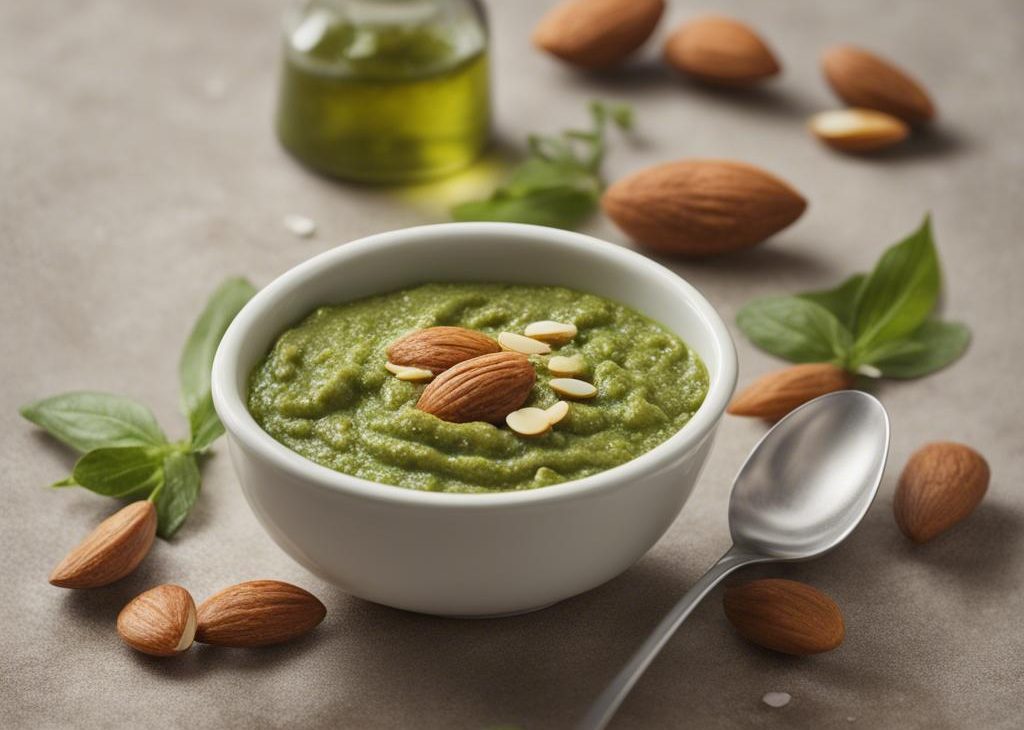
I make Almond pesto when I want a quick basil sauce with toasted almond flavor. The recipe is straightforward, but it rewards paying attention to the small details: tasting after blending because pecorino and parmesan vary in saltiness.
What I like most is the balance. The sauce is glossy and spoonable, with tiny almond bits rather than a completely flat puree. I have learned not to rush the parts that look minor, because those are usually the parts that make the difference between fine and worth repeating.
I note the places where I slow down, what I watch for, and how I store the finished recipe so it stays useful after the first serving.
Why I keep coming back to this
- Reliable method. I can follow the steps without special equipment beyond what the source calls for.
- Clear texture goal. The sauce is glossy and spoonable, with tiny almond bits rather than a completely flat puree.
- Practical timing. Prep is 7 min and cook time is 20 min.
- Manageable batch. The recipe makes 8 servings, which is helpful for planning.
- Flexible serving. I toss it with pasta, spread it on toast, or spoon it over vegetables.
- Small details matter. tasting after blending because pecorino and parmesan vary in saltiness
What you need (and what each one is doing)
I gather everything before I start because this recipe moves better when I am not stopping to search for a measuring spoon. Here is how I think about the ingredients as I work.
- 1 ounce grated pecorino cheese (or parmesan cheese).
- 3 tablespoons toasted almonds. It brings the nutty backbone of the recipe, so freshness matters.
- 1/2 teaspoon kosher salt or 1/4 teaspoon fine salt. It sharpens the other flavors, even in a sweet recipe.
- 1/4 cup extra virgin olive oil.
- 1/2 clove garlic.
- 1 cup fresh basil leaves, packed.
How I make it
Step 1 — Pulse the solids
I place the basil leaves, garlic, toasted almonds, and grated pecorino cheese in a food processor. Pulse until finely chopped.
Step 2 — Blend with oil
I add the salt and olive oil and blend on high speed for 1-2 minutes, until smooth and well combined but still slightly textured.
Step 3 — Build the flavor
I taste and adjust with more salt or olive oil as desired.
Step 4 — Store leftovers
I serve immediately with pasta, vegetables, toast, or sandwiches, or store in an airtight container in the refrigerator for up to 3 days.
Tips from my kitchen
- Toast the almonds. It deepens the flavor quickly.
- Start with half a garlic clove. Raw garlic gets stronger as it sits.
- Scrape the bowl. Cheese and nuts hide under the blade.
- Taste with food. Pesto tastes different on pasta than on a spoon.
- Cover the surface. It slows browning.
Variations I have actually tried
- Parmesan version: use parmesan for a milder sauce.
- Lemon lift: add a squeeze after blending.
- Walnut swap: use toasted walnuts.
- Spicy pesto: add red pepper flakes.
- Looser sauce: stir in hot pasta water.
How I serve it
I toss this pesto with pasta off the heat so the cheese stays creamy. For sandwiches or vegetables, I leave it thick and use it like a spread.
If I am serving this with other food, I keep the sides simple so the main flavor stays clear. I also avoid covering it too early; trapped steam or excess moisture can undo the texture I worked to build.
Storing Almond pesto
Refrigerate in an airtight container for up to 3 days with the surface covered directly. Do not cook it hard; stir into warm food off the heat.
For the best texture, I cool it as the method directs before packing it away. If reheating or serving later, I use gentle heat and stop as soon as it tastes fresh again.
Frequently asked questions
What almonds should I use?
Raw blanched almonds toasted at home are my favorite, but roasted unsalted almonds work.
Can I use parmesan?
Yes. Parmesan is milder, so taste before adding more salt.
Can I make it without a processor?
Use a mortar and pestle for a more rustic texture.
Why did it turn brown?
Basil oxidizes with air and heat. Cover the surface and avoid cooking it.
Can I freeze it?
Yes. Freeze small portions; the color darkens a little but the flavor holds.
A few testing notes I rely on
The main thing I watch is consistency. If the mixture looks too loose, too dry, or uneven, I pause before moving on. A short scrape of the bowl, a firmer press into the pan, or a few extra seconds of whisking often fixes the issue before it becomes a problem later.
I also write down what I changed, especially with extracts, spices, sweetness, or storage. That habit keeps the next batch honest. It is easy to think I will remember a tiny adjustment, but I rarely do unless I make a note while the taste is still fresh.
If you make Almond pesto, leave a comment with what worked for you. I always like hearing the small adjustments that happen in real kitchens.
One more habit that helps me with Almond pesto is setting up the next step before I begin the current one. I measure, scrape, rinse, or line the pan early so I am not making rushed choices while heat or texture is changing in front of me.
I also pay attention to how the recipe behaves after it sits. Some dishes taste better once flavors settle, while cookies and pancakes are most useful when I protect their texture. That is why I separate cooling, storing, and serving in my notes instead of treating them as an afterthought.
If something looks slightly different in my kitchen, I do not panic. I use the source time as my guide, then check the visual cue: set edges, a glossy sauce, a firm pickle, or a clean aroma. That small check keeps the recipe practical.