
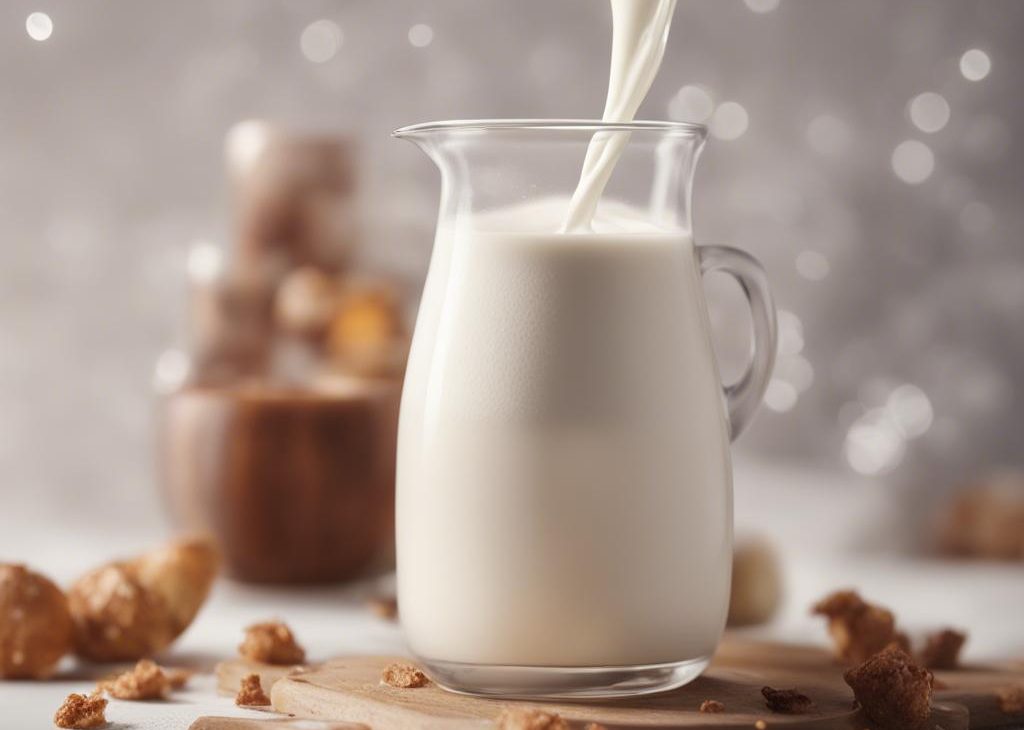
Angel Milk is the warm vanilla milk I make when I want a small sweet drink that takes almost no effort. It is milk, sugar, vanilla, and sometimes 2 drops of pink food coloring because a rosy mug makes the whole thing feel more cheerful.
I keep the heat gentle. Milk can taste cooked if it boils, so I pull it back when it is steaming and tiny bubbles show around the edge. If I have a thermometer nearby, I aim for about 160°F, but most nights I just watch the pot.
The sprinkles are not necessary, but I like adding them right before serving. They melt quickly, so I treat them like a garnish, not an ingredient that should sit in the mug for long.
I heat milk in a small pot over medium-high heat until hot but not boiling.
I add sugar and stir until dissolved; taste and adjust if needed.
I stir in vanilla and, if using, 2 drops pink food coloring.
I pour into two mugs or small glasses and garnish with sprinkles.
The clock matters, but I treat it as a guide. If the recipe gives a temperature, I keep it exactly; when I need a general warmth cue, I think in practical kitchen terms like a refrigerator near 40°F or a warm sauce that is hot but not boiling. For this recipe, I keep the listed prep, cook, and rest times in place and use visual cues to decide when to move on.
I also pay attention to how the mixture feels. Thick mixtures should look evenly hydrated, whipped mixtures should hold their shape without looking dry, and baked recipes should be allowed to cool or rest when the instructions call for it. That pause is often what turns a messy result into a clean slice, scoop, or serving.
For serving, I think in portions: 1 small mug. That keeps the recipe realistic, especially when the serving count is 2 and the dish is rich, sweet, or meant to be shared.
Angel Milk is best fresh. If I have extra, I refrigerate it without sprinkles for up to two days and rewarm gently or serve over ice.
Yes, I usually can. I follow the storage notes and keep the texture in mind; recipes with whipped cream, crisp toppings, or fresh garnish are best finished close to serving.
I make small swaps only after I have tried the base version. Main ingredients affect moisture, sweetness, salt, and structure, so I change one thing at a time.
Rushing is the mistake I see most. Skipping a chill, rest, gentle fold, or low-heat step can change the final texture even when the ingredients are correct.
I use the listed time plus the cue in the instructions: set edges, soft peaks, melted layers, softened onions, a clean toothpick, or a safe internal temperature depending on the recipe.
Often, yes, but I use the same pan size logic and do not crowd the pan. For baked recipes, two separate pans usually work better than one overfilled pan.
If you make Angel Milk, leave a comment with what worked for you — I always like hearing the little changes that happen in real kitchens.
I keep this recipe in my rotation because it rewards ordinary care. I do not need special tricks; I need measured ingredients, the right heat, and enough patience to let the recipe finish setting, cooling, or baking before I judge it. That is the kind of cooking I trust on a busy day.
When I make it again, I read through the steps once before starting and set out every ingredient in order. That small habit keeps me from missing a divided ingredient, a short chill, a pan size, or a temperature like 325°F, 350°F, or 375°F when it matters.
Angel milk is a 5-minute warm vanilla milk drink made with milk, sugar, vanilla, optional pink food coloring, and sprinkles. I keep it gently heated, not boiled.
Measure first. I set out each ingredient before starting.
Watch texture. The visual cues matter as much as the clock.
Keep the listed timing. Chilling, resting, and cooling are part of the recipe.
Store tightly. Airtight storage protects flavor and texture.


