
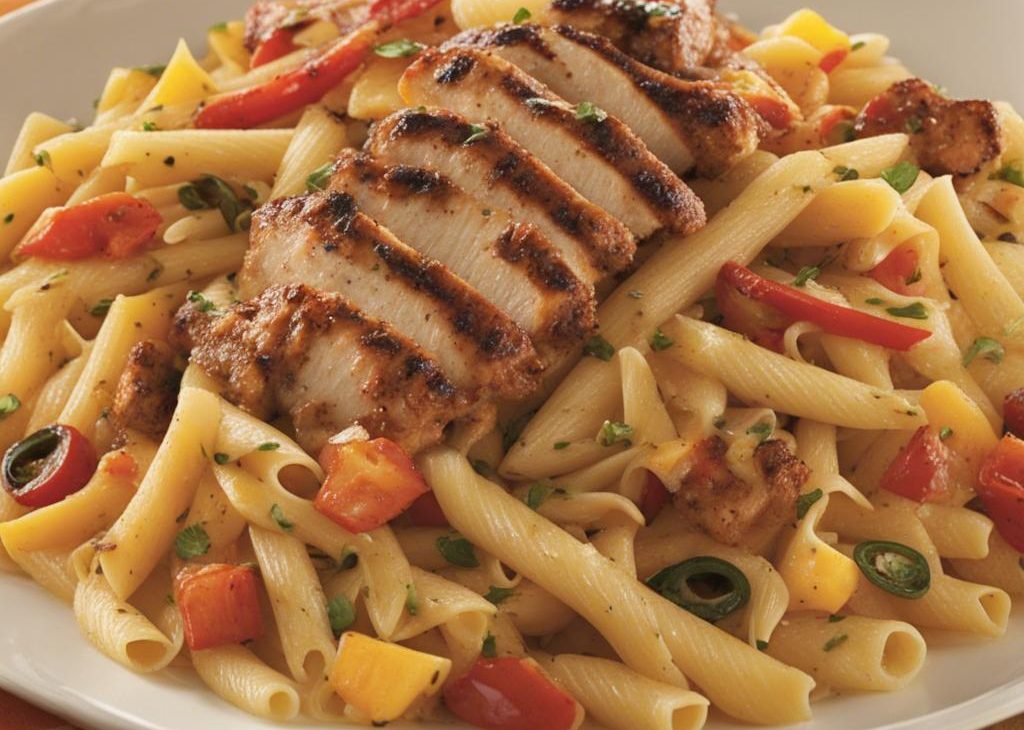
Bahama Breeze chicken pasta is one of those recipes I keep in my back pocket because it solves a specific craving without asking me to pretend the kitchen is a studio. Jerk-seasoned chicken sits over penne tossed with peppers, onion, jalapeno, broth, cream, and Parmesan. I have made versions of it on ordinary days, and the details below are the ones I pay attention to when I want the result to be reliable.
What I like most is that the recipe has a clear personality. The chicken is smoky and spiced, the peppers are sweet, and the small cream-Parmesan sauce coats rather than floods the pasta. I do not need extra decoration when the basics are handled well: measured ingredients, enough heat, and a little patience at the right moment.
I keep the original timing and quantities unless something in the source was obviously garbled, and I call out the spots where I watch texture, color, or temperature instead of blindly trusting the clock.
I rub chicken with jerk seasoning and refrigerate it at least 1 hour or up to 8 hours.
I sear in olive oil, then roast at 400°F (204°C) for 25-30 minutes to 165°F (74°C).
I boil penne in salted water for 7-8 minutes and drain it.
I saute peppers and onion, then add jalapeno, green onion, and garlic.
I add broth, then lower heat and stir in cream, Parmesan, salt, and pasta before topping with sliced chicken.
I refrigerate leftovers up to 3 days in a covered container. I label leftovers when they go into the freezer because future me never remembers what is wrapped in foil.
For best texture, I reheat gently rather than blasting it. Warm gently with a splash of broth or milk so the pasta loosens without breaking the sauce. That small step keeps the recipe tasting cooked, not merely warmed up.
I serve it with a crisp salad, cucumbers, or simple bread. I try to keep the sides simple so the main flavor of the recipe still has room to show up.
Yes. Boneless thighs stay juicy; cook them to 165°F (74°C).
It depends on the jerk seasoning and jalapeno. Seed the jalapeno for moderate heat.
Yes, but the sauce will be thinner. Milk is a lighter substitute.
The heat was probably too high when Parmesan went.
Season the chicken and slice vegetables ahead, then cook fresh.
If you make this, leave a comment with the change you tried or the detail that mattered most in your kitchen. I always like hearing which small adjustments are worth repeating.
One final note from testing: I get the best results when I set everything out before starting and clean as I go. With Bahama Breeze chicken pasta, that means the last few minutes are about tasting and texture instead of scrambling for a tool. It sounds small, but it makes the recipe feel calm, and calm cooking usually tastes better.
When I make Bahama Breeze chicken pasta, I take a minute to set up the ingredients before heat, batter, or dough is involved. That sounds ordinary, but it keeps me from overcooking one piece while looking for another. With ingredients like jerk seasoning, low-sodium chicken broth, extra-virgin olive oil, the recipe tastes cleaner when each part is measured, trimmed, and ready before I begin.
I also give the finished Bahama Breeze chicken pasta a short pause before serving when the recipe allows it. Bread slices cleaner, sauces settle, muffins firm up, and fried foods stop sputtering. That little rest is not wasted time; it is usually the difference between food that looks rushed and food I am happy to put on the table.
This Bahama Breeze-style chicken pasta pairs jerk-seasoned roasted chicken with penne, bell peppers, onion, jalapeno, cream, Parmesan, and chicken broth for a bold skillet dinner.
Marinate. The chicken tastes better.
Thermometer. Use 165°F (74°C).
Low heat. Dairy stays smooth.
Slice thin. It eats better with penne.


