
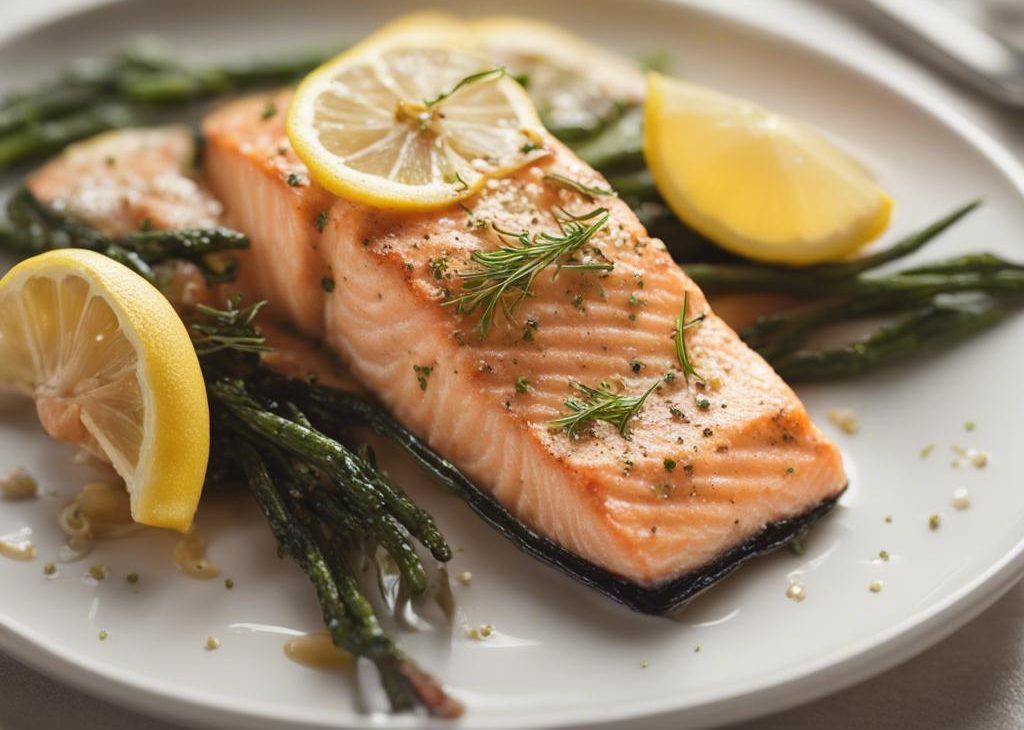
I make this salmon on nights when I want dinner to feel cared for but I only have half an hour. The sauce is just butter, olive oil, garlic, lemon juice, herbs, salt, and pepper, but it hits the salmon while it bakes and perfumes the whole pan.
The main thing I watch is thickness. A thin tail piece and a thick center-cut fillet do not bake at the same speed, so I try to buy pieces that look similar. If that is not possible, I pull the thinner piece early.
I like this as a sheet pan dinner with vegetables around the edges, but I keep the salmon in the middle where I can spoon every bit of lemon garlic sauce over it.
I pay attention to texture first when I make this lemon garlic salmon. A recipe can have the right ingredients and still miss if the drink is watery, the crumb is tough, the crust is pale, or the seafood sits too long. I use the listed times as my guide, then I look closely at what is in front of me.
I also think about balance. With this lemon garlic salmon, sweetness, salt, acid, fat, and heat all need a little room. If one part gets too loud, I correct gently instead of dumping in more of everything. A small squeeze of citrus, a pinch of salt, or a few extra seconds of mixing usually does more than a dramatic fix.
The pan, glass, blender, or oven can change the outcome more than people expect. My oven runs a little hot in the back corner, my blender needs liquids first, and my sheet pans brown faster when they are dark. I write those things down mentally and adjust the next batch instead of blaming the recipe.
Before I serve, I do one last check for the detail that makes the food feel finished: cold drinks get fresh ice, baked goods cool enough to hold their topping, chicken rests for a minute so the crust settles, and seafood gets lemon at the end. Those small habits are the difference between acceptable and something I want to make again.
When I change this lemon garlic salmon, I change only one thing at a time, then I notice whether it helped. That is how I learned which details matter and which ones are just noise in a recipe that should stay practical.
I preheat the oven to 400°F (204°C) and line a rimmed baking sheet with parchment, foil, or a silicone mat. If I use foil, I brush it lightly with olive oil so the fish releases cleanly.
I place the fillets evenly spaced in the middle of the pan. If I am adding vegetables, I arrange them around the perimeter, not under the fish, so the salmon cooks evenly.
In a small saucepan or skillet, I melt the butter with the olive oil over medium heat. I add the garlic for 1 minute, just until fragrant, then remove the pan from the heat and stir in lemon juice, herbs, salt, and pepper.
I spoon the sauce evenly over the fillets and let some run down the sides. If I have lemon slices, I place one on each piece. The fish should look glossy before it goes into the oven.
I bake for 15-20 minutes, depending on thickness, using about 10 minutes per 1-inch thickness as my guide. The salmon should turn opaque and flake easily, or reach 145°F (63°C) on a thermometer.
I refrigerate leftover salmon tightly covered for up to 3 days. I usually eat it cold or room temperature because reheating fish can dry it out and make the smell stronger.
If I do reheat, I cover it loosely and warm it gently at 300°F (149°C) just until heated through. A spoonful of leftover sauce or a squeeze of lemon helps wake it up.
My usual plate is salmon, rice or roasted potatoes, and a green vegetable. It is also good with couscous, buttered noodles, a cucumber salad, or crusty bread for catching the lemon garlic sauce.
Yes. I spoon the sauce over the fillets on lightly greased foil and wrap them loosely. The texture is softer and a little more steamed.
I like chives, basil, thyme, cilantro, or oregano with salmon. I use a lighter hand with stronger herbs like oregano.
It should be opaque and flake easily with a fork. For a temperature check, I look for 145°F (63°C) in the thickest part.
Yes. I place it skin-side down and keep the same timing guide. The skin helps protect the bottom of the fish.
Yes, but I choose quick-cooking vegetables like asparagus, thin green beans, zucchini, or cherry tomatoes so they finish with the fish.
If you make this salmon, I would like to know which herbs you used in the sauce.
This baked lemon garlic salmon is my quick sheet pan dinner with butter, olive oil, garlic, lemon juice, parsley, and dill. I spoon the warm sauce over the fillets and bake until flaky.
Watch the garlic. Watch the garlic. I cook it for only 1 minute so it does not brown and turn bitter.
Match fillet thickness. Match fillet thickness. Similar pieces make timing much easier.
Use a rimmed pan. Use a rimmed pan. The lemon butter sauce can run, and I do not want it on the oven floor.
Check early. Check early. Salmon goes from silky to dry quickly, so I look before the full 20 minutes if the fillets are thin.


