
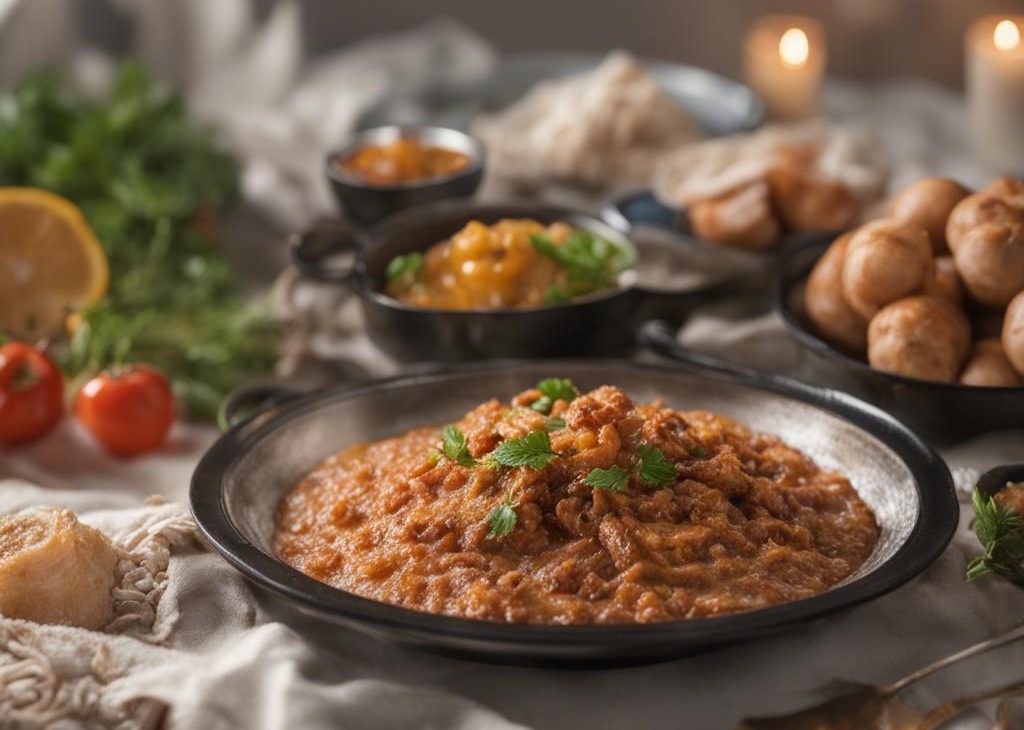
Hanini is the date-rich sweet I make when I want something warm, spiced, and filling without building a layered dessert. This version bakes into a sturdy brown-flour mixture, then gets broken into small pieces for serving.
The ingredient list is bold: dates, brown flour, powdered milk, turmeric, black pepper, sugar, butter, water, and baking powder.
For Arabic Hanini, that means noticing texture changes instead of blindly trusting the timer. I write the steps this way because those small cues are what save a batch in a real kitchen.
I check the dates for pits, then blend them with sugar, melted butter, turmeric, and black pepper until the mixture is as smooth as my processor will make it.
In a large bowl, I whisk brown flour, powdered milk, baking powder, and water. I add the water steadily so powdered milk does not hide in clumps.
I scrape the date paste into the flour mixture and stir with a wooden spoon until the color is even and no dry flour sits at the bottom.
I grease the pan, pour in the batter, and bake at 170°C for 25-30 minutes, until the top is golden and the center no longer wobbles.
When it is cool enough to handle, I break the Hanini into small pieces with a fork. That rough texture is good with a little honey or butter.
This is the part of Arabic Hanini that never fits neatly in a short recipe card. I pay attention to temperature, texture, and timing because those are the things that change from one kitchen to another. A cold ingredient, a crowded pan, or fruit that is wetter than usual can make the same written recipe behave differently. I do not treat that as failure; I adjust and keep going.
I also try to clean as I move through the recipe. That sounds unrelated, but it keeps me from rushing at the end when the food needs attention. If a bowl can be rinsed, a counter can be wiped, or a knife can be put away during a quiet minute, I do it. Then I can focus on the final cue, whether that is a golden edge, a thickened filling, a chilled bar, or a smooth blend.
Before I call Arabic Hanini done, I take one last practical look. I check whether the texture matches the way I want to serve it, whether the seasoning or sweetness needs a small correction, and whether the food needs a few quiet minutes before anyone digs in. That final pause is not fussy; it is how I avoid cutting too early, pouring too thick, or serving something before the flavors have settled.
If something looks a little off, I make the smallest fix first. A splash of liquid, a pinch of salt, a longer chill, a few more minutes in the oven, or a sharper knife often solves the problem without changing the recipe. I like recipes that leave room for those normal kitchen adjustments.
I store cooled Hanini in a covered container in the refrigerator for up to 4 days. It firms as it chills because of the dates and flour.
To reheat, I microwave a small portion in short bursts or warm it covered in a low oven. A little butter, water, or honey stirred in brings back softness.
I serve Hanini warm in small bowls with Arabic coffee or tea. It is rich enough that a modest serving is plenty, especially with honey on top.
Yes. Reduce it or leave it out if the dates are very sweet.
You can, but it will not bake the same. Almond flour needs liquid adjustments.
I like it warm because the date and spice aroma is stronger.
Use vegan butter and a plant-based milk powder if available.
The rustic pieces soak up honey or butter better than neat slices.
If you make this Hanini, tell me whether you kept the spices bold.
One last note from my kitchen: I try not to rush the resting, cooling, or chilling steps even when the recipe looks finished. That short pause gives flavors time to settle and makes slicing, scooping, or serving much cleaner. It is the kind of small patience that does not show in an ingredient list, but it shows at the table. When I repeat a recipe, I pay attention to the one detail that felt awkward the time before, because that is usually where the next batch improves.
A warm Arabic Hanini made with dates, brown flour, powdered milk, turmeric, black pepper, sugar, and melted butter, baked at 170°C and broken into rustic pieces.
Check the dates. I look for hidden pits first.
Whisk well. Powdered milk needs attention.
Serve warm. The spices taste fuller.


