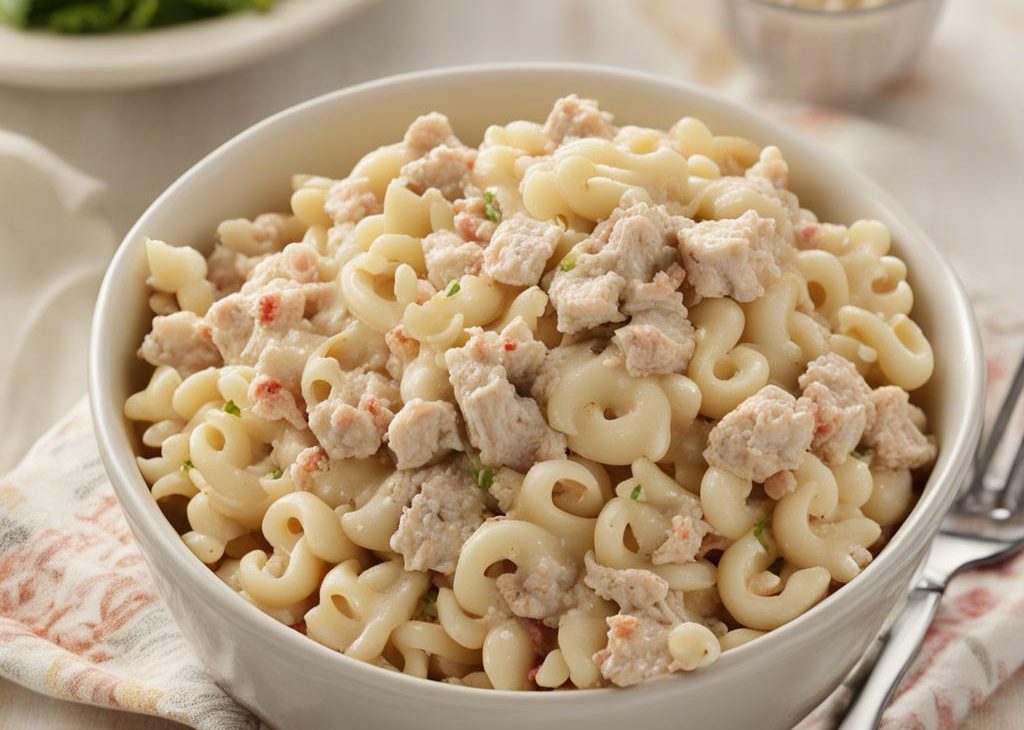

I make this tuna macaroni salad when I want the old boxed-recipe comfort of a creamy pasta salad, but I still want it to taste like I paid attention. The batch is small, the pasta stays springy, and the tuna does not get buried under a heavy dressing.
The sweet onion marmalade is the little twist I did not expect to like as much as I do. It softens the lemon aioli and gives the salad the same sweet-savory pull I remember from deli salads, only brighter.
I chill it before serving because warm tuna salad has never won me over. Thirty minutes is enough for the dressing to cling to the radiatore ridges, and that makes each forkful taste seasoned instead of merely coated.
Why I keep coming back to this
- The 3.5 oz package of radiatore makes a sensible 3-serving batch; I am not stuck eating tuna salad for a week.
- Rinsing the pasta cold stops the cooking and keeps the dressing from splitting when it hits the noodles.
- Albacore tuna brings enough body that I can serve this as lunch, not just a side dish.
- Lemon aioli, Meyer lemon juice, and sweet onion marmalade make a dressing that is creamy, tangy, and a little sweet.
- Celery, onion, and peas add the crunch and color a tuna macaroni salad needs.
- The Gouda is optional, but I like the salty, nutty shavings when I am making it for a plate lunch.
What I use and what each part does
- Radiatore pasta and albacore tuna. I keep the pasta al dente and drain the tuna hard so the salad stays light instead of watery.
- Lemon aioli, Meyer lemon juice, salt, and pepper. This is the creamy-tangy base, and I taste it before the pasta goes in because cold pasta mutes seasoning.
- Sweet onion marmalade. I use the full 2 tablespoons because it behaves like relish without the pickle bite.
- Celery, Cipollini onion, and peas. These bring crunch, sweetness, and color. I chop the onion small so it does not shout.
- Aged Gouda. It is optional, but a few shavings add a salty edge that works well with tuna and lemon.
How I make it
Step 1 — Cook and cool the pasta
I cook the 3.5 oz package of tri-color radiatore pasta according to the package directions until al dente. Drain, rinse with cold water, and shake off as much water as possible.
Step 2 — Drain
I thaw the peas if needed, drain the 5 oz can of albacore tuna thoroughly, finely chop the celery and Cipollini onion, and shave the Gouda if using.
Step 3 — Stir the lemon aioli
In a mixing bowl, stir the lemon aioli, sweet onion marmalade, Meyer lemon juice, salt, and black pepper until smooth and glossy.
Step 4 — Fold the salad
I fold in the cooled pasta, peas, tuna, Gouda, celery, and onion. Use a wide spatula so the tuna stays in small flakes instead of turning pasty.
Step 5 — Chill
I cover and refrigerate for at least 30 minutes so the dressing settles into the pasta. Toss once more before serving.
Step 6 — Serve
I serve chilled as a lunch salad, sandwich side, or scoop over crisp lettuce.
What I watch for
The main thing I watch is moisture. Pasta water, tuna liquid, and thawed peas can all thin the aioli, so I drain each part before it reaches the bowl.
I also taste after the salad chills. The first mix can seem bright, then the pasta absorbs the lemon and salt. A tiny squeeze of lemon at the end often brings it back.
My make-ahead rhythm
When I am making Betty Crocker-Style Tuna Macaroni Salad on a busy day, I break the work into small jobs instead of trying to race through the whole recipe. I measure the ingredients, set out the bowls and pans, and handle anything that needs cooling, draining, chilling, or resting before I start the final mix. That little bit of order keeps me from rushing the step that actually decides the texture.
I also keep the key numbers where I can see them: prep time, cook time, serving count, pan size, oven temperature, and any chill time tucked into the directions. It sounds fussy until my hands are sticky or floury and I do not want to scroll with my knuckle. More than once, that habit has saved me from missing a short rest or pulling a pan too early.
If I am serving guests, I do one quiet taste or texture check before the dish leaves the kitchen. For a salad or sauce, I check salt and acid after chilling. For baked recipes, I check the center, not just the edges. For fried food, I taste the first piece and adjust the heat before committing the whole batch.
I would rather pause for five minutes than fix a rushed dish at the table. That pause might mean letting dough relax, giving a chilled salad one more toss, wiping moisture from a vegetable, or letting a hot pan settle before cutting in. None of those moves are dramatic, but they are the small kitchen habits that make the recipe taste deliberate instead of hurried. I also keep a clean spoon nearby for tasting, because guessing at the end is how I miss the one pinch of salt or splash of acid that would have made the whole dish clearer. I write any adjustment in the margin for next time, because future me never remembers as well as I think I will.
Tips from my kitchen
- Drain the tuna well. Wet tuna loosens the aioli after the salad sits.
- Do not overcook the pasta. Soft pasta breaks when folded and gets gummy in the fridge.
- Chop the celery and onion small. Big pieces take over a small-batch salad.
- Taste after chilling. Cold pasta mutes salt and lemon, so I adjust at the end.
Variations I have actually tried
- Classic pantry version: use elbow macaroni, regular mayonnaise, and a spoonful of sweet pickle relish instead of onion marmalade.
- No cheese: skip the Gouda and add an extra tablespoon of peas or celery for texture.
- More lemon: add a little lemon zest with the Meyer lemon juice when I want it brighter.
- Herby bowl: fold in chopped dill or parsley right before serving.
- Sandwich filling: chop the pasta once after chilling and pile it onto toasted bread with lettuce.
Storing and reheating
I store the salad in a covered container in the refrigerator and try to eat it within 2 days. Tuna and aioli are both best when they stay cold, so I do not leave the bowl sitting out.
If the pasta absorbs too much dressing overnight, I loosen it with a teaspoon of lemon juice or aioli. I do not freeze this salad; the dressing separates and the celery loses its snap.
How I like to serve it
I like it spooned over crisp romaine, tucked beside tomato slices, or served with crackers and pickles for a quick lunch plate. If I am making it for dinner, I add a bowl of soup and call it done.
Frequently asked questions
Can I use regular macaroni instead of radiatore?
Yes. Keep the 3.5 oz amount and cook it just to al dente. Small shells or elbows are the easiest swaps.
What can I use instead of sweet onion marmalade?
I use sweet pickle relish or a teaspoon of honey mixed with a little minced onion when the marmalade is not in my fridge.
Can I make this dairy-free?
Yes. Use vegan garlic aioli and skip the Gouda. The salad still has plenty of flavor from tuna, lemon, onion, and celery.
Why rinse the pasta?
For a cold salad, rinsing stops the cooking and washes off surface starch. That keeps the dressing creamy instead of gluey.
How far ahead can I make it?
I like it best after 30 minutes and up to 24 hours. After that, it is still safe if kept cold, but the vegetables soften.
If you make this, tell me whether you kept the Gouda or went full pantry-style; I go back and forth depending on the day.
Betty Crocker-Style Tuna Macaroni Salad
Description
This chilled tuna macaroni salad is creamy, tangy, and small-batch enough for lunch or a simple supper. I use tender pasta, drained tuna, celery, peas, onion, lemon aioli, and a little sweet onion marmalade for a deli-salad feel without much fuss.
Ingredients You’ll Need
Instructions
- Cook the 3.5 oz package of tri-color radiatore pasta according to the package directions until al dente. Drain, rinse with cold water, and shake off as much water as possible.
- Thaw the peas if needed, drain the 5 oz can of albacore tuna thoroughly, finely chop the celery and Cipollini onion, and shave the Gouda if using.
- In a mixing bowl, stir the lemon aioli, sweet onion marmalade, Meyer lemon juice, salt, and black pepper until smooth and glossy.
- Fold in the cooled pasta, peas, tuna, Gouda, celery, and onion. Use a wide spatula so the tuna stays in small flakes instead of turning pasty.
- Cover and refrigerate for at least 30 minutes so the dressing settles into the pasta. Toss once more before serving.
- Serve chilled as a lunch salad, sandwich side, or scoop over crisp lettuce.
Note
Drain the tuna well. Wet tuna loosens the aioli after the salad sits.
Do not overcook the pasta. Soft pasta breaks when folded and gets gummy in the fridge.
Chop the celery and onion small. Big pieces take over a small-batch salad.
Taste after chilling. Cold pasta mutes salt and lemon, so I adjust at the end.
Frequently Asked Questions
Yes. Keep the 3.5 oz amount and cook it just to al dente. Small shells or elbows are the easiest swaps.
I use sweet pickle relish or a teaspoon of honey mixed with a little minced onion when the marmalade is not in my fridge.
Yes. Use vegan garlic aioli and skip the Gouda. The salad still has plenty of flavor from tuna, lemon, onion, and celery.
For a cold salad, rinsing stops the cooking and washes off surface starch. That keeps the dressing creamy instead of gluey.
I like it best after 30 minutes and up to 24 hours. After that, it is still safe if kept cold, but the vegetables soften.