
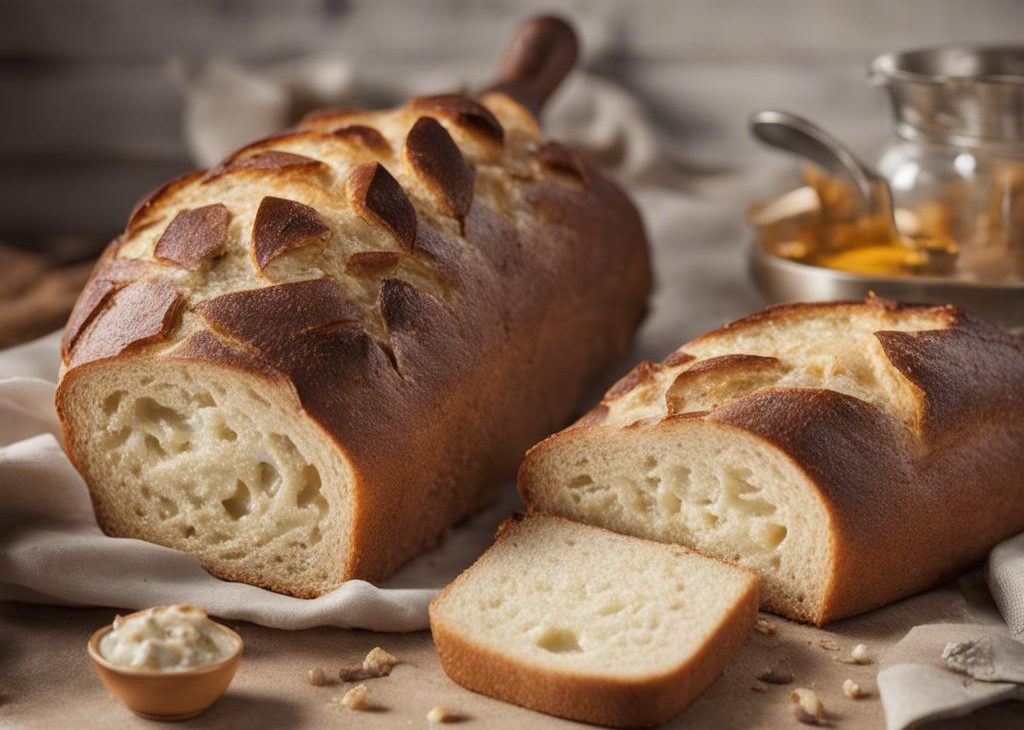
This Boatyard Bimini Bread is the kind of sweet yeast loaf I make when I want bread that can sit next to breakfast, dinner, or coffee without feeling out of place. It has coconut milk, honey, dry milk powder, and a little butter, so the crumb lands soft and slightly rich.
I bake it in a Bundt pan because the shape gives more golden edges and makes the loaf easy to slice into wedges. The first time I tried a sweet dough in a Bundt pan, I under-greased the center tube and had to patch the loaf together on the plate. Now I grease every ridge.
The recipe is simple, but it is still yeast bread. I give the dough time to rise, knead until it feels elastic, and invert the loaf while it is still warm. Those three habits make the difference between a soft, tall bread and a heavy ring that sticks to the pan.
I preheat the oven to 375°F and grease the Bundt pan before the dough is shaped. A sweet dough can grab onto the pan, so I use softened butter or baking spray and make sure the center tube is coated.
In one large bowl I whisk the flour, sugar, salt, yeast, and dry milk powder. In another bowl I whisk the eggs, melted butter, oil, coconut milk, and honey. Mixing each bowl well before combining keeps pockets of dry milk or egg out of the dough.
I pour the wet mixture into the dry ingredients and stir until a shaggy dough forms. If the bowl has dry flour at the bottom, I scrape and fold until it disappears. The dough should be soft, not runny.
I turn the dough onto a floured surface and knead for about 10 minutes. At first it feels sticky and uneven. As I work it, the surface smooths out and the dough springs back when pressed with a finger.
The first rise happens in a greased bowl for about 1 hour, or until doubled. Then I punch it down, knead for a minute or two, shape it into a ball, and settle it into the Bundt pan for another 45-minute rise.
I bake the bread for 25-30 minutes at 375°F, until golden and cooked through. After 5 minutes in the pan, I invert it onto a plate. Waiting too long traps steam and can make the crust stick.
I wrap cooled bread tightly and keep it at room temperature for 2 days. For longer storage, I slice it and freeze the slices so I can toast only what I need.
To refresh a slice, I warm it in a 300°F oven for a few minutes or toast it lightly. The coconut milk aroma comes back as soon as it warms.
I like this bread with salted butter and a drizzle of honey at breakfast. At dinner, I serve plain wedges with spicy chicken, beans, or grilled fish because the sweetness balances heat.
If I add fruit or nuts, I treat it more like a coffee bread and serve it with tea. Plain, it is flexible enough to sit in the bread basket.
This dough should feel soft and elastic after kneading, not tight like bagel dough and not wet like batter. When I press it with a fingertip, the dough should slowly push back. If it tears right away, I knead a little longer. If it smears across the counter, I dust with a small amount of flour and keep going.
The baked bread should have a tender, slightly sweet crumb with a golden outside. I let it cool just enough to slice neatly, but I still like the first piece warm because the coconut milk and honey are easiest to taste then.
Not strongly. I taste a soft coconut note, especially when the loaf is warm, but the honey and butter share the stage.
Bundt pans need careful greasing, especially around the center tube. I also avoid cooling too long in the pan.
Less yeast may work, but the rise will take longer.
Yes. I dissolve it in part of the coconut milk if it is warm, then continue with the recipe.
The loaf should be golden, firm, and a toothpick inserted near the center should come out clean. If it looks pale, I give it a few more minutes.
If you bake this Bimini bread, I would like to know whether you served it plain, toasted, or with a little honey butter.
A sweet coconut milk yeast bread inspired by Bimini-style island loaves, baked in a Bundt pan until golden. I like it warm with butter, honey, or a spoonful of jam.
Grease the Bundt pan thoroughly. Sweet dough sticks in every ridge if I rush that step.
Knead until smooth. The dough starts shaggy but should turn elastic after about 10 minutes.
Invert while warm. I wait 5 minutes, not 30, so the bread releases before the sugars glue it down.


