
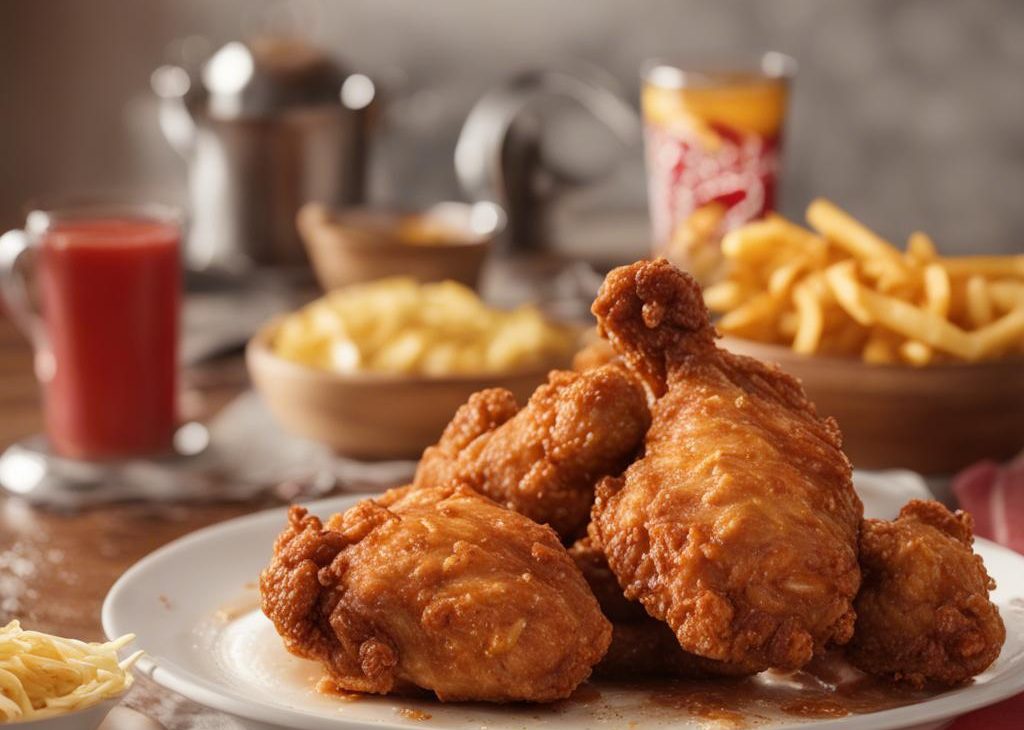
Bojangles Fried Chicken is all about the seasoned crust. The coating here is simple: flour, Cajun seasoning, paprika, cayenne, black pepper, and salt. The chicken goes through egg wash first, then into the flour, then into hot oil until the crust turns golden.
I do not fry chicken when I am distracted. The process is not hard, but it asks for attention: small batches, steady heat, and a rack ready before the first piece comes out. Paper towels make the bottom steam, so I use a wire rack every time.
This recipe is scaled for 2 servings with 1/2 whole chicken. Piece size matters, so I treat the 8-10 minute fry time as a guide and check that the chicken is cooked through. A crisp crust is good only if the inside is done.
I stir the flour, Cajun seasoning, paprika, cayenne, black pepper, and salt in a shallow bowl. I break up any spice clumps with my fingers because an unmixed pocket of cayenne is not fun.
Before raw chicken touches anything, I set a wire rack over a lined baking sheet. Fried chicken needs somewhere to land immediately, and I do not want to search for equipment with hot oil on the stove.
I dip each piece in egg wash, let the excess drip, then press it into the seasoned flour on all sides. I set the coated pieces aside while I finish the batch so the flour can hydrate slightly.
I heat the oil in a deep skillet and fry pieces in small batches for about 8-10 minutes, depending on size. I avoid crowding because too many cold pieces drop the oil temperature and make the crust greasy.
Each finished piece goes onto the rack, not paper towels. I let the chicken rest a few minutes so the crust settles and the juices calm down before serving.
I refrigerate leftover fried chicken in a shallow container once it cools. It keeps for up to 3 days, though the crust is best on day one.
For reheating, I put the chicken on a rack in a 350°F oven until hot. The microwave warms it, but the crust softens.
I serve this with coleslaw, mashed potatoes, green beans, biscuits, or dirty rice. Something cool and crisp on the plate helps balance the seasoned crust.
If I am making sandwiches, I use boneless pieces and add pickles. The acidity cuts the fried coating in a way I really like.
Fried chicken rewards setup. Before I heat the oil, I have the seasoned flour mixed, the egg wash ready, the rack set over a baking sheet, and a clean plate for finished chicken. Once the oil is hot, I do not want to be opening drawers or washing tongs.
I also give coated chicken a short rest before frying. Even 5 minutes helps the flour hydrate against the egg wash, which makes the coating cling better. When the chicken goes into the oil, I leave it alone at first. Moving it too soon can tear off the crust before it sets.
Because the recipe uses 1/2 whole chicken, pieces may not cook at the same speed. I usually start larger pieces first and hold smaller pieces for the second batch. If a breast piece is especially thick, I keep the heat moderate so the coating has time to brown while the inside cooks.
Seasoning can vary a lot by Cajun blend. Some are mostly salt, while others are heavy on herbs and chile. I taste a pinch of the seasoning before mixing the flour.
I let fried chicken rest a few minutes before serving. The crust stays crisp on the rack, and the juices settle enough that the first bite is less likely to burn.
The safest way is a thermometer: chicken should reach 165°F in the thickest part. Juices should run clear.
You can bake coated chicken, but it will not taste the same as fried. I would spray the coating with oil and bake on a rack.
The chicken may have been too wet, the oil not hot enough, or the pieces moved too much early in frying.
If it is not burned, I strain cooled oil and reuse it once for savory frying. I do not reuse oil that smells scorched.
Yes. I adjust it based on the Cajun seasoning I use and who is eating.
If this fried chicken makes it to your table, tell me whether you kept it classic or added hot honey, pickles, or extra cayenne.
Crispy fried chicken coated with flour, Cajun seasoning, paprika, cayenne, black pepper, and salt, then dipped in egg wash and fried until golden. I drain it on a rack so the crust stays crisp.
Use a rack, not paper towels. A rack keeps the crust from steaming underneath.
Fry in small batches. Crowding drops the oil temperature and makes the coating heavy.
Check doneness. Chicken should be cooked through before serving; timing depends on piece size.


