
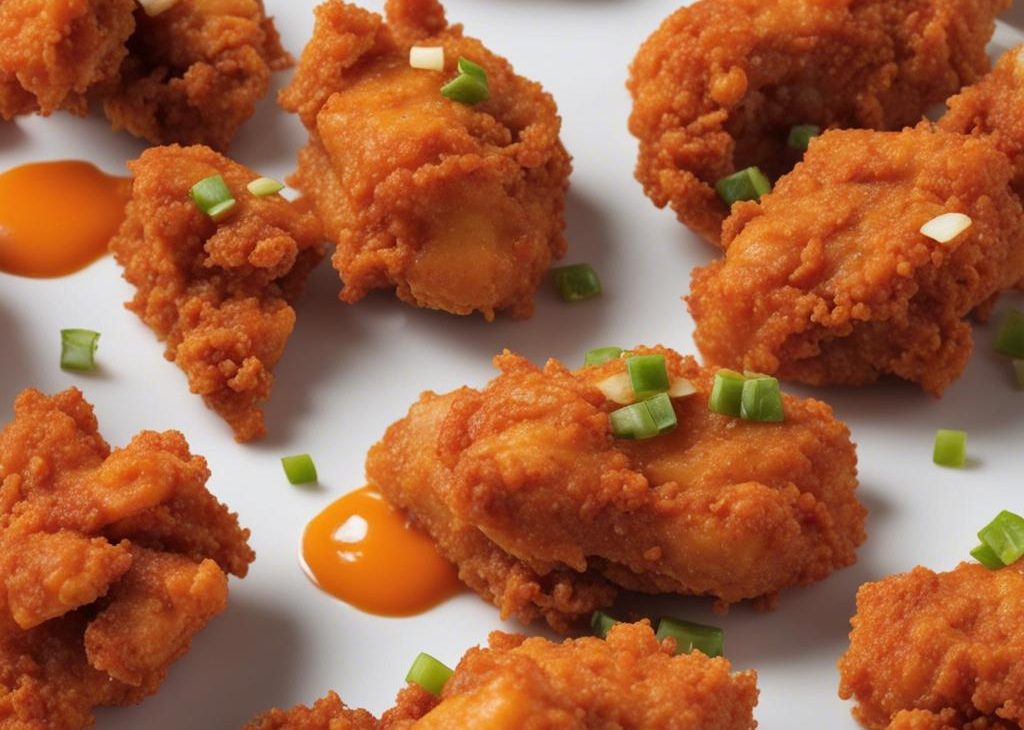
I started making Boom Boom Chicken after I wanted the flavor of the original without the thin, rushed feeling a lot of copycat recipes have. My first pass was not tidy: I had one bowl too many on the counter, I tasted too early, and I had to correct the seasoning at the end. That test was useful, though, because it showed me where the recipe needed patience.
This has takeout energy, but the best batch came from slowing down the fry. I keep the oil at 350°F (175°C), cook in batches, and sauce right before serving. That gives me crisp chicken with a creamy, spicy-sweet coating instead of a soggy bowl.
I wrote this the way I actually cook it, with the small visual cues I watch for. A timer is helpful, but it cannot tell whether the pan is crowded, your cheese is melting smoothly, or your fish is cold from the refrigerator. I use the listed times, then I look, smell, and taste before I call it done.
Whisk mayonnaise, honey, sweet chili sauce, Sriracha, buttermilk, and egg. Season with salt and pepper.
Mix cornstarch, flour, salt, and pepper in a separate bowl. Coat the cubed chicken evenly.
Heat vegetable oil to 350°F (175°C). Fry chicken in batches for 5-7 minutes, until golden and cooked through.
Drain briefly on paper towels, then toss the hot chicken with boom boom sauce.
Sprinkle panko over the top, toss once more, and serve immediately.
I serve it immediately, usually over rice or with crunchy lettuce and cucumbers. The contrast matters because the sauce is creamy and the chicken is rich.
Refrigerate leftovers for up to 3 days, but keep extra sauce separate if possible. Reheat chicken uncovered in an oven or air fryer to bring back some crunch.
The panko is better at the end than in the wet sauce. It stays crisp longer and gives the chicken a rough, crunchy finish.
I also learned not to chase restaurant flavor by adding more of everything. Usually the better fix is a calmer one: brown the food a little more, let the sauce reduce for another minute, chill the candy fully, or taste for salt after the main ingredient has had time to absorb it.
I give myself a little buffer around the listed times because home kitchens vary more than recipe cards admit. A cold baking dish, a thin skillet, a crowded sheet pan, or ingredients pulled straight from the refrigerator can all change the finish by a few minutes. I keep the original timing as the roadmap, then I use the doneness signs in the steps as the final call.
For stovetop recipes, I lower the heat before I think I need to. That keeps garlic from scorching, dairy from breaking, and sugar-heavy glazes from turning sticky before the main ingredient is ready. For oven recipes, I check early but do not keep opening the door every two minutes. One careful check near the low end of the range tells me more than nervous peeking.
The serving window matters too. Crisp chicken, wings, cookies, and seared salmon are best soon after cooking. Beans, roast, cake, and candy reward patience because resting or chilling changes the texture. I plan the rest of the meal around that rhythm so the main recipe is not sitting at its worst moment while I finish a side dish.
When I cook from these notes again, I write one quick sentence on the printed page or in my phone: whether the pan was too full, whether I wanted more pepper, or whether the sauce thickened faster than expected. Those tiny notes are why the second batch is usually calmer than the first. They also keep me from changing three things at once and never knowing which change actually helped.
I keep the plating simple for the same reason. A recipe with a creamy sauce, crisp coating, glossy glaze, or tender crumb does not need a crowded plate. I would rather serve it hot, neat, and seasoned correctly than add garnishes that distract from the work already done in the pan, especially when people are already waiting.
Yes. I do the prep ahead when possible, then cook or finish close to serving so the texture stays fresh.
Yes, but I use a larger pan or cook in batches. Crowding is the fastest way to lose browning and crispness.
I reheat gently. Crisp recipes do better uncovered in an oven or air fryer, while creamy or saucy recipes need low heat and sometimes a splash of liquid.
Yes. I make the base version once, then adjust heat, herbs, salt, or sweetness after I know how the recipe behaves.
I pick a side that balances the dish: something crisp with creamy food, something fresh with fried food, and something starchy with saucy food.
If you make Boom Boom Chicken, leave a comment with what you changed. I always like hearing which small adjustments work in other kitchens.
Crispy fried chicken pieces tossed with a creamy sweet chili, honey, Sriracha, mayonnaise, buttermilk, and panko boom boom sauce.
Prep first. Small measured ingredients make the cooking calmer.
Trust the cues. Use the times, but stop when the texture is right.
Taste before serving. Salt, heat, and richness are easiest to adjust at the end.
Store promptly. Cool leftovers and refrigerate within 2 hours.


