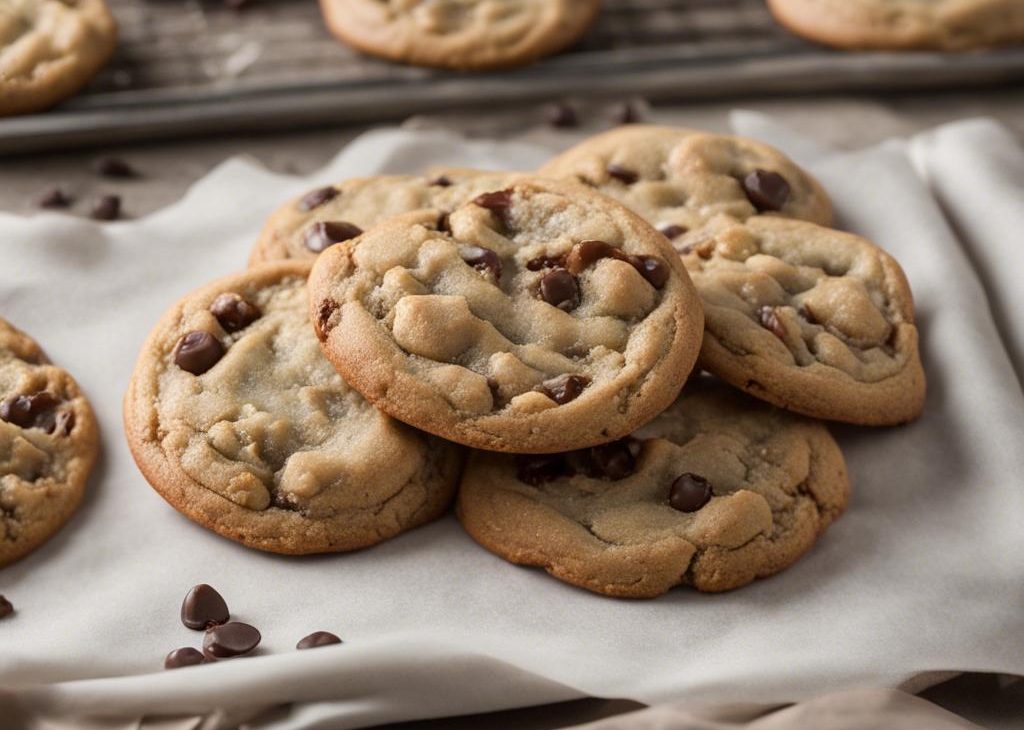
These are the cookies I make when a regular chocolate chip cookie sounds good but I want the dough to taste toasted and a little more grown-up. Browning the butter changes the whole batch. It turns sweet cream into something nutty, warm, and almost caramel-like.
The catch is that the butter has to firm back up before mixing. I have tried rushing it with melted brown butter, and the cookies spread into thin puddles. Chilled brown butter gives me thick centers and chewy edges.
This is a plan-ahead cookie, not a last-minute cookie. Once the dough is cold, though, the baking part is easy and the freezer stash is excellent.
Why I trust this cookie dough
- Chilled brown butter gives deep flavor without greasy spread.
- Brown sugar keeps the centers chewy.
- An extra yolk adds richness.
- Cornstarch softens the bite just enough.
- Milk replaces moisture lost while browning the butter.
- The dough freezes well in scooped balls.
Before I start
Before I start, I line the pans and measure the butter carefully. Brown butter moves quickly once it starts to color, so I do not want to be hunting for parchment or a heatproof bowl while the milk solids are getting darker.
I use a light-colored skillet whenever I can. The difference between browned and burned butter is easier to see against a pale surface. As soon as I smell nuts and see amber specks, I move it off the heat and pour it out.
I also give myself time for cooling. Bars and cookies with brown butter often taste best after the fat has settled back into the crumb. Cutting or icing too early is how I end up with smears instead of clean pieces.
What you need (and what each one is doing)
- 1 cup unsalted butter (16 Tbsp; 226g). I brown it slowly and scrape in the toasted bits because that is where the nutty flavor hides.
- 1/2 cup granulated sugar (100g).
- 1 cup brown sugar (200g).
- 1 large egg plus 1 egg yolk, at room temperature. Room-temperature eggs mix in more smoothly, so I set them out while I prep the pan.
- 2 teaspoons pure vanilla extract. Vanilla is quiet, but I notice when it is missing because the finish tastes flat.
- 2 1/2 cups all-purpose flour (313g). I spoon and level flour, or weigh it, so the batter stays tender instead of heavy.
- 1 teaspoon cornstarch.
- 1 teaspoon baking soda. This is the lift, so I check the date on the container before I start.
- 1/2 teaspoon salt. A small amount keeps the sweet ingredients from tasting one-dimensional.
- 2 Tablespoons milk (30ml). This loosens the mixture just enough; I add it at the point the recipe calls for so the texture stays right.
- 1 and 1/2 cups chocolate chips (270g). It gives the recipe its bitter-sweet edge, which keeps the finished dessert from tasting sugary only.
How I make them
Step 1 — Brown and chill the butter
I brown the butter in a light-colored skillet, then pour it into a flat heatproof dish. I cover and chill it until solid, about 2-3 hours, because a flat dish cools faster than a bowl.
Step 2 — Beat until smooth
I scrape the chilled brown butter into a mixing bowl and beat it smooth. Then I add granulated sugar and brown sugar and beat until the mixture looks lighter and creamy.
Step 3 — Beat the egg egg
I beat in the egg, egg yolk, and vanilla, scraping the bowl so no dense butter clings to the bottom.
Step 4 — Mix the dry ingredients
In a separate bowl, I whisk flour, cornstarch, baking soda, and salt. I mix that into the wet ingredients on low, add the milk, and fold in the chocolate chips.
Step 5 — Chill the dough
I cover the dough and refrigerate it for at least 2-3 hours and up to 3 days. This step is not optional for me; it controls spread.
Step 6 — Scoop and bake
I let the dough sit out 10 minutes, preheat to 350°F (177°C), scoop 1.5-Tablespoon balls, and bake 11-12 minutes. The centers look soft when they come out, then settle as they cool.
The cues I trust
I pull the cookies when the edges are lightly golden but the middles still look underdone. If the whole cookie looks baked in the oven, it will taste dry once cooled.
How I time it
For cookies, I think of the cooling time as part of the bake. The sheet pan keeps cooking the centers after it leaves the oven, and the icing or chocolate behaves better once the cookies are no longer hot. I set a timer for the cooling step because that is the part I am most likely to rush. I also write the finish time on a scrap of paper when I start, because guessing later is how I end up cutting too soon.
Tips from my kitchen
- Chill in a flat dish. The brown butter firms faster and more evenly.
- Measure the flour carefully. Too much flour makes the dough crumbly and the cookies cakey.
- Rotate the pan. Brown butter cookies show hot spots quickly, so I turn the sheet once.
- Shape after baking if needed. A round cutter scooted around warm cookies makes neat edges.
Variations I have actually tried
- Dark chocolate Use chopped bittersweet chocolate instead of chips.
- Salted tops Add flaky salt when the cookies come out of the oven.
- Walnut batch Replace 1/2 cup chips with toasted walnuts.
- Espresso note Add 1 teaspoon espresso powder with the dry ingredients.
- Freezer cookies Freeze scooped dough and bake from frozen, adding 1-2 minutes.
Storing and reheating
I keep baked cookies in an airtight container at room temperature for up to 1 week. Scooped dough balls freeze for up to 3 months. I bake them straight from frozen when I want two cookies and no dishes.
How I like to serve it
I like these slightly warm, when the chocolate is soft but the cookie has set. If they are a day old, 8 seconds in the microwave brings back that just-baked texture.
Frequently asked questions
Can I skip chilling the dough?
I would not. The dough spreads too much without a proper chill because browned butter behaves differently than softened butter.
Why is my dough crumbly?
It may be very cold, or the flour may be heavy. Let it sit a few minutes and squeeze the dough together as you roll.
Can I use salted butter?
Yes, but reduce the added salt slightly. I still prefer unsalted because it gives me more control.
Can I chill the butter overnight?
Yes. Let it soften slightly before beating so the mixer can smooth it out.
Why add milk?
Browning butter cooks off water. The milk puts a little moisture back into the dough.
These are the cookies that taught me patience is an ingredient.