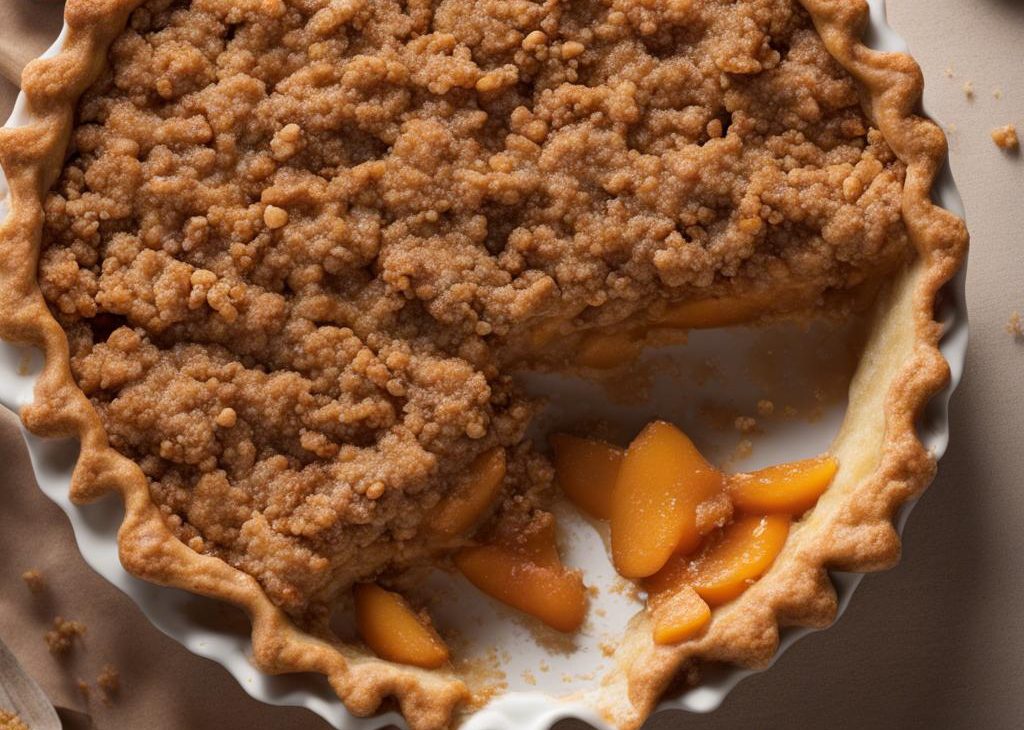
I make this Brown Sugar Peach Crumble Pie when the peaches on my counter smell sweet before I even cut into them. It has a flaky bottom crust, a chunky peach filling, and a cinnamon crumble that lands somewhere between pie topping and peach crisp.
The first time I rushed a peach pie, I learned the hard lesson: warm peach filling slides. Now I give this pie the full 3-hour cool, even when it is difficult to wait. The slices are cleaner, the filling tastes brighter, and the crumble keeps a better texture.
I like slightly firm peaches here. Soft peaches taste good, but they can collapse into jam during the long bake. Firm-ripe fruit gives me distinct peach pieces and bubbling syrup around the edges.
Why I keep coming back to this
- Brown sugar adds a caramel note that works beautifully with peaches.
- The crumble topping is easier than a top crust and gives a buttery, cinnamon finish.
- Leaving excess peach liquid behind keeps the bottom crust from getting soggy.
- A baking sheet catches drips and helps the bottom crust bake more evenly.
- The pie can cool in the refrigerator if I need sturdy slices for a gathering.
- It tastes like summer but still has enough spice to feel cozy.
What you need (and what each one is doing)
- Homemade pie crust. I use one 9-inch crust and freeze the second disc if the dough recipe makes two.
- Peaches, 7-8 medium. Slightly firm peaches hold their shape. I peel them and cut 1-2-inch chunks so the filling stays rustic.
- Brown sugar for filling, 1/2 cup. It sweetens the peaches and makes the syrup taste lightly caramelized.
- Flour for filling, 1/2 cup. This thickens the peach juices. I do not reduce it because peaches release plenty of liquid.
- Lemon juice, 2 teaspoons. A small amount sharpens the fruit without making the pie tart.
- Cinnamon for filling, 1/4 teaspoon. Just enough to warm up the peaches.
- Brown sugar, cinnamon, flour, and melted butter for crumble. I stir them into thick crumbs that bake into a sandy, buttery topping.
- Walnuts, 1/2 cup, optional. I like the crunch, but I leave them out if serving anyone who avoids nuts.
How I make it
Step 1 — Chill the dough
I make and chill the pie dough first. Once ready, I roll one disc into a 12-inch circle and fit it into a 9-inch pie dish without stretching it.
Step 2 — Mix the peaches
I peel the peaches, cut them into 1-2-inch chunks, and stir them with brown sugar, flour, lemon juice, and cinnamon. While they sit, the sugar draws out juice and the flour starts coating the fruit.
Step 3 — Build the flavor
I spoon the peaches into the crust but leave the extra liquid in the bowl. That little restraint makes a big difference for the bottom crust.
Step 4 — Mix the brown sugar
I mix brown sugar, cinnamon, and flour, then stir in melted butter and walnuts. The topping should look thick and crumbly, not like a paste. I scatter it evenly over the peaches.
Step 5 — Check the texture
I start the pie at 400°F (204°C) for 20 minutes, then lower the oven to 375°F (190°C) for 30-35 minutes more. I look for bubbling juices at the edges.
Step 6 — Cool fully
I cool the pie for 3 full hours. If I need very neat slices, I put it in the refrigerator during part of that time.
Tips from my kitchen
- Use firm-ripe peaches. Overripe fruit can turn the filling loose and mushy.
- Leave liquid behind. I spoon in fruit, not every drop from the bowl.
- Shield the crust. After the first 20 minutes, I cover dark edges with a pie shield or foil ring.
- Wait for bubbles. Bubbling at the sides tells me the filling got hot enough to thicken.
- Cool completely. Three hours is not decoration; it is part of the recipe.
Variations I have actually tried
- No walnuts: I leave them out and the crumble still bakes beautifully.
- Peach-blueberry: I replace 1 cup peaches with blueberries and keep the thickener the same.
- Ginger peach: I add a small pinch of ground ginger to the filling.
- Almond crumble: I use chopped almonds instead of walnuts and add a drop of almond extract to the filling.
- Frozen peaches: I thaw, chop, and blot them very dry before using.
Little details I do not skip
- I read the method before touching a bowl. A few of these recipes move quickly once heat, dough, filling, or frosting is involved, and I cook better when I know the next two steps.
- I set out the measured ingredients. It keeps me from hunting for vanilla, salt, parchment, a towel, or a pan while butter is browning or batter is waiting.
- I trust texture along with the clock. Times matter, but I also watch for the dough, filling, sauce, or topping to look and feel the way the step describes.
- I let things cool or rest when the recipe asks. That pause is usually when structure develops, slices clean up, frosting behaves, or flavors settle.
- I make one small note after cooking. If my oven runs hot, my skillet browns fast, or a dough needs another minute, I write it down for next time.
Storing and serving
I cover leftover pie tightly and refrigerate it for up to 5 days. The crumble softens slightly after the first day, but the flavor gets deeper. I rewarm slices at 300°F (149°C) for 10-12 minutes when I want the topping to taste freshly baked.
How I like to serve it
I like this pie barely warm or fully chilled with vanilla ice cream. If serving after a big meal, I cut smaller slices because the crumble and crust make it satisfying.
My prep rhythm
I do best when I separate the recipe into setup, cooking, and finishing instead of treating it as one long job. I clear a landing spot for hot pans or finished pieces, put a cooling rack nearby when needed, and keep a clean towel within reach. If the recipe includes chilling, freezing, filling, frosting, or slicing, I plan that time before I promise dessert or dinner. I also taste or smell when it makes sense: brown butter should smell nutty, fruit should smell ripe, and frosting should taste balanced before it goes on anything. I check the serving dish early, too, because a finished dessert or warm stack of tortillas waits for no one while I search for the right plate. When I am making a recipe for guests, I give myself a small buffer instead of aiming to finish at the exact minute everyone wants to eat. That extra cushion keeps me from cutting too soon, frosting too warm, or rushing a pan off the heat. I would rather serve five minutes later than fix a rushed mistake. That sounds fussy, but it makes the actual cooking feel calm and keeps small problems from turning into big ones.
Frequently asked questions
Do I have to peel the peaches?
I prefer peeled peaches because the filling is smoother. If the skins do not bother you, the pie still works with them on.
Can I use canned peaches?
I avoid canned peaches here because they are already soft and can make a mushy filling.
Why is my pie runny?
It may not have baked until bubbling, or it may have been sliced before the 3-hour cool. Peach pie needs both heat and time.
Can I make it ahead?
Yes. I bake it the day before, cool completely, and refrigerate. I bring it toward room temperature before serving.
Can I use a store-bought crust?
Yes. I still fit it into a 9-inch dish and chill it while I prepare the filling.
When peaches are good, I keep this pie simple and let the brown sugar crumble do just enough.