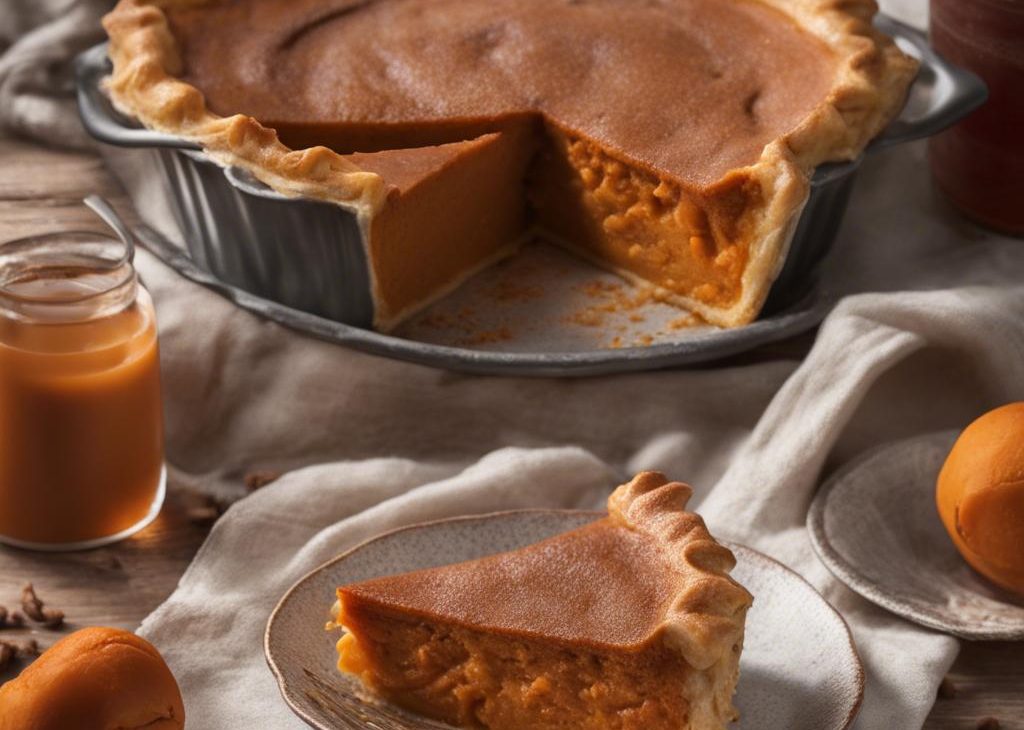
I make Brown Sugar Sweet Potato Pie when I want a pie that tastes rich but not heavy. The filling is smooth, warmly spiced, and sweetened with brown sugar, which gives it a deeper flavor than plain white sugar.
Sweet potato pie rewards patience in two places: the potatoes need to boil until they are truly soft, and the baked pie needs to cool until the center sets. I have rushed both steps before, and the texture was never as silky.
This version uses heavy cream, two eggs, a little flour, and warm spices. I serve it with whipped cream, but I keep the topping light because the pie itself has plenty to say.
Why I keep coming back to this
- Boiled sweet potatoes blend into a smooth filling without roasting time.
- Brown sugar adds a molasses note that fits the spices.
- A small amount of flour helps the custard slice cleanly.
- The crust chills while the filling is made, which helps reduce shrinking.
- The pie keeps well in the refrigerator for several days.
- It feels at home on a holiday table but is simple enough for a weekend bake.
What you need (and what each one is doing)
- Unbaked flaky pie crust. I use one 9-inch crust and keep it cold before filling.
- Egg wash. One egg beaten with milk or cream gives the crust edge a glossy brown finish.
- Sweet potatoes, 1 lb. About 2 medium potatoes. I boil until a knife slides through with no resistance.
- Butter, 6 Tablespoons. Soft butter blends into the warm potatoes and makes the filling taste round.
- Brown sugar, 1 cup. I prefer dark brown sugar, but light works too.
- Heavy cream, 1/2 cup. It makes the custard smooth and rich.
- Eggs, 2 large, and flour, 2 Tablespoons. These help the filling set without becoming stiff.
- Vanilla, cinnamon, nutmeg, cloves, ginger, and salt. The spice mix is warm, not aggressive. Salt keeps the sweetness balanced.
- Whipped cream. Optional, but I like a small spoonful on each slice.
How I make it
Step 1 — Prep the ingredients
I make the pie dough ahead because it needs at least 2 hours in the refrigerator. When it is cold, I roll it into a 12-inch circle and fit it into a 9-inch dish.
Step 2 — Boil the sweet potatoes
I cover the potatoes with water and boil them 45-50 minutes. They should be soft all the way through, not just tender at the edges.
Step 3 — Chill
I fold the excess dough back over the edge to make a thick rim, crimp it, brush with egg wash, and chill it at least 15 minutes while I finish the filling.
Step 4 — Blend the filling
After draining and cooling the potatoes briefly, I peel them and beat or blend them until smooth. Then I add butter, brown sugar, cream, eggs, flour, vanilla, spices, and salt and blend again.
Step 5 — Bake
I spread the filling into the crust and bake at 350°F (177°C) for 55-60 minutes. The center should jiggle only slightly, and a toothpick should come out mostly clean.
Step 6 — Cool and serve
I cool the pie for at least 2 hours. The filling sinks a bit and sets as it cools, which is exactly what I want before slicing.
Tips from my kitchen
- Boil until very soft. Firm sweet potato pieces leave a stringy filling.
- Blend longer than you think. I stop only when the filling looks completely smooth.
- Chill the shaped crust. That short chill helps keep the edge from shrinking.
- Shield the crust. If the rim browns early, I use foil or a pie shield.
- Cool before cutting. Warm sweet potato pie can slump on the plate.
Variations I have actually tried
- Dark brown sugar: I use it for the deepest flavor.
- Maple cream: I add a little maple syrup to the whipped cream for serving.
- Less spice: I skip cloves if serving people who prefer a gentler pie.
- Gingersnap edge: I sprinkle crushed gingersnaps around the whipped cream for crunch.
- Orange hint: I add 1 teaspoon orange zest to the filling with the vanilla.
Little details I do not skip
- I read the method before touching a bowl. A few of these recipes move quickly once heat, dough, filling, or frosting is involved, and I cook better when I know the next two steps.
- I set out the measured ingredients. It keeps me from hunting for vanilla, salt, parchment, a towel, or a pan while butter is browning or batter is waiting.
- I trust texture along with the clock. Times matter, but I also watch for the dough, filling, sauce, or topping to look and feel the way the step describes.
- I let things cool or rest when the recipe asks. That pause is usually when structure develops, slices clean up, frosting behaves, or flavors settle.
- I make one small note after cooking. If my oven runs hot, my skillet browns fast, or a dough needs another minute, I write it down for next time.
Storing and serving
I refrigerate leftover pie tightly covered for up to 5 days. I serve it cold or let slices sit at room temperature for 20 minutes. I do not microwave it unless I want a softer custard texture.
How I like to serve it
My favorite serving is a chilled slice with softly whipped cream and a dusting of cinnamon. For a holiday dessert table, I slice it small because sweet potato pie is dense and satisfying.
My prep rhythm
I do best when I separate the recipe into setup, cooking, and finishing instead of treating it as one long job. I clear a landing spot for hot pans or finished pieces, put a cooling rack nearby when needed, and keep a clean towel within reach. If the recipe includes chilling, freezing, filling, frosting, or slicing, I plan that time before I promise dessert or dinner. I also taste or smell when it makes sense: brown butter should smell nutty, fruit should smell ripe, and frosting should taste balanced before it goes on anything. I check the serving dish early, too, because a finished dessert or warm stack of tortillas waits for no one while I search for the right plate. When I am making a recipe for guests, I give myself a small buffer instead of aiming to finish at the exact minute everyone wants to eat. That extra cushion keeps me from cutting too soon, frosting too warm, or rushing a pan off the heat. I would rather serve five minutes later than fix a rushed mistake. That sounds fussy, but it makes the actual cooking feel calm and keeps small problems from turning into big ones.
Frequently asked questions
Can I roast the sweet potatoes instead?
Yes. Roasting gives a deeper flavor, but I still mash or blend until completely smooth and measure about 1 lb cooked sweet potato.
Why did my filling crack?
It may have baked a little too long. I pull the pie when the center still has a slight jiggle.
Can I make it ahead?
Yes. I bake it the day before, cool it, cover it, and refrigerate.
Can I use canned sweet potato puree?
You can, but I prefer fresh because the texture and flavor are better. If using canned, make sure it is plain.
Do I need the flour?
I keep it in because it helps the filling slice neatly without changing the flavor.
This is the pie I make when I want brown sugar, spice, and a clean slice on the same plate.