
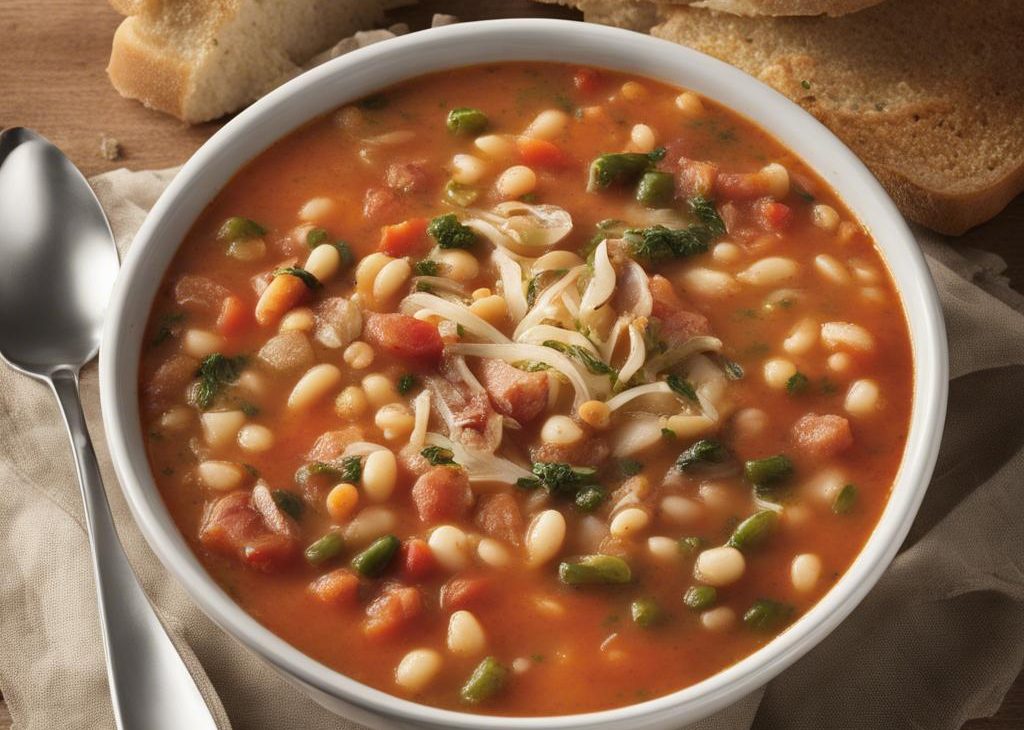
I treat this as a big stockpot soup, not a two-bowl recipe. The vegetables, beans, and stock fill my largest pot quickly, so I treat it as a generous batch and freeze leftovers.
I keep this version practical: I want the Carrabba's Minestrone Soup to taste right, look right, and be repeatable on a normal day. The timing is a guide, but I pay just as much attention to texture, aroma, color, and how the mixture moves in the pan or blender — those details save dinner more often than a timer does.
I heat a large stock pot over medium-high heat. Add the butter and olive oil to the pan and let it melt.
Once the butter is melted, add in the celery, onion, carrots, garlic and prosciutto. Cook for 5 minutes, stirring occasionally, until vegetables are softened.
I add the green beans, cabbage and zucchini to the pot. Cook for an additional 5 minutes, stirring occasionally.
I pour in the chicken stock, dried parsley, dried basil, tomatoes and season with salt and pepper to taste. Stir to combine all ingredients together. Bring soup to a boil, then reduce heat and let simmer for 20 minutes. Add the potatoes, garbanzo beans, kidney beans, and pecorino romano rind to the pot and let simmer for an additional 20 minutes or until the potatoes are tender.
I remove bay leaf from soup, then add grated Pecorino Romano cheese. Stir to combine and let the cheese melt. Serve individual bowls of soup with extra Pecorino Romano cheese on top if desired.
I keep going until it looks right.
I cool the soup in shallow containers and refrigerate it for up to 5 days. The vegetables and beans keep absorbing broth, so I loosen leftovers with water or stock while reheating.
Yes. I prep the parts that benefit from resting, chilling, or slow cooling first. If texture matters, I wait to add crisp toppings, drizzles, ice, or fresh garnishes until serving.
I watch the cue that changes fastest: browning for baked recipes, thickness for sauces, tenderness for meats, and texture for drinks. A timer helps, but the food gives the final answer.
Yes. I adjust in small amounts, then taste again. It is easy to add more sugar, vinegar, salt, chile, or liquid; it is much harder to take it back out.
I loosen it gradually. For sauces and soups I use water or stock; for drinks I use the main liquid; for batters and fillings I only adjust if the recipe already allows it.
I do not rush cooling, chilling, or resting. Those quiet minutes are often when cookies firm up, pies set, cheesecakes smooth out, and sauces cling properly.
If you make this Carrabba's Minestrone Soup, I would love to hear what you changed. I keep notes every time I cook, because the small real-life adjustments — the pan size, the ripeness, the extra minute on the stove — are what make a recipe dependable.
One more practical note from my kitchen: I set out every ingredient before I start, especially for recipes with caramel, hot sauce, or fast blender steps. That little bit of order keeps me from overcooking one part while searching for the next, and it makes the whole recipe feel calmer.
Measure before starting.
Use the visual cues, not only the clock.
Cool or rest fully when directed.
Taste and adjust at the end.


