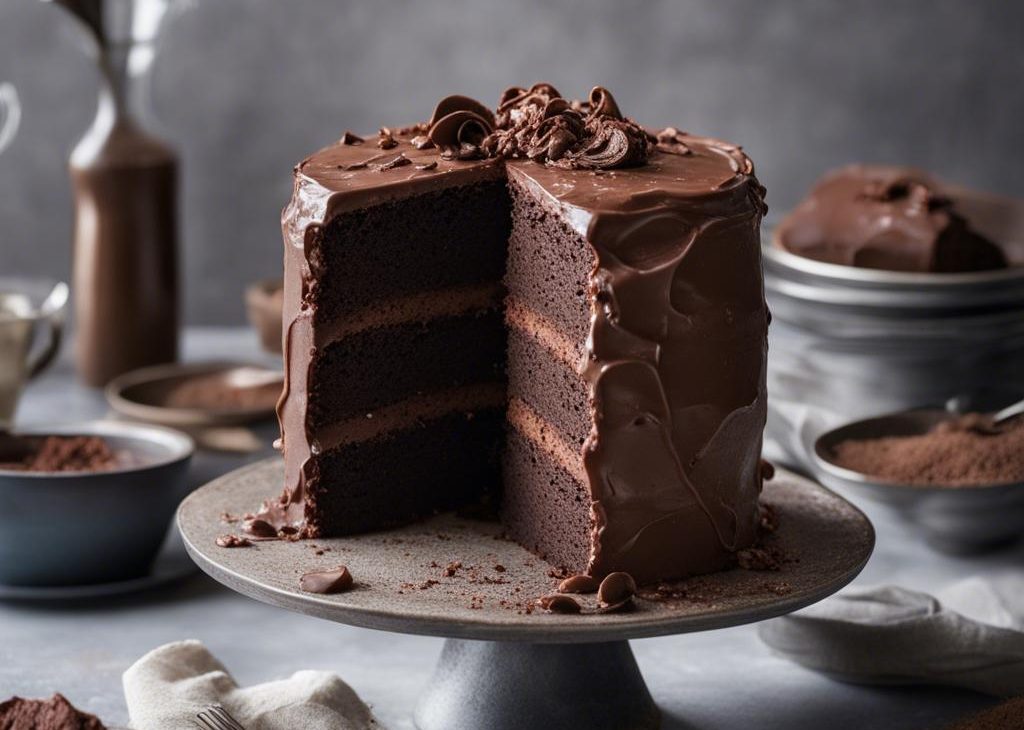
I make this blackout cake when the table wants chocolate on chocolate, not a polite little cocoa hint. It has pudding, cake layers, and frosting, so I clear the counter before I start.
The part that matters most is cooling. Warm pudding slides, warm cake tears, and warm frosting gets streaky. I build it only after each piece has had time to settle.
It is a project, but the kind I enjoy on a weekend afternoon. I slice it cold because the layers hold cleaner and the chocolate flavor tastes deeper.
Why I keep coming back to this
- It respects the source. I keep the listed amounts and times close, then focus on clean prep and better pacing.
- The flavor has a clear direction. Cheesecake Factory-style blackout cake tastes best when the main ingredient is not buried under random extras.
- I can prep in stages. Measuring, chopping, chilling, or cooling ahead makes the final cooking feel calm.
- The texture is easy to read. I watch for bubbling, crisp edges, a set center, or glossy dressing instead of trusting the clock blindly.
- It scales with care. If I make more, I use a wider pan or extra bowl rather than piling everything deeper.
- Leftovers are manageable. I know how to store it without ruining the best part of the dish.
What you need and why it matters
- 2 cups boiling water.
- 1/4 teaspoon kosher salt (for pudding).
- 2 tablespoons cocoa powder (1 tablespoon Dutch cocoa and 1 tablespoon dark cocoa).
- 3 tablespoons cold water (for cornstarch slurry).
- 1 ounce chocolate chips.
- 1 teaspoon pure vanilla extract (for pudding).
- 4 tablespoons cornstarch (for pudding thickness).
- 2 tablespoons unsalted butter or vegan baking stick (for pudding).
- 3/4 cup plus 1 tablespoon granulated sugar (for pudding).
- 1 1/2 cups gluten-free flour with xanthan gum. This gives structure, so I keep the amount steady and do not overwork it.
- 1 tablespoon white vinegar.
- 1 1/2 teaspoons baking soda.
- 4 tablespoons vegetable oil.
- 3/4 teaspoon salt (for cake batter).
- 4 heaping tablespoons cornstarch (mixed with 6 tablespoons water).
- 3/4 cup cocoa powder (1/2 cup Dutch cocoa and 1/4 cup dark cocoa).
- 1 cup milk.
- 3/4 teaspoon baking powder.
- 1 cup warm water.
- 1 1/2 cups granulated sugar (for cake batter).
- 1 teaspoon pure vanilla extract (for cake batter).
- 3 1/2 cups confectioners sugar (for frosting).
- 2 teaspoons pure vanilla extract (for frosting).
- 3/4 cup unsalted butter or vegan baking stick (for frosting).
- 1/2 cup room-temperature water (for frosting consistency).
- 1 cup cocoa powder (1/2 cup natural or Dutch cocoa and 1/2 cup dark cocoa).
How I make it
Step 1 — Whisk the cornstarch
I make the pudding first by whisking 4 tablespoons cornstarch with 3 tablespoons cold water, then stirring it into 2 cups boiling water with 1/4 teaspoon kosher salt. I take a minute here to clear the counter because rushing the first step usually costs me time later.
Step 2 — Cook the mixture
I add 1 ounce chocolate chips, 2 tablespoons cocoa powder, 1 teaspoon vanilla, 2 tablespoons butter, and 3/4 cup plus 1 tablespoon sugar, then cook until thick and cool it to room temperature.
Step 3 — Preheat the oven
I preheat the oven to 350°F and grease two 9-inch cake pans.
Step 4 — Combine the ingredients
I mix the cake batter with 1 1/2 cups gluten-free flour, 1 tablespoon vinegar, 1 1/2 teaspoons baking soda, 4 tablespoons oil, 3/4 teaspoon salt, the cornstarch-water mixture, cocoa, milk, baking powder, warm water, sugar, and vanilla.
Step 5 — Bake
I divide the batter between the pans and bake 25-30 minutes, then cool 10 minutes in the pans and finish cooling on a rack.
Step 6 — Beat until smooth
I beat confectioners sugar, vanilla, 3/4 cup butter, 1/2 cup water, and 1 cup cocoa powder into a smooth frosting.
Step 7 — Chill
I layer one cake with pudding, add the second cake, frost the top and sides, and chill at least 1 hour before slicing. I do the last visual check before serving, because that is when small fixes are easiest.
Tips from my kitchen
- Cool the pudding until it is no longer warm to the touch before assembly.
- Line the cake pans with parchment if your pans tend to grip chocolate batter.
- I chill the frosted cake before cutting because the pudding layer behaves better cold.
- Use a long thin spatula for frosting; a short knife pulls crumbs into the icing.
Variations I have actually tried
- Use: all Dutch cocoa for a rounder, less sharp chocolate flavor.
- Add: a thin layer of mini chocolate chips over the pudding before the second layer.
- Make: the frosting with vegan baking stick if that is what the table needs.
- Add: espresso powder to the cake batter for a darker chocolate note.
- Serve: with raspberries to cut through the richness.
Storing and reheating
I refrigerate this cake because of the pudding filling. Covered slices keep up to 4 days, and I let each slice sit 10 minutes before serving so the frosting softens.
If the dish has a crisp top or crust, I reheat it uncovered in the oven or air fryer. If it is creamy, saucy, or chilled, I use gentle heat and stop as soon as it loosens. That small choice keeps leftovers from tasting like a different recipe.
What I serve with it
I serve small slices with coffee or cold milk. The cake is rich enough that I do not add a heavy sauce on the plate.
Frequently asked questions
Can I make it ahead?
Yes. I prep the parts that can sit without losing texture, then finish the hot, crisp, or dressed step close to serving.
Can I change the seasoning?
Yes, but I change one direction at a time. I add heat, herbs, or extra garlic separately so the main flavor still comes through.
How do I keep the texture right?
I follow the visual cues more than the clock. If the center is loose, the coating is pale, or the sauce is thin, I give it more time.
What should I do with leftovers?
I cool leftovers quickly and cover them tightly. Crisp foods go back in the oven; creamy foods get gentle heat and a stir.
Can I double the recipe?
Usually, yes. I use a wider pan or two pans instead of making one deep pan, because extra depth changes cooking time.
If you make Cheesecake Factory-style blackout cake, tell me what you changed or what you served with it; I always like hearing the practical kitchen notes.