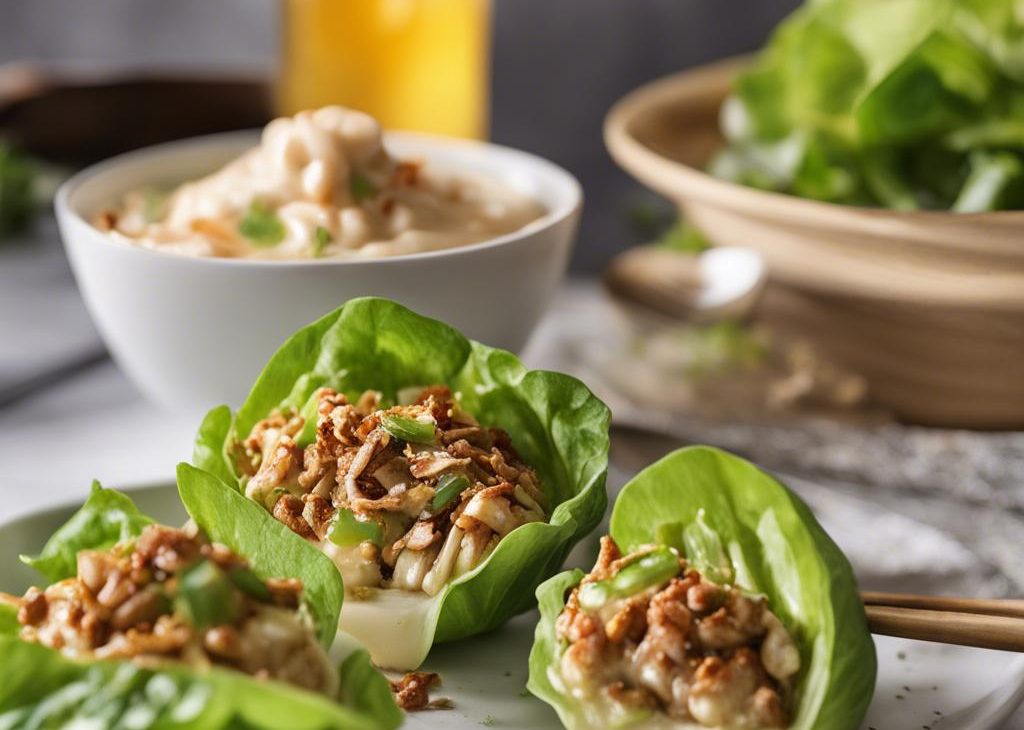
I make these Thai lettuce wraps when I want a hands-on dinner that still feels fresh. The chicken marinates in coconut milk, lime, garlic, cilantro, salt, and red pepper, then gets tucked into butter lettuce with peanut sauce.
The biggest mistake I made early on was overfilling the leaves. Butter lettuce is tender, so I keep the chicken pieces modest and add toppings in pinches.
I prep the peanut sauce while the chicken cooks. That keeps the lettuce cold and crisp until the final minute.
Why I keep coming back to this
- It respects the source. I keep the listed amounts and times close, then focus on clean prep and better pacing.
- The flavor has a clear direction. Cheesecake Factory-style Thai lettuce wraps tastes best when the main ingredient is not buried under random extras.
- I can prep in stages. Measuring, chopping, chilling, or cooling ahead makes the final cooking feel calm.
- The texture is easy to read. I watch for bubbling, crisp edges, a set center, or glossy dressing instead of trusting the clock blindly.
- It scales with care. If I make more, I use a wider pan or extra bowl rather than piling everything deeper.
- Leftovers are manageable. I know how to store it without ruining the best part of the dish.
What you need and why it matters
- 1/4 teaspoon crushed red pepper flakes.
- 1/2 teaspoon garlic powder (for marinade).
- 1/2 teaspoon kosher salt (for marinade).
- 1/2 tablespoon extra-virgin olive oil.
- 7 ounces unsweetened coconut milk (about 1/2 can, shaken).
- 1/2 tablespoon dried cilantro.
- 1/2 package chicken tenderloins. This is the savory backbone, and I cook or season it before it gets folded into anything else.
- 2 tablespoons fresh lime juice (for marinade).
- 1/4 teaspoon kosher salt (for sauce).
- 1/2 tablespoon Sriracha.
- 2 tablespoons soy sauce.
- 2 tablespoons fresh lime juice (for sauce).
- 3/4 teaspoon garlic powder (for sauce).
- 2 tablespoons natural peanut butter.
- 2 teaspoons sesame oil.
- 1/2 tablespoon honey. This handles sweetness and texture, and a little extra can change the balance quickly.
- Asian cucumber salad (for topping).
- shredded carrots (for topping).
- sesame seeds (for topping).
- 1/2 head butter lettuce (leaves separated).
- fresh cilantro (for topping).
How I make it
Step 1 — Combine the ingredients
I combine chicken tenderloins with coconut milk, 2 tablespoons lime juice, olive oil, dried cilantro, 1/2 teaspoon garlic powder, 1/2 teaspoon kosher salt, and red pepper flakes. I take a minute here to clear the counter because rushing the first step usually costs me time later.
Step 2 — Combine the base
I cover and marinate the chicken for at least 1 hour, or overnight if I am planning ahead.
Step 3 — Stir the peanut butter
I stir peanut butter, sesame oil, soy sauce, 2 tablespoons lime juice, 3/4 teaspoon garlic powder, Sriracha, honey, and 1/4 teaspoon salt into a smooth sauce.
Step 4 — Prepare the pan
I preheat the oven to 375°F, grease a baking sheet, and bake the marinated chicken for 20 minutes, flipping halfway through.
Step 5 — Chop the cilantro
I wash and dry the butter lettuce, shred carrots, chop cilantro, and get the cucumber salad ready.
Step 6 — Finish and serve
I toss the cooked chicken with peanut sauce, then tuck it into lettuce leaves with carrots, cilantro, sesame seeds, and cucumber salad. I do the last visual check before serving, because that is when small fixes are easiest.
Tips from my kitchen
- Dry the lettuce leaves very well so they do not tear in your hand.
- Marinate in a shallow dish so every tenderloin touches the coconut mixture.
- I warm thick peanut sauce for a few seconds if it will not stir smooth.
- Serve the toppings in little piles so each wrap can be built fresh.
Variations I have actually tried
- Grill: the chicken instead of baking it.
- Use: romaine hearts if butter lettuce is too delicate.
- Add: chopped peanuts for crunch.
- Use: maple syrup in the sauce instead of honey.
- Add: thin jalapeno slices for extra heat.
Storing and reheating
I store chicken, sauce, lettuce, and toppings separately for up to 3 days. Built wraps do not hold well because the lettuce wilts.
If the dish has a crisp top or crust, I reheat it uncovered in the oven or air fryer. If it is creamy, saucy, or chilled, I use gentle heat and stop as soon as it loosens. That small choice keeps leftovers from tasting like a different recipe.
What I serve with it
I serve the wraps on a platter with extra peanut sauce. A small bowl of rice turns them from appetizer to dinner.
Frequently asked questions
Can I make it ahead?
Yes. I prep the parts that can sit without losing texture, then finish the hot, crisp, or dressed step close to serving.
Can I change the seasoning?
Yes, but I change one direction at a time. I add heat, herbs, or extra garlic separately so the main flavor still comes through.
How do I keep the texture right?
I follow the visual cues more than the clock. If the center is loose, the coating is pale, or the sauce is thin, I give it more time.
What should I do with leftovers?
I cool leftovers quickly and cover them tightly. Crisp foods go back in the oven; creamy foods get gentle heat and a stir.
Can I double the recipe?
Usually, yes. I use a wider pan or two pans instead of making one deep pan, because extra depth changes cooking time.
If you make Cheesecake Factory-style Thai lettuce wraps, tell me what you changed or what you served with it; I always like hearing the practical kitchen notes.