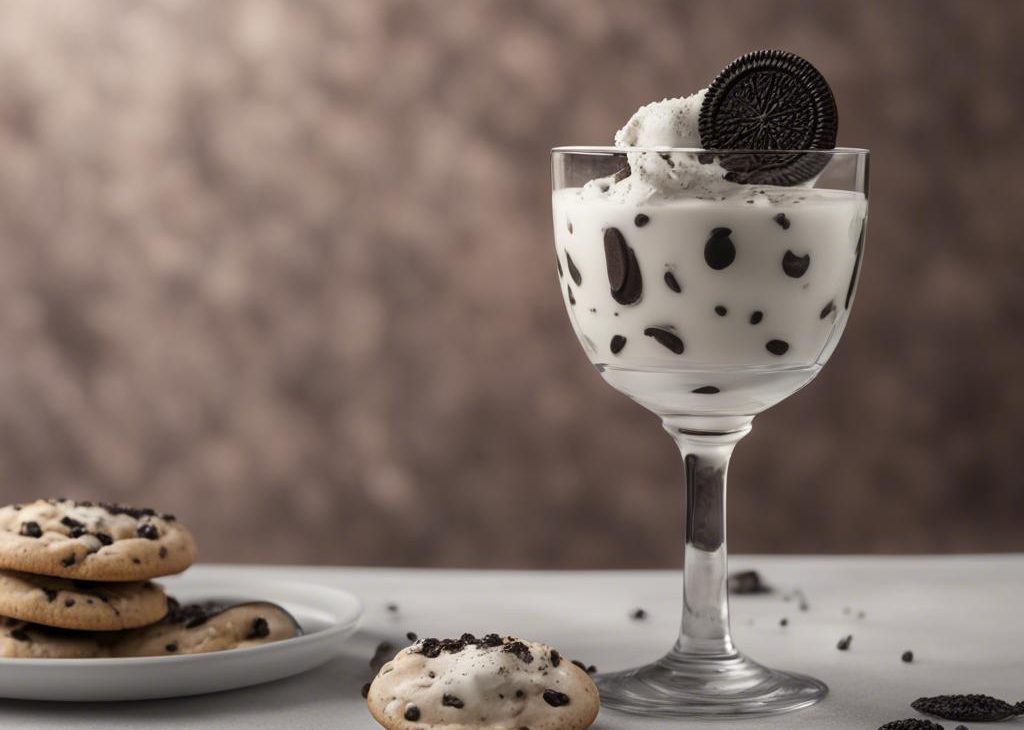
I treat this Cookies and Cream Cocktail like dessert in a glass, not a drink to rush through. It is creamy, sweet, and cold, with a crushed sugar cookie rim that makes the first sip taste like a bakery counter.
The first time I made it, I learned that the rim needs to be set up before the shaker comes out. Corn syrup is sticky in the best way for cookie crumbs, but it is messy if I try to do it after the drink is mixed.
I serve this in small glasses over ice because the cream and liqueurs are rich. Two servings feels right to me: enough for a sweet finish without turning the drink into a milkshake.
Why I keep coming back to this
- Heavy cream gives the cocktail body without needing ice cream or a blender.
- Brown sugar dissolves into the shaker and gives a warmer sweetness than white sugar.
- Irish cream and creme de cacao bring the cookies-and-cream flavor in different ways.
- A cookie crumb rim adds texture, so the drink is not just creamy.
- The recipe is fast once the glasses are rimmed.
- It works well as an after-dinner drink when I do not want to bake dessert.
What I use and why it matters
I like to line up the ingredients for Cookies and Cream Cocktail before I start. It keeps me from rushing, and it also makes the small texture cues easier to notice.
- 2 tablespoons brown sugar. so the mixing goes smoothly. It does more than sweeten—it helps browning and affects how tender the final texture is.
- 4 oz heavy cream. so the mixing goes smoothly.
- 2 teaspoons vanilla extract. so the mixing goes smoothly. It rounds out the sweetness so the recipe does not taste one-dimensional.
- 2 oz Bailey's Irish Cream. so the mixing goes smoothly.
- corn syrup. for the glass rim
- 2 oz creme de cacao. so the mixing goes smoothly.
- crushed sugar cookies. for the rim and garnish
How I make it
Step 1 — Rim the glasses
I brush or dip the rim of each glass in a thin layer of corn syrup, then press it into crushed sugar cookies on a plate. I do this gently so the rim is coated but not dripping.
Step 2 — Fill the shaker
I add brown sugar, heavy cream, vanilla, Bailey's Irish Cream, and creme de cacao to a cocktail shaker with plenty of ice. The ice matters because the drink needs a hard chill.
Step 3 — Build the flavor
I shake vigorously until the outside of the shaker feels frosty. That usually takes 15-20 seconds. The sugar should dissolve and the cream should look slightly aerated.
Step 4 — Cook
I fill the prepared glasses with fresh ice, strain the cocktail over the top, and finish with a whole sugar cookie or another pinch of crushed cookie crumbs.
The cues I watch for
The rim should have a thin, even cookie coating. If I use too much corn syrup, cookie crumbs slide down the glass instead of staying on the edge.
The cocktail should be served right after shaking. If it sits too long, the cream loses its cold lift and the drink tastes heavier.
Tips from my kitchen
- Use fresh ice. I shake with ice, then pour over new ice so the glass looks clean.
- Crush cookies finely. Big pieces fall off the rim.
- Shake hard. Cream needs a strong shake to feel light.
- Serve small. This is rich, so I keep the pours modest.
Variations I have actually tried
- Chocolate rim: I mix cocoa powder into the cookie crumbs.
- Vanilla vodka: I add 1 ounce and split the cocktail into smaller pours.
- Coffee note: I replace 1 ounce creme de cacao with coffee liqueur.
- Less sweet: I reduce the brown sugar to 1 tablespoon.
- Mocktail-style: I skip the liqueurs and shake cream, milk, vanilla, chocolate syrup, and cookie crumbs.
Storing and reheating
I do not store the finished cocktail because cream drinks are best right after shaking. I do crush the cookies and rim the glasses 10 minutes ahead if I am serving guests.
Leftover crushed cookies can go into a sealed jar for another batch, ice cream topping, or a quick yogurt bowl. I keep them dry so they stay crumbly.
How I like to serve it
I serve this after dinner with a small spoon or straw. It pairs well with salty snacks, dark chocolate, or nothing at all because the drink already acts like dessert.
Frequently asked questions
Can I make it dairy-free?
You can use coconut cream and a dairy-free Irish cream alternative. The texture changes, but the drink still feels creamy.
Can I make it ahead?
I do not shake it ahead. I rim the glasses and measure the liquids, then shake right before serving.
What if I do not have corn syrup?
Honey or simple syrup can work for the rim, though corn syrup holds crumbs with the least dripping.
Is this very strong?
It tastes mild because of the cream and sugar, but it still contains alcohol. I serve it as a slow dessert drink.
Can I use Oreos for the rim?
Yes. I use sugar cookies for a lighter rim, but crushed Oreos make a darker, more chocolate-heavy version.
If you try it, I would like to hear whether you used sugar cookies or Oreos on the rim.
When I write this kind of recipe down for myself, I include the small things that are easy to forget: how the mixture should look, when the pan should be turned down, and what I would do differently if the ingredients were slightly different. Those notes are not fancy, but they are what help me repeat the dish on a busy night.
I also try to leave a little room for judgment. Ovens run hot, skillets heat unevenly, and produce changes from week to week. I use the listed times as my starting point, then I look for the color, aroma, thickness, or tenderness described above before I call the recipe done.
What I check before I call it done
Before I serve it, I slow down for one final look. I check texture first, then seasoning, then temperature. That order saves me from fixing the wrong thing. A dish can have enough salt and still feel unfinished if it needs a few more minutes in the pan, a longer chill, or a cleaner cut.
I also think about what will happen after it sits for 10 minutes. Creamy fillings firm up, fried edges soften, and hot pans keep cooking even after they leave the heat. When I account for that carryover, I get a result that tastes right at the table instead of only looking right in the kitchen.
- Texture: I look for the cue in the instructions before trusting the timer.
- Seasoning: I taste a small bite and adjust with salt, citrus, or sweetness only if the recipe calls for that direction.
- Serving: I add fresh herbs, crumbs, sauce, or garnish at the end so they stay distinct.
I keep that final pause because it makes the recipe easier to repeat next time.