
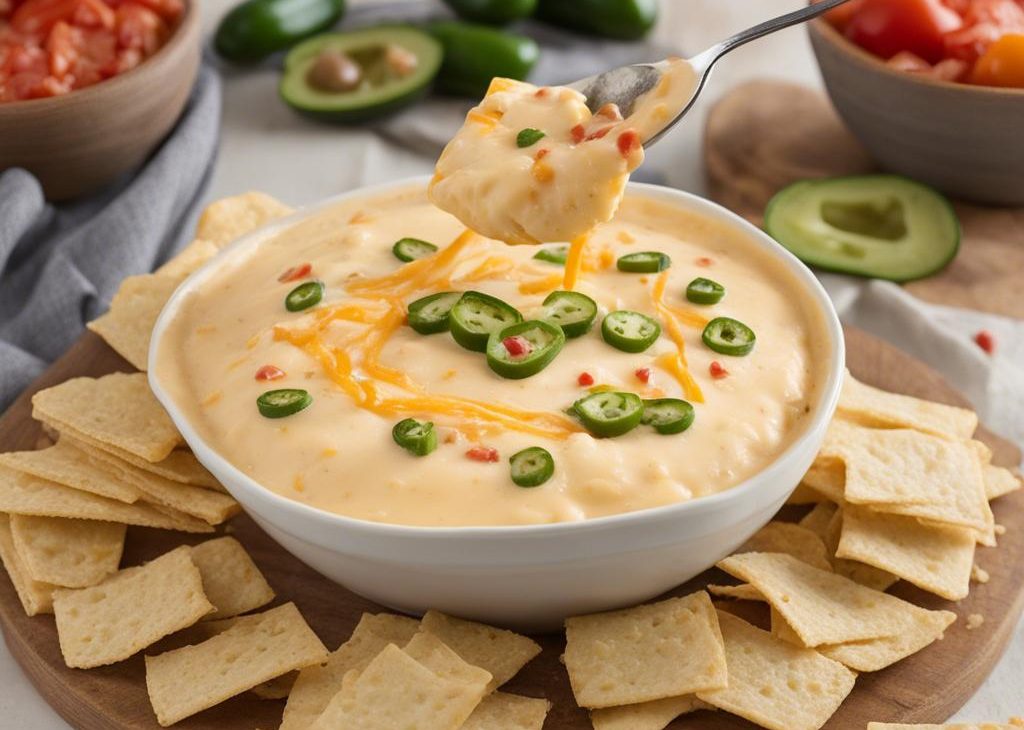
This Costa Vida Queso is the small-batch cheese dip I make when I want something hot and scoopable without setting up a slow cooker. I started making it after too many takeout cups disappeared before the tacos were on plates.
The first time I made it, I rushed the cheddar and ended up with stringy bits on the spoon. Now I melt the Velveeta first, lower the heat, and add the cheddar by handfuls.
I like the way salsa, tomato, and spices cut through the dairy. It is rich, but it does not taste flat, and it belongs with chips, nachos, tacos, and burrito bowls.
I also like knowing where a recipe can go sideways before I start. With this one, I slow down at the spots that affect texture: heat level, mixing, moisture, or chilling. That sounds fussy, but it is really just the difference between a result I want to repeat and one I only tolerate because the ingredients were already used.
I measure the cheeses, salsa, and spices before I turn on the burner. Queso moves quickly once the dairy warms, and I do not want to leave a hot pan while I dice a tomato or search for jalapenos.
I heat the half-and-half in a medium saucepan until small bubbles show at the edge, then I lower the heat before it boils hard.
I add the Velveeta and stir until the base looks smooth, dragging the spoon along the bottom where cheese likes to settle.
I stir in the cheddar by handfuls, letting each addition melt before adding more. This keeps the sauce smoother.
I add tomato, salsa, cream cheese, jalapenos, cumin, cayenne, and chili powder, then stir until the cream cheese disappears.
I simmer on low for 5 minutes, stirring often. If it thickens too much, I add a spoonful of half-and-half and serve it hot.
At the end, I look for a smooth spoon trail and a glossy surface. If the queso drags heavily across the pan, I loosen it with half-and-half before serving.
I keep variations small the first time I test them. One swap tells me something useful; five swaps at once just leave me guessing. After I know the base recipe, I am much more relaxed about changing the heat, nuts, herbs, fruit, or serving style.
I cool leftover queso, spoon it into a covered container, and refrigerate it for up to 3 days. It firms when cold, and that is normal.
To reheat, I use short microwave bursts, stirring every 20-30 seconds. On the stovetop, I use low heat and a splash of half-and-half. I do not boil reheated queso.
If I serve it with dinner, I keep it in a warm bowl and let people drizzle their own.
Yes, though I like it best fresh. I reheat it gently with a splash of half-and-half and stir until it smooths out again.
The heat was probably too high or the cheddar went in too quickly. Low heat and small handfuls of cheese fix most problems.
Whole milk works, but the sauce is thinner. I add a little extra cream cheese if I use milk.
The queso usually is, but I still check the cheese, salsa, spices, and chips because labels vary.
I do not freeze this dip. The dairy can thaw watery and separated, and a fresh small batch is easier.
When I make it again, I jot down the salsa brand and how hot the jalapenos were. Those two details explain why one batch tastes mellow and another needs a bigger bowl of chips.
If you make this Costa Vida Queso, tell me what salsa you used because that one choice changes the whole bowl.
A warm, spoonable Costa Vida queso with Velveeta, cheddar, salsa, jalapenos, tomato, and cream cheese. I keep the heat low so the dip stays creamy enough for chips, tacos, or nachos.
Keep the heat low. Cheese dip gets grainy when it is pushed too hard.
Add cheddar gradually. Handfuls melt cleaner than one big pile.
Taste before salting. Salsa, chips, and processed cheese all bring salt.
Reheat gently. Short microwave bursts with stirring keep the sauce smoother.


