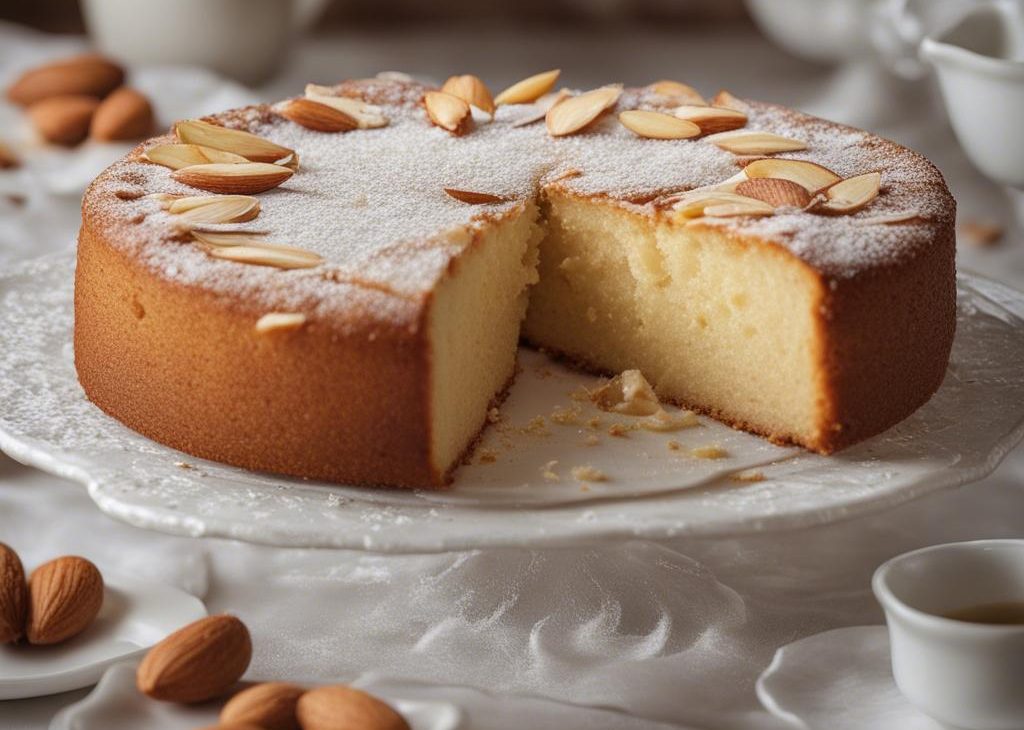
This Costco Almond Cake is the buttery small cake I make when I want dessert without building a layer cake project around it. It has a plain-looking crumb, a strong almond scent, and sliced almond crunch.
The ingredient list is short, so the mixing matters. Soft butter matters. Eggs go in one at a time. Almond extract is powerful, and I measure it instead of pouring from the bottle.
I think of this as a pantry cake with a bakery mood. It is sweet, but it does not need frosting, and once cooled it slices neatly with tender golden edges.
Why I keep coming back to this
- It uses one cup of flour and basic baking staples.
- Almond extract gives clear almond flavor without grinding nuts.
- Softened butter makes the crumb tender.
- Sliced almonds keep the cake from feeling plain.
- The two-serving yield is useful when I do not want a full cake.
- It works plain, with berries, or with a little whipped cream.
I also like knowing where a recipe can go sideways before I start. With this one, I slow down at the spots that affect texture: heat level, mixing, moisture, or chilling. That sounds fussy, but it is really just the difference between a result I want to repeat and one I only tolerate because the ingredients were already used.
What you need (and what each one is doing)
- 1/4 cup sliced almonds.
- 1/2 cup unsalted butter. I use it for richness and body, and I make sure it is the texture the method needs before I start.
- 3/4 cup granulated sugar. It balances the recipe and helps the texture, but I measure it instead of adding by eye.
- 1/4 teaspoon kosher salt.
- 1 1/2 teaspoons almond extract.
- 1 teaspoon baking powder.
- 1 cup all-purpose flour. It gives structure; I spoon and level it because a packed cup can make the result dry.
- 2 large eggs. It binds the mixture and helps the finished dish hold together when sliced or rolled.
I set out the butter and eggs early, then measure the almond extract with a real spoon. This cake is simple enough that small choices show up clearly in the crumb, especially after it cools. I also scrape the bowl twice, because the dense streak of butter on the side is the bit that can leave a greasy pocket in a small cake.
How I make it
Step 1 — Prep the oven and pan
I preheat the oven to 350°F (175°C), butter the pan, and line the bottom with parchment if I want easy removal.
Step 2 — Whisk together
I whisk flour, baking powder, and kosher salt so the leavener is not hiding in one spot.
Step 3 — Cream butter and sugar
I beat softened butter with sugar until lighter and a little fluffy, scraping the bowl because butter clings to the sides.
Step 4 — Add eggs and almond extract
I beat in eggs one at a time, then add almond extract. If the batter looks slightly curdled, the flour brings it back.
Step 5 — Fold and bake
I stir in dry ingredients just until flour disappears, fold in almonds, spread the batter in the pan, and bake 35 minutes.
At the end, I press the center lightly and look for a gentle spring. A tester should bring moist crumbs, not wet batter, and the edges should smell toasted. I let the cake cool because almond flavor tastes clearer when the butter has settled back into the crumb.
Tips from my kitchen
- Do not melt the butter. Melted butter makes the crumb heavier.
- Measure almond extract. Too much can taste sharp instead of nutty.
- Stop mixing once flour disappears. Overmixing toughens a small cake.
- Cool before slicing. Warm almond cake crumbles at the edges.
- Use fresh baking powder. A small cake shows stale leavener right away.
Variations I have actually tried
- Lemon almond: I add finely grated lemon zest with the sugar.
- Berry top: I scatter a small handful of raspberries over the batter.
- Vanilla-softened: I replace 1/2 teaspoon almond extract with vanilla.
- Apricot finish: I brush warm apricot jam over the cooled cake.
- Extra almond crunch: I reserve half the almonds for the top.
I keep variations small the first time I test them. One swap tells me something useful; five swaps at once just leave me guessing. After I know the base recipe, I am much more relaxed about changing the heat, nuts, herbs, fruit, or serving style.
Storing and reheating
Once the cake is cool, I cover it and keep it at room temperature for 1 day or refrigerate it for up to 4 days. Chilled slices taste better after 15-20 minutes at room temperature.
To rewarm a slice, I use 8-10 seconds in the microwave, just enough to take off the chill. I do not heat it until hot because the almond aroma is nicer slightly warm.
What I serve with it
I serve this with coffee, black tea, berries, lightly sweetened whipped cream, or plain Greek yogurt. For dessert plates, I add sliced strawberries and jam. For breakfast, I keep it simple and call it a coffee cake slice.
Frequently asked questions
Can I use salted butter?
Yes. I skip the 1/4 teaspoon kosher salt if my butter is salted.
Can I make this gluten-free?
A cup-for-cup gluten-free baking blend usually works. I do not use almond flour as a full swap because it changes the structure.
Why did my cake sink in the middle?
It may have needed a few more minutes, the baking powder may be old, or the batter may have been overmixed after the flour went.
Can I reduce the almond extract?
Yes. Use 1 teaspoon for a softer almond flavor. I would not skip it completely because the cake is built around that note.
How do I know it is done?
The center should spring back lightly and a tester should come out with moist crumbs, not wet batter. I start checking at 35 minutes.
When I make it again, I jot down the pan I used and whether the butter was truly soft. Those notes help me keep the next almond cake tender, especially when I switch between a darker metal pan and a lighter one.
If you bake this Costco Almond Cake, tell me whether you served it plain or dressed it up with fruit.