
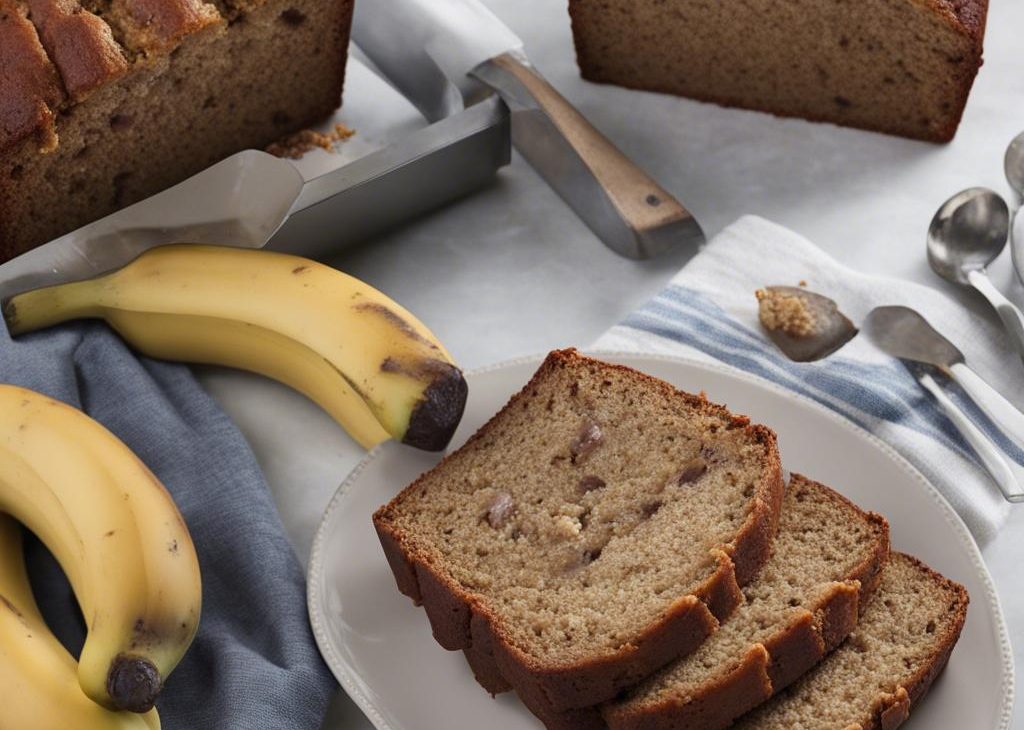
This Costco Banana Bread is the loaf I make when the bananas on the counter have crossed from snack to baking project. I want soft slices, pecan crunch, and enough sweetness to eat it plain.
I have learned not to judge banana bread by the top alone. The crust can look deeply golden while the middle is still gummy, especially when the bananas are very ripe.
The source lists 3 servings, so I treat each piece like a generous bakery-style slice. It is good warm, better after it settles, and excellent toasted the next morning.
I also like knowing where a recipe can go sideways before I start. With this one, I slow down at the spots that affect texture: heat level, mixing, moisture, or chilling. That sounds fussy, but it is really just the difference between a result I want to repeat and one I only tolerate because the ingredients were already used.
I measure the mashed banana after mashing and set out the dry ingredients before mixing. Banana bread punishes guessing with a gummy center, so I keep that cup honest.
I preheat the oven to 350°F (175°C) and grease a loaf pan. If I worry about sticking, I add parchment.
I beat softened butter with granulated sugar and light brown sugar until the mixture looks creamy instead of clumpy.
I mix in the beaten egg, then vanilla, buttermilk or whole milk, and mashed bananas. The batter may look uneven, and that is fine.
In another bowl, I stir flour, baking soda, and salt, then fold that mixture into the banana mixture just until no dry streaks remain.
I fold in pecans, scrape the batter into the pan, smooth the top, and bake 60-70 minutes. I cool it in the pan for 10 minutes, then move it to a rack.
At the end, I test the center of the loaf, not the browned edges. A clean toothpick and a 10-minute pan rest tell me the bread is ready to move.
I keep variations small the first time I test them. One swap tells me something useful; five swaps at once just leave me guessing. After I know the base recipe, I am much more relaxed about changing the heat, nuts, herbs, fruit, or serving style.
I wrap cooled banana bread tightly and keep it at room temperature for 1 day or refrigerate it for up to 5 days. The fridge firms the crumb, but toast brings it back nicely.
For longer storage, I freeze slices individually. I wrap each slice, tuck them into a freezer bag, and freeze for up to 2 months. I thaw at room temperature or toast from frozen.
I like a slice with coffee, cold milk, or yogurt. For dessert, I warm it slightly and add whipped cream. For breakfast, I toast it and add salted butter because the salt wakes up the banana flavor.
Yes. Soft, spotted bananas are best because they mash easily and bring more sweetness and aroma.
Yes. The source allows either. Buttermilk adds tang; whole milk gives a milder loaf.
It may have too much banana, be underbaked, or be overmixed. Measure the 3/4 cup mashed banana and test the center.
Yes. The bread still works without them. I like the crunch, but plain banana bread is useful when nuts are not an option.
A toothpick inserted into the center should come out clean or with a few moist crumbs, not wet batter. The bake window is 60-70 minutes.
When I make it again, I jot down banana ripeness and whether I used buttermilk or whole milk. Those details change the sweetness and crumb more than expected.
If you bake this Costco Banana Bread, tell me whether you used buttermilk or whole milk.
A moist Costco banana bread with mashed banana, buttermilk or whole milk, brown sugar, vanilla, and chopped pecans. I bake it at 350°F until the center is set, then cool it before slicing.
Measure the banana. Too much mashed banana can make the center gummy.
Fold gently. Overmixing toughens the loaf.
Use the center test. The edges set before the middle.
Cool before slicing. The crumb firms as it rests.


