
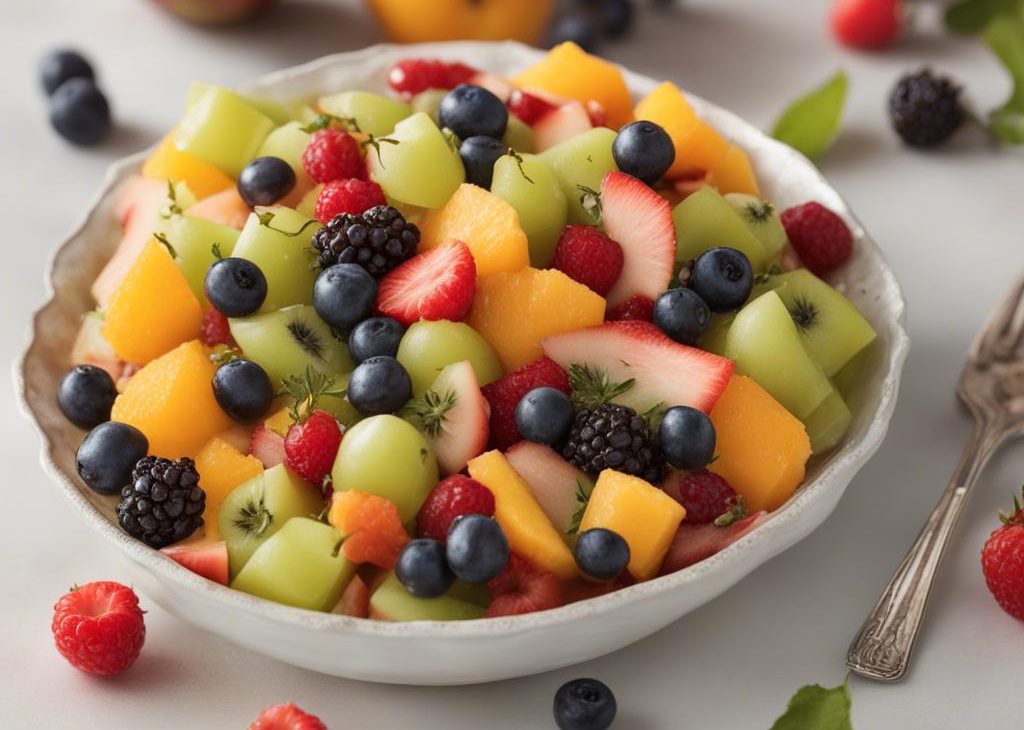
This Costco Fruit Salad is the bowl I make when I want something cold, colorful, and honest on the table without turning on a burner. I like it for brunch, after-school snacks, and those evenings when dinner is heavy and I need a fresh side that does not argue with anything else.
The trick is not complicated, but I have learned that the order matters. I cut the melon first, dry the berries, halve the grapes if they are big, and fold the soft fruit in last. When I rush and dump everything in at once, the strawberries bruise and the bottom of the bowl gets syrupy too fast.
I keep this version close to the Costco-style mix: cantaloupe, honeydew, grapes, strawberries, blueberries, and pineapple. No dressing is required when the fruit is ripe. If one item is a little dull, I fix it with a squeeze of lime rather than covering the whole bowl with sugar.
Before I start Costco Fruit Salad, I take a minute to think about what the recipe is really asking for. Some of these Costco-style recipes are more about careful heating, chilling, or assembly than complicated cooking.
I do not treat the ingredient list as a place to casually rewrite the recipe. The quantities are here for a reason, even when the original source was a little awkwardly parsed. When I want a different result, I change the handling first: I cut pieces smaller, drain something better, warm a sauce more gently, or give the food a few extra minutes to settle before I change the amount of an ingredient.
I start with the cantaloupe and honeydew because they can handle a little movement. I cut both into small cubes, about the size I would want on a spoon, and add them to a large bowl. If the melon is very juicy, I let it sit in a strainer for a minute so the finished salad does not swim.
I add the grapes next, halving any large ones. Then I add the pineapple chunks. Pineapple brings enough acidity to act like a light dressing, so I make sure it is spread through the melon instead of sitting in one corner of the bowl.
I add the strawberries and blueberries last. This is where I slow down. I use a wide spatula and lift from the bottom rather than stirring hard. The goal is an even mix without crushing the berries into the melon.
I cover the bowl and chill it until it tastes cold and refreshing. If the fruit has released juice at the bottom, I give it one gentle fold before serving. I serve it with a slotted spoon when I am taking it to a table where it may sit for a while.
The times in this Costco Fruit Salad method are the frame, but I still pay attention while I cook. I look for the cue that matches the food: fruit should look glossy but not bruised, sauce should thicken enough to coat a spoon, chicken should reach its safe temperature, pasta should stay al dente, and baked desserts should set before I slice them. That habit keeps me from overcorrecting a simple recipe.
I also set up the serving pieces before the final step whenever I can. A hot skillet dish loses its best texture if it waits around, while a chilled salad or pie needs enough cold time to taste settled. Having the plates, bowl, knife, sauce, or side dish ready makes the last few minutes calmer, and the food gets to the table the way I intended.
The other mistake I try to avoid is making the dish harder than it needs to be. If the recipe is a shortcut, I let it be a shortcut and focus on the details that matter most: even pieces, clean heat, enough salt, a dry surface when browning is the goal, and a serving plan that keeps the texture from fading before anyone eats. I would rather do a simple thing carefully than add noise that does not improve the plate.
When I make a variation, I keep the main method steady. I swap one flavor at a time, then pay attention to whether the texture changes. That keeps the recipe dependable, and it also tells me which change actually helped instead of turning dinner into a guessing game.
I store leftovers in a covered glass container in the refrigerator. It tastes best the day I make it, but I still enjoy it the next day over yogurt or oatmeal. If the salad gives off a lot of juice, I drain the bottom before serving again. I do not freeze this one; thawed melon and berries turn limp.
I serve this with breakfast casseroles, grilled chicken, turkey sandwiches, or a simple cheese board. For brunch, I like it in a chilled bowl with tongs or a slotted spoon. For dessert, I spoon it into small cups and add a little whipped cream on the side.
I make it a few hours ahead, but not a full day if I want it to look freshly cut. Melon holds, grapes hold, and pineapple holds, but strawberries soften and tint the juices after several hours.
I usually skip dressing. Ripe pineapple and berries provide enough juice. If the fruit is not very sweet, I add a squeeze of lime or a tiny drizzle of honey and stop there.
I dry washed fruit well and avoid chopping the melon too small. If the bowl sits for a while, I use a slotted spoon for serving so the extra juice stays behind.
I do not use frozen fruit for this salad. Once thawed, it gets soft and stains the fresh fruit around it. Frozen fruit is better for smoothies or compote.
Yes, as written it is vegan and dairy-free. I keep any yogurt, whipped cream, or honey on the side so everyone can choose what they want.
If you make this bowl, tell me which fruit disappears first at your table because mine is always the pineapple.
A cool, no-cook Costco-style fruit salad with cantaloupe, honeydew, grapes, strawberries, blueberries, and pineapple. I keep the pieces small, chill the bowl, and serve it fresh so every spoonful stays bright.
Dry washed fruit well so the salad does not turn watery.
Add strawberries and blueberries last because they bruise fastest.
A squeeze of lime helps if the melon tastes flat.
This salad is best the day it is made.


