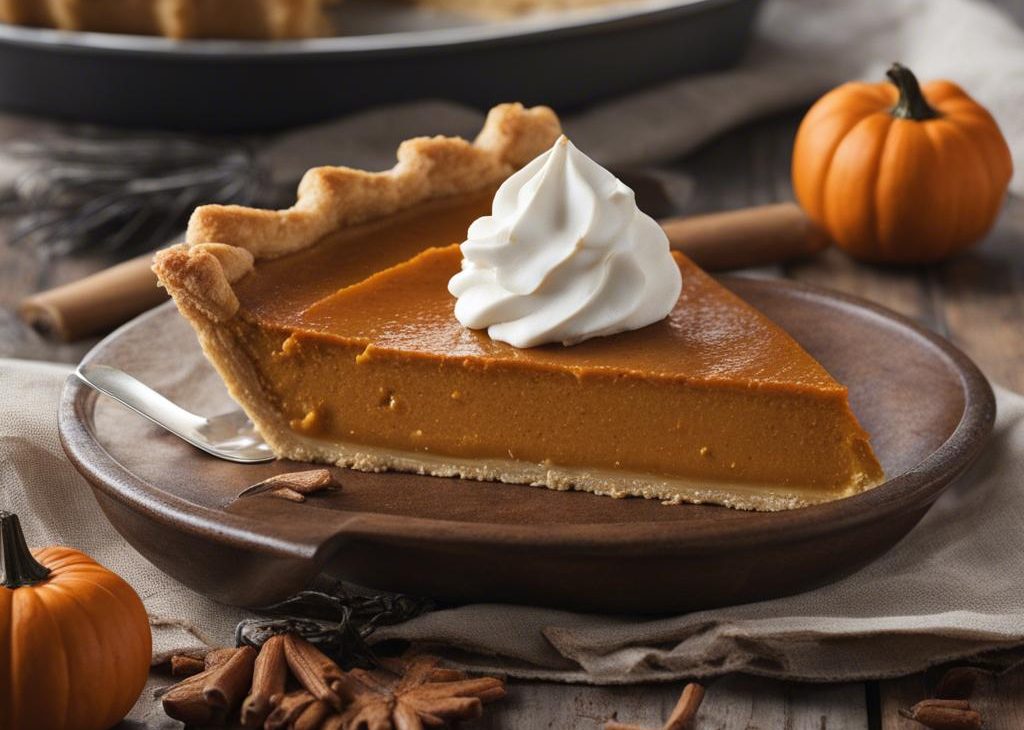
I make this Costco-style pumpkin pie when I want the big creamy flavor of a bakery pie but do not want to make crust from scratch. The filling is the star: pumpkin puree, cream, milk, eggs, vanilla, and enough spice to smell like the holidays before the pie even hits the oven.
The small detail that matters most is blind-baking the crust. I have skipped that step when I was rushing, and the bottom turned pale and soft. Fifteen extra minutes with pie weights gives the filling a much better base.
Pumpkin pie also needs patience after baking. The center should have a gentle wobble, not a liquid slosh, and it has to cool for at least 2 hours. I plan for that rest before I promise dessert.
Why I keep coming back to this
- A store-bought crust keeps the process approachable while still giving a flaky edge.
- Heavy cream and whole milk make the filling smooth without tasting greasy.
- The extra yolks help the custard slice cleanly once it cools.
- Black pepper is tiny but useful; it makes the warm spices taste less flat.
- Blind-baking helps prevent a soggy bottom crust.
- The pie can be made ahead and chilled, which is exactly what I want for a holiday table.
What I use and why it matters
- Store-bought crust. I use a standard crust and roll it to fit a 9-inch pie plate.
- Ground ginger, 3/4 teaspoon. Ginger gives the filling a warm, lightly sharp finish.
- Whole milk, 1/2 cup. Milk loosens the custard so it is creamy rather than dense.
- Pumpkin puree, one 15-ounce can. I use plain puree, not pumpkin pie filling.
- Egg plus 3 yolks. The whole egg sets the custard, and the yolks make it richer.
- Nutmeg, 1/2 teaspoon. Nutmeg brings that classic bakery-pie aroma.
- Heavy cream, 1 cup. Cream gives the filling its soft, smooth texture.
- Salt, sugar, and black pepper. Sweetness needs balance. Salt and pepper keep the pie from tasting one-note.
- Vanilla, cinnamon, pumpkin spice, and cloves. This spice blend is full, cozy, and strong enough for the pumpkin.
Small prep details that help
Before I start Costco Pumpkin Pie, I read through the steps once and set out the pieces that usually slow me down: a sharp knife, a clean board, measuring spoons, the right pan, and a towel for quick cleanup. That small pause keeps me from making rushed choices once heat or dressing or dough is involved. I also check the ingredient temperatures. Cold dairy, wet greens, damp seafood, or a chilled roast can all change timing, so I would rather notice that at the counter than halfway through cooking.
I measure the seasonings into small piles or bowls when the recipe moves quickly. It feels fussy for about thirty seconds, then it pays me back when I am not trying to open a spice jar with messy hands. I also decide where the finished food will land before I begin. A wire rack, serving platter, clean jar, or cooling space may sound minor, but I have learned that good food gets clumsy fast when I am hunting for a place to put a hot pan.
How I make it
Step 1 — Fit and chill the crust
I preheat the oven to 375°F (190°C). I let the refrigerated crust soften for a few minutes, roll it to fit a standard 9-inch pie plate, press it in gently, trim the excess, crimp the edge, and freeze it for about 15 minutes.
Step 2 — Bake
I line the chilled crust with parchment and fill it with pie weights or dried beans. I bake it for 15-20 minutes, remove the parchment and weights, then bake 5 minutes more until the crust looks lightly golden.
Step 3 — Whisk the custard
In a large bowl, I whisk the large egg and 3 egg yolks until smooth. I whisk in the pumpkin puree, whole milk, heavy cream, and vanilla until the mixture looks even.
Step 4 — Whisk the dry ingredients
In a small bowl, I combine the sugar, cinnamon, nutmeg, ginger, pumpkin spice, salt, black pepper, and cloves. I whisk the dry mixture into the pumpkin mixture gradually so no spice pockets remain, then reduce the oven to 325°F (160°C).
Step 5 — Pour and combine
I pour the filling into the warm crust and bake for 45-60 minutes. The edges should be set and the center should jiggle slightly. If I use a thermometer, I look for 175°F (80°C) in the center.
Step 6 — Chill
I cool the pie on a wire rack for at least 2 hours, then cover and refrigerate it until serving. Cutting too early is the fastest way to lose clean slices.
What I watch for
The clock gives me a starting point for Costco Pumpkin Pie, but I do not let it make the final decision. I watch the texture, the smell, and the way the food sits in the pan. If something is browning before the center is ready, I lower the heat, cover loosely, or move the pan. If something looks pale or watery, I give it more space, more time, or a few minutes uncovered. That kind of small adjustment is usually what separates a dependable batch from one that tastes rushed.
I also taste or check seasoning at the point where it can still be fixed. For salads and dressings, I taste on a leaf, cracker, or piece of vegetable instead of a plain spoon. For casseroles and baked dishes, I taste the sauce or filling before it is covered. For meat and fish, I trust temperature first and appearance second. I have ruined more food by guessing than by taking ten seconds to check.
If a batch does not behave exactly the way I expected, I try to make one calm correction instead of three panicked ones. A splash of liquid can loosen a thick sauce. A few uncovered minutes can dry a wet top. A pinch of salt can wake up a flat filling. A short rest can turn a messy scoop into a clean serving. I build those little fixes into my cooking now because real kitchens are never as tidy as written instructions.
Tips from my kitchen
- Use pumpkin puree. Pumpkin pie filling already contains sugar and spices, so it throws off the balance.
- Do not skip the crust chill. Cold dough holds its crimp better and shrinks less in the oven.
- Stop before the center is firm. A fully firm center in the oven often means a cracked, overbaked custard after cooling.
- Mix spices separately. I get fewer cinnamon streaks when I blend the sugar and spices first.
- Cool slowly. I keep the pie away from a cold draft so the custard does not crack dramatically.
Variations I have actually tried
- Maple edge: I replace 2 tablespoons of the sugar with maple syrup and bake as written.
- Less spice: I cut the pumpkin spice in half when serving people who prefer a milder pie.
- Gingersnap crumb: I sprinkle crushed gingersnaps over whipped cream for crunch.
- Fresh pumpkin: I use well-drained fresh puree only if it is thick, not watery.
- Bruleed slice: I dust individual chilled slices with sugar and torch them right before serving.
Storing and making it ahead
I refrigerate pumpkin pie once it is cool. Covered well, it keeps for 3-4 days. I do not store it at room temperature because it is a custard pie.
For freezing, I wrap the fully cooled pie tightly and freeze it for up to 2 months. I thaw it overnight in the refrigerator and blot any condensation from the top before adding whipped cream.
What I serve with it
I serve this with lightly sweetened whipped cream, toasted pecans, or a thin drizzle of caramel. Coffee helps too, especially after a rich dinner.
Frequently asked questions
Can I use fresh pumpkin puree?
Yes, if it is thick and well drained. Watery puree makes the custard loose, so I strain homemade puree before measuring.
Why did my pie crack?
It was probably baked a little too long or cooled too abruptly. I pull it while the center still jiggles gently.
Can I make it the day before?
Yes. I actually prefer it chilled overnight because the slices come out cleaner and the spices settle.
Do I have to blind-bake the crust?
I strongly recommend it. Pumpkin filling is wet, and blind-baking gives the bottom crust a head start.
How do I know the center is done?
The edges should be set and the center should wobble like soft gelatin. A thermometer should read about 175°F (80°C).
If this pie lands on your table, I would love to know whether you serve it plain or with a mountain of whipped cream.