
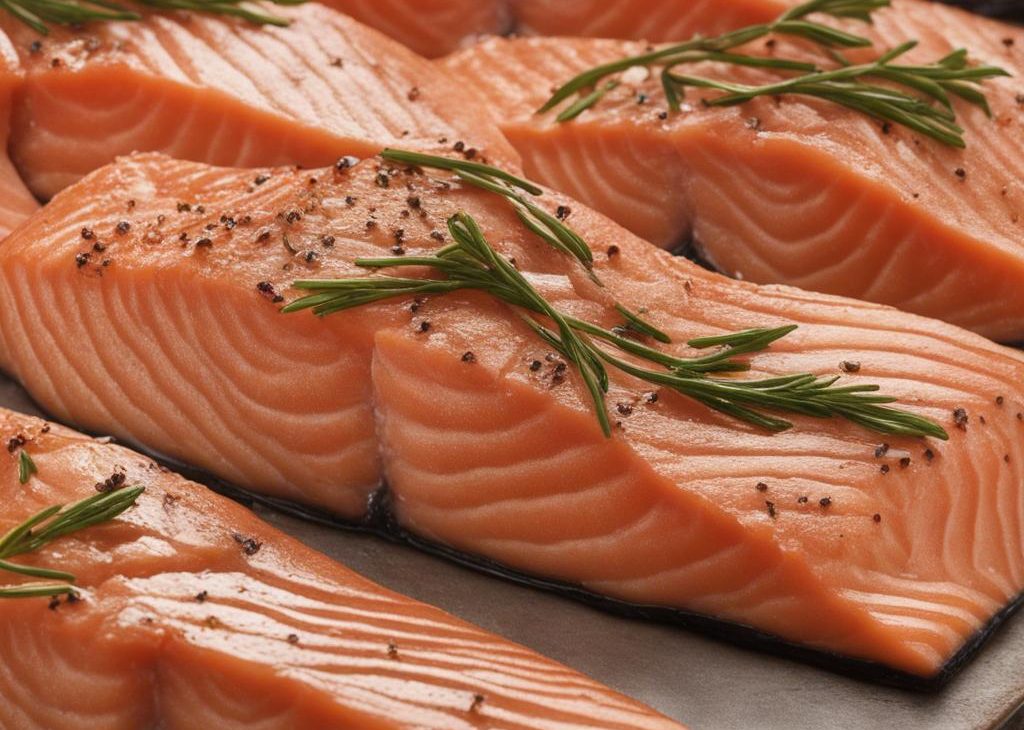
This is the salmon method I use when I want dinner to feel clean and quick but still properly cooked. Costco Kirkland wild salmon fillets are usually thick enough to stay moist, and they do not need much more than oil, salt, pepper, thyme, and garlic powder.
I bake the fillets at 375°F (190°C), which is a calm middle ground. Hotter ovens can dry the edges before the center catches up, and lower ovens take longer than I want on a weeknight.
The number I pay attention to is 145°F (62°C). I still look for flaking and opacity, but a thermometer removes the guesswork, especially when one fillet is thicker than the other.
Before I start Costco Salmon Cooking Instructions, I read through the steps once and set out the pieces that usually slow me down: a sharp knife, a clean board, measuring spoons, the right pan, and a towel for quick cleanup. That small pause keeps me from making rushed choices once heat or dressing or dough is involved. I also check the ingredient temperatures. Cold dairy, wet greens, damp seafood, or a chilled roast can all change timing, so I would rather notice that at the counter than halfway through cooking.
I measure the seasonings into small piles or bowls when the recipe moves quickly. It feels fussy for about thirty seconds, then it pays me back when I am not trying to open a spice jar with messy hands. I also decide where the finished food will land before I begin. A wire rack, serving platter, clean jar, or cooling space may sound minor, but I have learned that good food gets clumsy fast when I am hunting for a place to put a hot pan.
I preheat the oven to 375°F (190°C). While it heats, I line a baking sheet with parchment and lightly grease the parchment so the fish releases cleanly.
I pat the salmon dry and place the fillets on the sheet, skin side down if the skin is still attached. Dry fish takes seasoning better and bakes with a nicer surface.
I drizzle the olive oil over the fillets and rub it across the tops. Then I sprinkle on the kosher salt, black pepper, garlic powder, and dried thyme as evenly as I can.
I bake for about 15 minutes, depending on thickness, until the salmon reaches 145°F (62°C) in the thickest part. The flesh should look opaque and flake with gentle pressure.
I move the salmon to plates and let it sit for a minute or two before serving. That short pause keeps the first forkful juicy instead of steaming hot and fragile.
The clock gives me a starting point for Costco Salmon Cooking Instructions, but I do not let it make the final decision. I watch the texture, the smell, and the way the food sits in the pan. If something is browning before the center is ready, I lower the heat, cover loosely, or move the pan. If something looks pale or watery, I give it more space, more time, or a few minutes uncovered. That kind of small adjustment is usually what separates a dependable batch from one that tastes rushed.
I also taste or check seasoning at the point where it can still be fixed. For salads and dressings, I taste on a leaf, cracker, or piece of vegetable instead of a plain spoon. For casseroles and baked dishes, I taste the sauce or filling before it is covered. For meat and fish, I trust temperature first and appearance second. I have ruined more food by guessing than by taking ten seconds to check.
If a batch does not behave exactly the way I expected, I try to make one calm correction instead of three panicked ones. A splash of liquid can loosen a thick sauce. A few uncovered minutes can dry a wet top. A pinch of salt can wake up a flat filling. A short rest can turn a messy scoop into a clean serving. I build those little fixes into my cooking now because real kitchens are never as tidy as written instructions.
I refrigerate leftover salmon in a shallow airtight container for up to 3 days. To reheat, I use low heat, either covered in a 300°F oven or in a skillet with a splash of water.
I often skip reheating and eat leftovers cold. Cold salmon flakes beautifully into salads and does not risk drying out a second time.
I serve these fillets with roasted potatoes, steamed rice, asparagus, cucumber salad, or a simple green salad. If the meal feels too plain, I add lemon wedges or a spoonful of pesto at the table.
I prefer to thaw it first, pat it dry, and then bake. Thawed fish seasons more evenly and releases less water onto the pan.
I keep the oven temperature the same and add a few minutes, checking the center with a thermometer.
I leave it on if it is attached. It helps protect the bottom of the fish, and the cooked fillet lifts away easily.
Yes, but I mince it very finely and mix it with the oil. Garlic powder is easier and less likely to burn.
It likely baked too long or was very thin. I start checking early and pull at 145°F (62°C).
If this is your go-to Costco salmon method too, I would like to know what side dish you always make with it.
Simple oven-baked Costco salmon fillets with olive oil, thyme, garlic powder, salt, and pepper. I bake them at 375°F until they reach 145°F and flake easily.
Pat it dry. Surface moisture dilutes the oil and seasoning.
Check the thickest part. The tail end cooks faster, so I never judge doneness there.
Do not crowd the pan. Space around each fillet helps the heat circulate.
Use parchment. It keeps the fish from welding itself to the sheet pan.


