
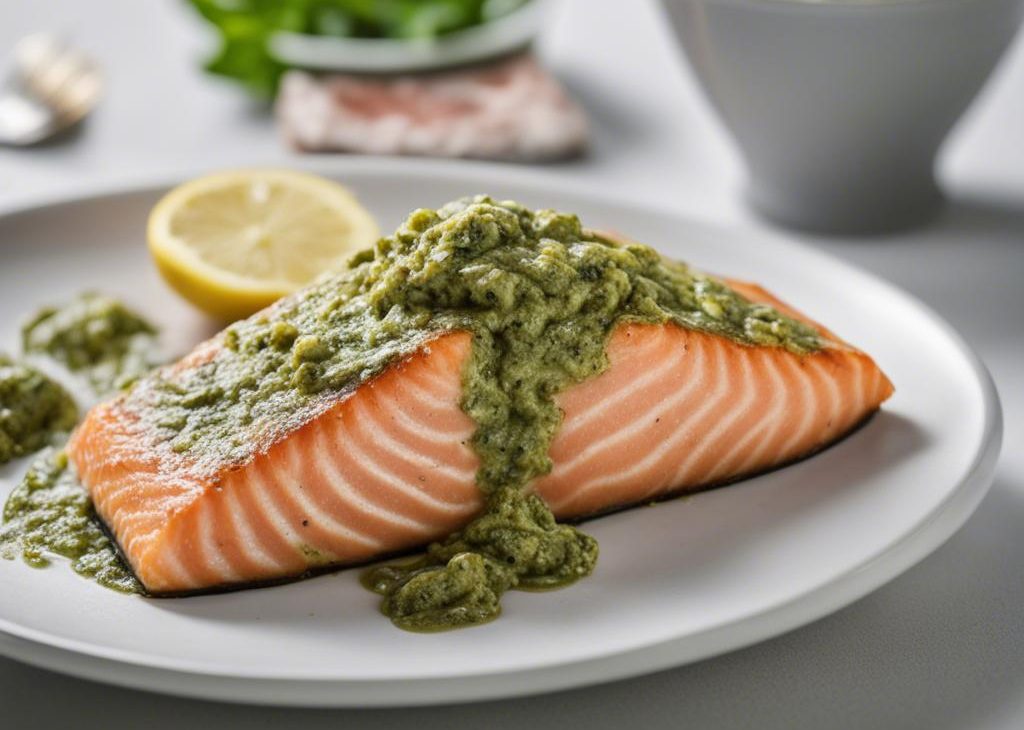
This salmon pesto butter is what I make when I want fish with a little richness but not a complicated sauce. Butter melts with dill, pesto goes over the salmon, and the whole pan simmers gently until the fish flakes.
I like this recipe because pesto does a lot of work. It brings basil, garlic, cheese, oil, and nuts in one spoonful, so the ingredient list stays short. The dill keeps the dish from feeling too heavy.
The only part I watch closely is heat. Butter can go from fragrant to harsh if the pan is too hot, and salmon dries out if it boils aggressively. A quiet simmer is the mood I want.
Before I start Costco Salmon Pesto Butter, I read through the steps once and set out the pieces that usually slow me down: a sharp knife, a clean board, measuring spoons, the right pan, and a towel for quick cleanup. That small pause keeps me from making rushed choices once heat or dressing or dough is involved. I also check the ingredient temperatures. Cold dairy, wet greens, damp seafood, or a chilled roast can all change timing, so I would rather notice that at the counter than halfway through cooking.
I measure the seasonings into small piles or bowls when the recipe moves quickly. It feels fussy for about thirty seconds, then it pays me back when I am not trying to open a spice jar with messy hands. I also decide where the finished food will land before I begin. A wire rack, serving platter, clean jar, or cooling space may sound minor, but I have learned that good food gets clumsy fast when I am hunting for a place to put a hot pan.
I heat a medium saucepan or deep skillet over medium heat and melt the butter. Once it is melted, I season it lightly with salt and pepper, remembering that pesto brings salt too.
I stir in the chopped fresh dill and let it warm for a few minutes. I keep the heat moderate; I want the dill to perfume the butter, not fry into dark flecks.
I place the salmon filet in the pan. If the filet is large, I cut it into portions first so each piece has contact with the buttery sauce.
I spoon the basil pesto over the salmon, cover the pan, and let it simmer for 8-10 minutes, or until the fish is cooked through and flakes easily. I baste once or twice with the pan butter.
I turn off the heat, remove the lid, and let the salmon cool slightly before serving. The sauce thickens a bit as it stands, and I spoon it over each portion.
The clock gives me a starting point for Costco Salmon Pesto Butter, but I do not let it make the final decision. I watch the texture, the smell, and the way the food sits in the pan. If something is browning before the center is ready, I lower the heat, cover loosely, or move the pan. If something looks pale or watery, I give it more space, more time, or a few minutes uncovered. That kind of small adjustment is usually what separates a dependable batch from one that tastes rushed.
I also taste or check seasoning at the point where it can still be fixed. For salads and dressings, I taste on a leaf, cracker, or piece of vegetable instead of a plain spoon. For casseroles and baked dishes, I taste the sauce or filling before it is covered. For meat and fish, I trust temperature first and appearance second. I have ruined more food by guessing than by taking ten seconds to check.
If a batch does not behave exactly the way I expected, I try to make one calm correction instead of three panicked ones. A splash of liquid can loosen a thick sauce. A few uncovered minutes can dry a wet top. A pinch of salt can wake up a flat filling. A short rest can turn a messy scoop into a clean serving. I build those little fixes into my cooking now because real kitchens are never as tidy as written instructions.
I refrigerate leftovers for up to 3 days. The butter sauce firms when cold, so I reheat gently in a covered skillet over low heat with a splash of water.
I do not microwave this aggressively. Short bursts are fine, but high heat can make the salmon smell stronger and turn dry.
I serve this over rice, mashed potatoes, couscous, or roasted vegetables. A crisp salad with lemony dressing helps balance the butter and pesto.
Yes, but I thaw it completely and pat it dry first. Extra moisture thins the butter sauce.
Yes. I put the salmon in a baking dish with the dill butter and pesto, cover loosely, and bake at 375°F until cooked through.
The salmon, butter, dill, and most pesto are gluten-free, but I always check the pesto label.
You can, though the sauce will taste lighter and less creamy. I use a mild olive oil if making that swap.
The thickest part should flake and look opaque. If using a thermometer, I look for 145°F (62°C).
If you try this pesto butter salmon, I would love to know whether you served it with rice, potatoes, or something green.
A rich stovetop salmon dish with butter, dill, basil pesto, and a fresh salmon filet. I simmer it gently so the butter stays fragrant and the fish cooks through without drying.
Keep the simmer gentle. Hard bubbling makes the salmon tough around the edges.
Taste pesto first. Some brands are very salty, so I adjust the added salt after tasting.
Cut large filets. Portions cook more evenly and are easier to lift from the pan.
Use a lid. Covered cooking traps steam and helps the top of the fish cook through.


