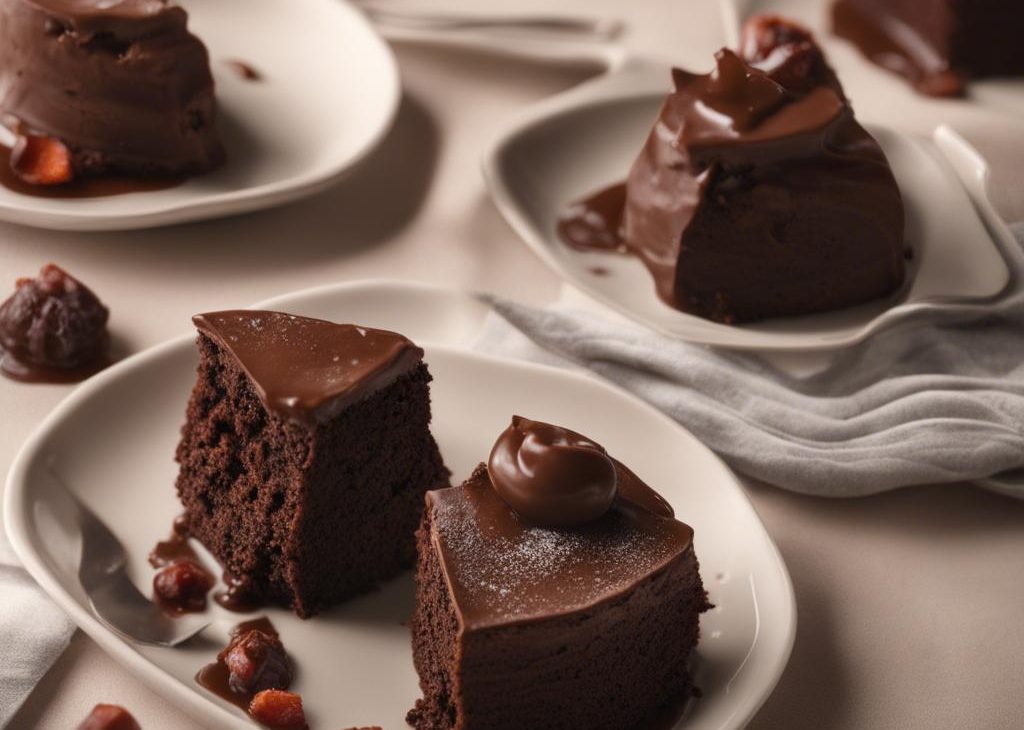
I make Date Night Chocolate Fudge Cakes for 2 when I want something that feels homemade without pretending the little details do not matter.
What keeps me coming back is how semi-sweet chocolate, heavy cream, brown sugar carry the flavor. I measure first, clear space, and then work through the steps without trying to rush the part that needs patience.
Why I keep coming back to this
- I can taste the main ingredients clearly.
- The steps give me visual checkpoints instead of guesswork.
- The leftovers still feel like something I meant to make.
- I can measure everything before I start and then work calmly.
- Small swaps work without changing the whole personality of the recipe.
- The smell while it cooks is the nudge that brings people into the kitchen.
What you need (and what each one is doing)
- 3 ounces semi-sweet chocolate (85g). I use chocolate I like eating plain because the flavor is obvious.
- 1/4 cup heavy cream (60ml).
- 3 Tablespoons brown sugar (36g). This sweetens and also helps with browning, chew, or body.
- 2 Tablespoons vegetable oil (30ml).
- 2 Tablespoons beaten egg (30ml).
- 1/2 teaspoon pure vanilla extract. for it later. It rounds out the sweetness so the recipe does not taste one-dimensional.
- 6 Tablespoons all-purpose flour (46g). This gives structure, so I spoon and level instead of packing it down.
- 1/4 teaspoon baking powder.
- 1/8 teaspoon baking soda.
How I make it
Step 1 — Prepare the pan
Lightly grease two 6-ounce ramekins with butter or nonstick spray. Place them on a baking sheet. Set aside.
Step 2 — Preheat the oven
Preheat oven to 350°F (177°C).
Step 3 — Whisk together
Coarsely chop 2 ounces (57g) of semi-sweet chocolate. Reserve 1 ounce (28g) for step 5 (don't chop). Combine the chopped chocolate and heavy cream in a medium heatproof bowl. Microwave in 20-second increments, stirring after each increment until melted and smooth. Whisk in the brown sugar until no lumps remain. Whisk in the oil, 2 Tablespoons of beaten egg, and vanilla extract until combined. Set aside.
Step 4 — Whisk the dry ingredients
In a small bowl, whisk the flour, baking powder, and baking soda together. Pour the dry mixture into the wet ingredients and fold with a silicone spatula until all of the ingredients are combined and there are no lumps. Pour evenly into the ramekins; they should be just about 3/4 of the way full.
Step 5 — Fill the cups
Cut the remaining 1 ounce of chocolate in half. Place a piece of chocolate (0.5oz/14g) into the center of each filled ramekin and use a spoon to fully submerge the chocolate.
Step 6 — Bake
Bake for 15-17 minutes, rotating the baking sheet at the 8-minute mark.
Step 7 — Serve
Remove from the oven and serve immediately. The centers will be slightly gooey, with melted chocolate inside. Serve warm.
Tips from my kitchen
- Measure flour carefully. Packed flour makes the finished batch heavy.
- Use parchment when you can. I would rather lift cleanly than pry at corners.
- Cool before judging. Many baked goods finish setting after they leave the oven.
- Watch the edges. My oven shows doneness there before the center looks dramatic.
Variations I have actually tried
- Change only the garnish for the easiest variation.
- Use dark chocolate where semi-sweet is listed.
- Add citrus zest when vanilla is already in the batter.
- Swap similar nuts in the same amount.
- Serve rich pieces with barely sweetened cream or yogurt.
Storing and reheating
I cool Date Night Chocolate Fudge Cakes for 2 completely before covering it because trapped steam softens the top. Frosted, creamy, or mousse-filled pieces go in the refrigerator; plainer bakes can usually sit airtight at room temperature. For longer storage, I wrap individual portions so I can thaw only what I need.
What I serve it with
I keep the plate simple and let the main texture do the talking.
Frequently asked questions
Can I make this ahead?
Yes. I prep the parts the recipe allows ahead, then finish the final cook or garnish close to serving.
How do I know it is done?
I use the listed cook time of 15 minutes as a guide, then trust the visual cues in the steps.
Can I change the main ingredient?
Usually, but I change one thing at a time so I know what affected the texture.
Why did mine turn out too soft?
Most often it needed more time, more cooling, or a little less crowding in the pan.
Can I freeze leftovers?
Most baked items freeze well wrapped tightly. Crisp or sauced dishes are better refrigerated and reheated uncovered.
What I watch for after a few batches
The detail I pay attention to most is texture. I do not walk away during the moment when the recipe changes from mixed ingredients into something cooked, baked, set, or glossy. That is when a minute or two can matter more than a long list of instructions.
I also write down any change I make, even if it is only a different pan or a different brand of chocolate. The next batch is easier when I know exactly what caused a softer center, a darker edge, or a sauce that thickened faster than expected.
If you make this Date Night Chocolate Fudge Cakes for 2, leave a comment with what you changed or what you served with it — I like hearing the practical kitchen notes.
My last bit of advice is to make the recipe once as written before changing it heavily. After that first batch, I know where I can bend the method and where I need to leave the measurements alone.