
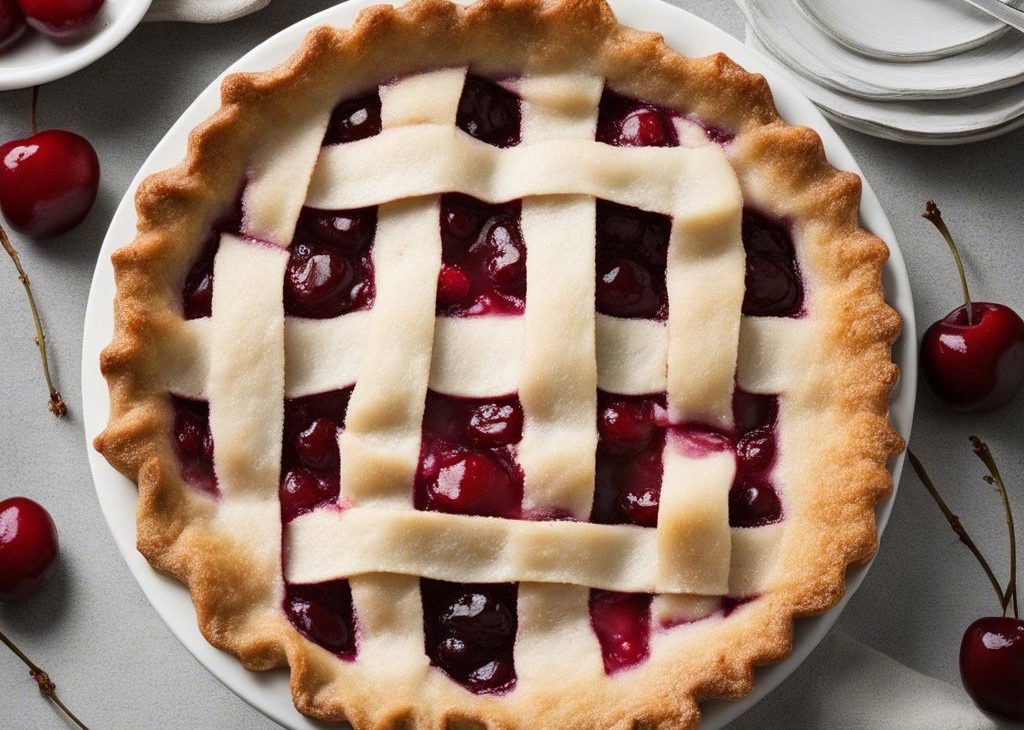
I make Impossible Cherry Pie when I want a bake that feels considered but still comes from normal pantry work. The batch has the kind of smell that pulls me back to the oven door before the timer finishes: warm sugar, butter or oil, and whatever fruit, spice, or chocolate is doing the heavy lifting.
I do not treat this as a fussy showpiece. I treat it as a recipe that needs a steady hand: measure, scrape the bowl, chill or cool when the directions say to, and cut only when the texture is ready. The first impatient slice is usually the messy one.
I preheat the oven to 350°F (175°C). I grease a 9-inch pie plate to ensure easy removal once the pie is baked.
In a medium bowl, whisk together the milk, softened margarine or butter, almond extract, eggs, Bisquick baking mix, and sugar until smooth and well combined. I pour the mixture into the greased pie plate, spreading it evenly.
I drop spoonfuls of the cherry pie filling evenly over the surface of the pie mixture. In a separate bowl, prepare the streusel topping by combining firm margarine or butter, Bisquick baking mix, brown sugar, and ground cinnamon. Use a fork or the fingers to blend the ingredients until crumbly.
I sprinkle the streusel mixture over the cherry pie filling, ensuring an even distribution. I bake the pie for approximately 50-55 minutes or until a toothpick inserted into the center comes out clean. The top should have a golden-brown hue, and the kitchen will be filled with the tempting aroma of a freshly baked pie.
I allow the pie to cool for a few minutes before serving. For an added touch of enjoynce, serve a warm slice with a scoop of vanilla ice cream or a dollop of freshly whipped cream. Enjoy!
I watch the edges first. Cookies and small bakes usually tell the truth there before the middle does; pale edges mean wait, deep brown edges mean I waited too long.
Cooling is part of the recipe, not a polite suggestion. Warm sugar and butter are fluid, and they need time to settle before the crumb, filling, or icing behaves.
I cool it completely before covering. Trapped steam is the fastest way to turn a crisp edge soft or make icing slide.
For most bakes, I keep leftovers airtight at room temperature for a short stretch or in the refrigerator if there is fruit, dairy, or a soft filling. I freeze wrapped portions when I know I will not finish them quickly.
I usually serve this with coffee, tea, or a spoonful of something creamy if the bake is fruit-heavy. If it is already iced or glazed, I keep the plate simple and let the texture do the work.
Yes. I prep what I can early and store it covered, then finish the step that protects texture right before serving.
I keep the same quantity and choose a similar ingredient in size and moisture. Big swaps can change timing, so I watch the pan or oven closely.
I look for set edges, a center that no longer looks wet, and the doneness cue in the instructions. If meat is involved, I use a thermometer.
I cool leftovers first, then refrigerate them in an airtight container. For crisp foods, I reheat uncovered so steam does not soften the surface.
I add a small pinch of salt or a little acid, then taste again. Rich dishes often need acid; sweet bakes often need salt.
If you make Impossible Cherry Pie, tell me what you changed or what cue helped most; I read those notes before I make the next batch.
I make Impossible Cherry Pie with the source quantities kept intact and the method rewritten around the cues I use in my own kitchen. The source timing is 55 min prep, and I keep those numbers while watching the food instead of the clock alone. Expect practical steps, storage notes, and swaps that stay close to the original dish.
Measure first. I set out every ingredient before heat or mixing starts so I can move calmly.
Watch texture. The source timing matters, but I trust color, set, sizzle, and tenderness too.
Season late if needed. I taste near the end and adjust salt, pepper, acid, or sweetness in small amounts.
Rest when the recipe allows. A short pause keeps slices cleaner, sauces smoother, and juices in place.


