
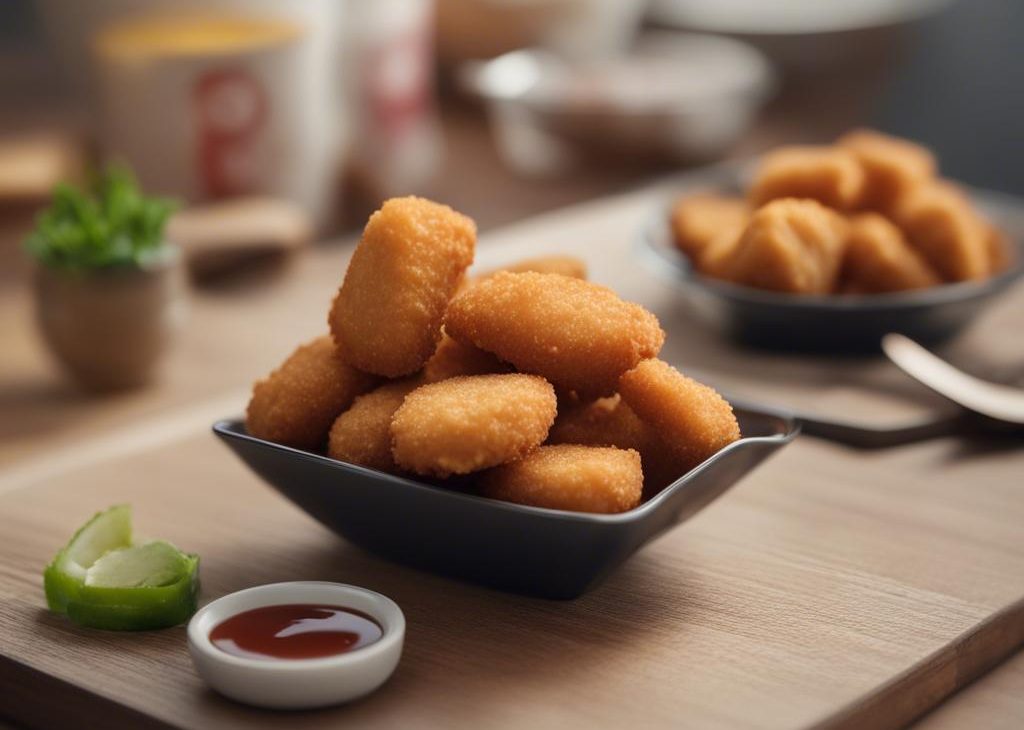
This Japanese Chicken Nuggets is the kind of food I make when I want dinner to feel lively without turning the kitchen upside down. I get everything chopped before the heat goes on, because once a skillet or grill is hot, the recipe moves quickly.
I have learned to watch the small cues: onions losing their raw bite, sauce thickening at the edge of the pan, meat resting before I slice or serve it. Those cues are more helpful than staring at the clock alone.
Nothing fancy, just a clear path to a plate of Japanese Chicken Nuggets that tastes like someone paid attention.
I cut the chicken into 1-inch cubes and pat the pieces dry. I mix the cornflour and white flour in a bowl, then coat the chicken evenly and shake off the excess.
I heat vegetable oil to 350°F (177°C). I fry the chicken for 6-8 minutes, turning the pieces so they brown evenly and cook through.
I drain the nuggets on paper towels. I stir the soy sauce, grated ginger, crushed garlic, salt, and pepper together, then toss the hot nuggets with just enough sauce to coat.
I serve them while crisp. I keep extra sauce on the side instead of drowning the coating.
I cool leftovers quickly, then pack them in shallow containers so they do not steam themselves soft. Most savory leftovers taste best within 3-4 days.
For reheating, I use a skillet when I want browned edges and the microwave when I am in a hurry. If the dish has sauce, I add a spoonful of water or broth so it warms without drying out.
I serve Japanese Chicken Nuggets hot and keep toppings or sides nearby. Warm tortillas, crisp lettuce, rice, bread, or a simple salad can turn the same base into a different meal.
One last note from my own kitchen: I get the best results when I slow down at the boring moments. Scraping the bowl, letting a pan preheat, chilling a mixture, or waiting before slicing never sounds exciting, but those are the small habits that make a familiar recipe taste cared.
Yes, with a little planning. I prep the parts that hold well and wait on anything crisp, fizzy, or freshly blended until close to serving.
I taste after the main mixing or cooking step, then adjust in small amounts. Salt, acid, and sweetness show up differently after resting, so I do not make one big adjustment all at once.
Usually yes. I double the ingredients evenly, use a larger bowl or pan, and give myself extra mixing room. Baked recipes may need a few more minutes if the pan is crowded.
A splash of liquid for thickness, a short chill for looseness, or a few extra minutes of cooking for a wet center. Big fixes tend to make a second problem.
I keep leftovers covered in the refrigerator and use my eyes and nose before reheating or serving. Most cooked dishes are best within 3-4 days; creamy cold mixtures are best within 2-3 days.
If you make this Japanese Chicken Nuggets, I would love to hear what tiny adjustment made it work best in your kitchen.
I rewrote this japanese chicken nuggets with clear steps, practical timing notes, and the small kitchen cues I rely on when I make it. The goal is a recipe that feels usable at the counter, not just readable on a screen.
Set everything out first. I make fewer mistakes when the measured ingredients are lined up before I start.
Taste at the point where tasting makes sense. For raw meat or batter I check seasoning by smell and balance; for sauces, salads, and drinks I taste directly.
Use 350°F (177°C) for the oil. The source temperature reads like Celsius, but that would be unsafe for frying; I treat it as a standard frying temperature.
Give it a short rest when possible. Five to thirty minutes can help juices settle, crumbs firm, or flavors blend.


