
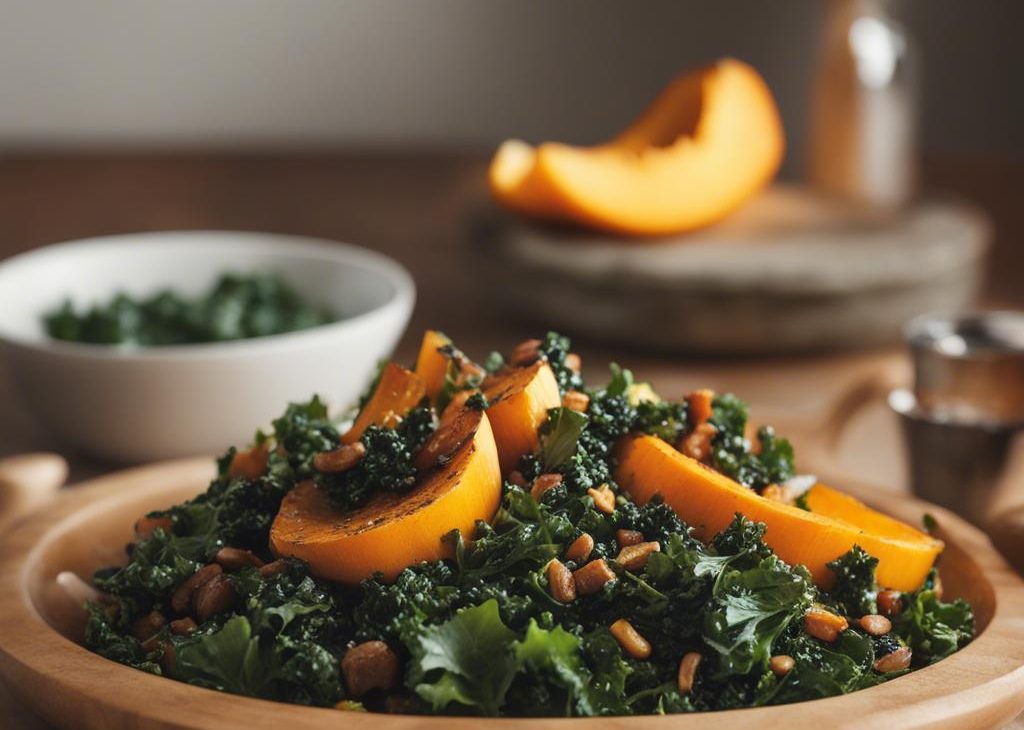
I make Maple-Roasted Squash & Kale Salad when I want something dependable from real kitchen measurements, not a vague handful of this and that. I set the ingredients out first, get the pan ready, and work through the method in the same order I would on a busy afternoon.
This is the kind of roast and toss recipe where small details matter. I pay attention to texture, cooling time, and how the mixture looks before it goes into the pan or onto the plate. That habit has saved me from more than one rushed batch.
The flavor leans on ground cumin, ground coriander, garlic powder, ground cinnamon. I like that the recipe is flexible enough for a home kitchen, but still gives clear numbers to follow.
Preheat oven to 425°F (218°C). Line 1 or 2 large baking sheet(s) with parchment paper or silicone baking mat(s). Set aside. In a small bowl, mix together cumin, coriander, garlic powder, cinnamon, salt, and pepper.
In a large bowl, toss the squash and chickpeas with the seasoning mix. Drizzle maple syrup and olive oil over top, then stir everything together until the squash and chickpeas are coated. Spread squash and chickpeas in a single layer on the prepared baking sheet(s). Roast for 20 minutes, then flip the squash slices over and stir the chickpeas around. If it is using 2 baking sheets, rotate the baking sheets from top to bottom/bottom to top. Roast for another 10-15 minutes or until lightly browned. Remove from the oven and let cool on the baking sheet for at least 15 minutes.
Make the vinaigrette: In a small bowl, whisk together the vinaigrette ingredients. Place the kale in a large bowl. Pour most of the dressing on top (reserve about 2 Tablespoons), and use the hands to massage the dressing into the kale leaves until completely coated. Top with roasted squash and chickpeas, apple slices, pecans, dried cherries, and crumbled goat cheese. Drizzle remaining dressing on top, and gently toss to combine. Serve the salad room temperature or cold.
Store leftover salad in an airtight container in the refrigerator for up to 5 days.
I refrigerate leftovers in an airtight container for up to 5 days, but I keep a little dressing back if I know the salad is for meal prep. Kale holds better than tender lettuce, and the roasted pieces taste good cold or gently warmed.
I serve it with something simple on the side so the main recipe stays the focus. A salad, rice, beans, bread, or pickled vegetables usually gives the plate enough contrast.
Yes. I usually make it ahead when the recipe has a cooling or chilling step, because the flavor settles and slicing is neater. For crisp items, I wait to cover them until they are completely cool.
Rushing the texture is the mistake I see most. I let butter soften, pans preheat, candy reach temperature, or fillings cool as directed instead of trying to force the next step.
A small change is fine. I reduce sugar or syrup by a tablespoon or two first, then taste the next batch before making a bigger change because sweetness also affects browning and set.
I look for the recipe's physical signs before the timer: set edges, a clean tester, bubbling filling, a steady simmer, or a dry surface. The timer gets me close; the food tells me when to stop.
Usually yes, but I prefer two pans or two batches instead of one very deep pan. A crowded pan changes the cook time and can leave the center underdone while the edges overcook.
If you make Maple-Roasted Squash & Kale Salad, leave a note with the tweak that worked in your kitchen — I always like hearing the practical details.
Maple-Roasted Squash & Kale Salad rewritten in a first-person kitchen voice with the measurements kept clear. I walk through the recipe with practical notes on ground cumin, ground coriander, garlic powder, ground cinnamon, timing, storage, and the small cues I watch while cooking.
Measure first. I set ingredients out before starting so the method moves smoothly.
Watch texture. I use the timer as a guide, but I trust the visual cues in the food.
Cool fully. Cutting, covering, or storing too early can soften crisp edges and unset centers.
Keep notes. Pan size and oven behavior are worth writing down for the next batch.


