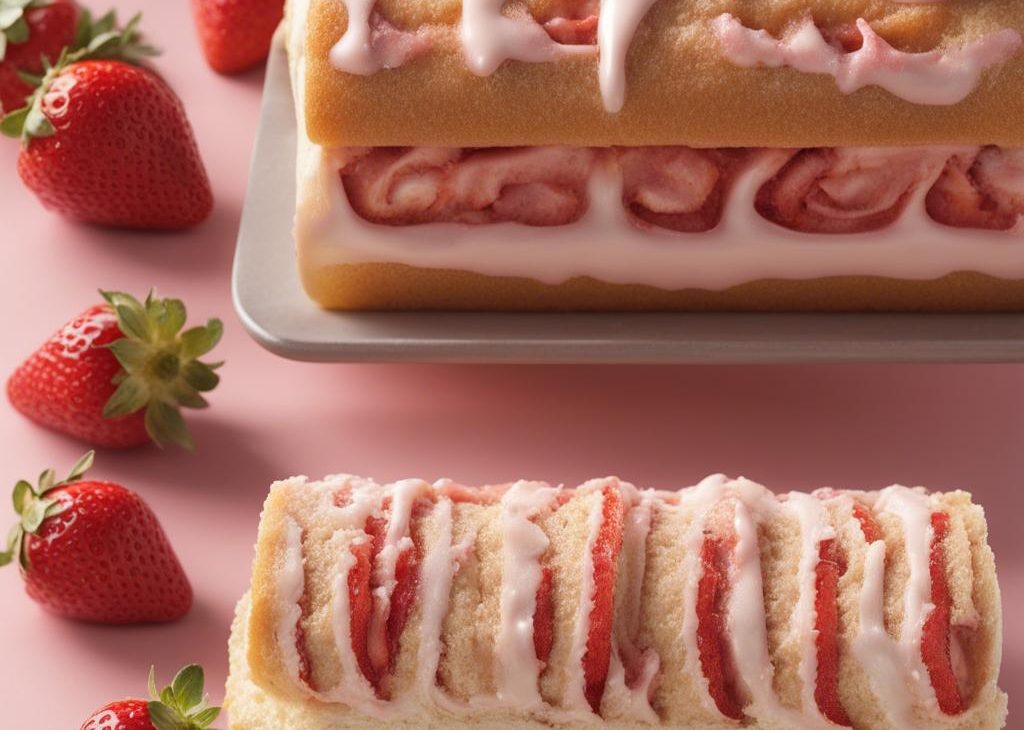
A Strawberries 'n' cream cake roll looks dramatic, but I think of it as a sponge cake that needs a quick plan. The cake is thin, soft, and flexible while it is warm. If I have the towel dusted with confectioners' sugar before the pan comes out of the oven, the rolling part feels manageable. If I wait, I get flustered, and flustered cake rolls crack.
This one is filled with strawberry cream cheese frosting made from freeze-dried strawberries, cream cheese, butter, confectioners' sugar, and vanilla. I like freeze-dried berries here because they bring real strawberry flavor without watering down the frosting. Fresh berries can garnish the slices, but I do not ask them to carry the filling.
The cake itself is a vanilla sponge with separated eggs, cake flour, a little baking powder, buttermilk, vanilla extract, and vanilla bean seeds. It bakes in a 10x15-inch pan at 350°F (177°C) for 15 minutes, then gets rolled while warm and filled after cooling.
Why this cake roll works for me
- The egg whites are whipped separately, so the sponge has lift without feeling heavy.
- Cake flour keeps the crumb soft enough to roll.
- A little baking powder gives backup lift, which I appreciate in a thin cake.
- Buttermilk adds moisture without making the batter greasy.
- Freeze-dried strawberries flavor the frosting without adding extra water.
- Rolling the warm cake in a sugared towel trains it into shape before filling.
What I use and why
Cake flour, baking powder, and salt are sifted together so the dry mix disappears quickly into the batter. The eggs are divided because the whites build volume and the yolks add color and richness. I use the sugar in two places: 1/4 cup goes into the whites, and the remaining sugar gets beaten with the yolks, buttermilk, vanilla, and vanilla bean.
The confectioners' sugar for the towel is not just decorative. It keeps the warm sponge from sticking as it cools in the rolled shape. The frosting starts with freeze-dried strawberries processed into a powdery crumb, then cream cheese and butter make it tangy and rich. More confectioners' sugar thickens it enough to stay inside the roll.
How I make the sponge
Step 1 — Get the pan and towel ready
I read the steps first because the cake needs attention the moment it leaves the oven. I preheat to 350°F (177°C), grease a 10x15-inch baking pan, line it with parchment, and grease the parchment too. Then I lay a thin towel on the counter and keep the confectioners' sugar nearby.
Step 2 — Whisk the dry ingredients
I sift the cake flour, baking powder, and salt. Then I beat the egg whites with 1/4 cup sugar on high speed for 4-5 minutes, until stiff peaks form. In the same mixing bowl, I beat the yolks, remaining sugar, buttermilk, vanilla extract, and vanilla bean seeds for 3-4 minutes, until light in color.
Step 3 — Beat until smooth
I beat half the whipped whites into the yolk mixture on low for 10 seconds, repeat with the remaining whites, then add the flour mixture and mix on low only until combined. I spread the batter into the pan, nudge it to the corners, and bake for 15 minutes, until the cake springs back when lightly poked.
Step 4 — Chill
As soon as the cake comes out, I dust the towel with 1 cup confectioners' sugar, invert the cake onto it, peel away the parchment, and roll from the narrow end with the towel inside. I move slowly and accept a little unevenness. The rolled cake cools completely in the towel; I often refrigerate it for about 2 hours to speed that along.
Filling the roll
I let the cooled roll sit on the counter for a few minutes while I make the frosting. I process the freeze-dried strawberries into a powdery crumb, then beat the cream cheese until smooth. Butter goes in next, followed by confectioners' sugar, strawberry powder, and vanilla. I taste and add salt only if the frosting needs it.
When I unroll the cake, I do it slowly and do not force the curl flat. I spread frosting over the surface, leaving about a 1/2 inch border, then roll it back up without the towel. A little frosting may squeeze out the sides. I chill the roll for 20 minutes before slicing so the spiral holds.
Tips from my kitchen
- I prepare the towel before baking, not after, because warm sponge waits for no one.
- I use a thin towel with little texture; thick terry cloth can leave dents.
- I do not overbake the sponge. A dry cake cracks faster.
- I leave a frosting border so the filling has somewhere to move as I roll.
- I wipe the knife between slices for the cleanest spiral.
Variations I have actually tried
- For extra strawberry color, I add a few more crushed freeze-dried berries to the frosting, not fresh puree.
- For a vanilla-forward roll, I skip the garnish and let the vanilla bean show through.
- For a lemony finish, I add a little lemon zest to the frosting.
- For a lighter plate, I serve thin slices with fresh berries on the side instead of more frosting.
- For a birthday-style roll, I add a few sprinkles to the finished top after dusting with sugar.
Storing and serving
Because the filling contains cream cheese, I keep the cake roll covered in the refrigerator. It slices best after a short chill, but it tastes softer if I let each slice stand for 10 minutes before serving. I dust with confectioners' sugar just before serving because the refrigerator can make the sugar disappear into the surface.
I do not freeze the fully decorated roll unless I need to. The sponge can handle freezing, but the frosting texture is nicer fresh. If I freeze slices, I wrap them once firm and thaw in the refrigerator.
Frequently asked questions
Why did my cake roll crack?
Mine cracks when it is overbaked, rolled too late, or forced flat after cooling. I roll it while warm and unroll it gently.
Can I use fresh strawberries in the frosting?
I do not recommend replacing the freeze-dried strawberries with fresh ones. Fresh berries add water and can make the cream cheese frosting loose.
Do I need a 10x15-inch pan?
Yes, I use that size so the cake bakes thin enough to roll. A smaller pan makes a thicker sponge that is more likely to crack.
Can I make it a day ahead?
Yes. I make and fill the roll a day ahead, refrigerate it covered, and dust or garnish right before serving.
What if some frosting spills out?
I trim or wipe the edges and move on. A small amount of frosting at the ends is normal when the roll is tight enough to hold a spiral.
I also keep the presentation simple. A dusting of confectioners' sugar and a few sliced strawberries tell the story without hiding the spiral. If the roll has a tiny crack, I place that side down and slice with confidence.
If you try this cake roll, tell me whether your first slice had a tight spiral or a relaxed one — both still taste good.