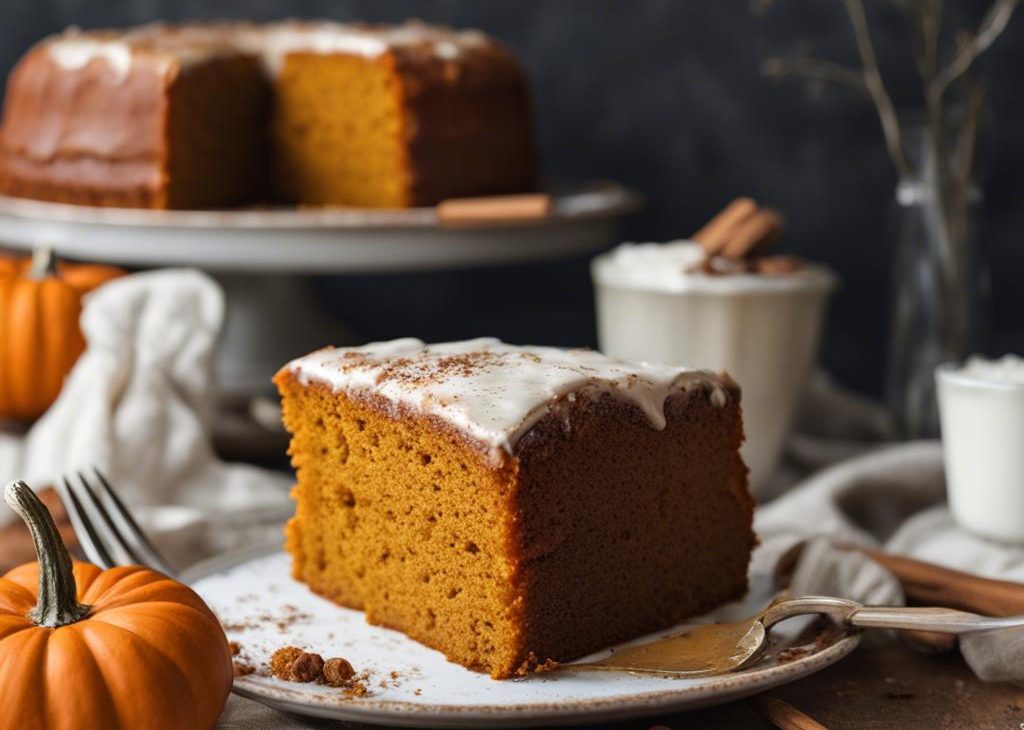
I make Pumpkin Cake when I want pumpkin flavor without fussing with layers. It is the kind of recipe I reach for when I want food that feels familiar but still needs a little attention. The payoff is tender, warmly spiced, and thick enough to carry a generous swipe of frosting, which is exactly why I keep it in my rotation.
The first time I worked through this version, I paid attention to the small moments: how the mixture looked before cooking, when the edges started to change, and how long it needed to rest. Those details are easy to skip, but they are usually what separate a decent batch from one I want to make again.
I kept the method straightforward and wrote the notes the way I use them in my own kitchen. If something can go wrong, I would rather say it plainly than pretend the clock fixes everything.
Why I keep coming back to this
- It gives me tender, warmly spiced, and thick enough to carry a generous swipe of frosting without asking for fussy restaurant tricks.
- The ingredient list is clear, and I can tell what each piece is doing.
- The timing is practical enough for a real kitchen, including interruptions.
- It scales nicely for sharing or for leftovers, which matters more than people admit.
- I can serve it with coffee, chai, or sliced apples on the side and call the meal handled.
- The recipe has enough built-in cues that I do not have to guess the whole way through.
What you need (and what each one is doing)
- 2 cups all-purpose flour (250g). This gives structure, so I measure it carefully.
- 2 teaspoons baking powder.
- 1 teaspoon baking soda.
- 1 teaspoon salt.
- 1 1/2 teaspoons ground cinnamon.
- 2 teaspoons pumpkin pie spice.
- 1 cup vegetable oil (240ml). This brings moisture, richness, or tenderness.
- 4 large eggs. This binds and helps the recipe set.
- 1 cup packed brown sugar (200g).
- 1/2 cup granulated sugar (100g).
- 1 15-ounce can pumpkin puree.
- 1 1/2 teaspoons pure vanilla extract.
- 8 ounces cream cheese, softened (226g).
- 1/2 cup unsalted butter, softened (8 Tbsp; 113g).
- 3 cups confectioners' sugar (360g).
- 1 teaspoon pure vanilla extract.
- 1/8 teaspoon salt.
How I make it
Step 1 — Preheat the oven to 350°
I preheat the oven to 350°F (177°C) and grease a 9x13-inch baking pan. I always use this glass pan.
Step 2 — Whisk the dry ingredients
I whisk the flour, baking powder, baking soda, salt, cinnamon, and pumpkin pie spice together in a large bowl. Set aside. Whisk the oil, eggs, brown sugar, granulated sugar, pumpkin, and vanilla extract together until combined. Pour the wet ingredients into the dry ingredients and use a mixer or whisk until completely.
Step 3 — Bake
I spread batter into the prepared pan. Bake for 30-36 minutes. Baking times vary, so keep an eye on yours. The cake is done when a toothpick inserted in the center comes out clean. If I find the top or edges of the cake is/are browning too quickly in the oven, loosely.
Step 4 — Cool completely
I remove the cake from the oven and set the entire pan on a wire rack. Allow to cool completely. After about 45 minutes, I usually place the cake in the refrigerator to speed things up.
Step 5 — Whisk together
In a large bowl using a handheld or stand mixer fitted with a paddle or whisk attachment, beat the cream cheese and butter together on high speed until smooth and creamy. Add 3 cups confectioners' sugar, vanilla, and salt. Beat on low speed for 30 seconds, then switch to high speed.
Step 6 — Store leftovers
I cover leftover cake tightly and store in the refrigerator for 5 days.
The small details I watch
With Pumpkin Cake, I respect the resting and cooling steps. Hot food keeps cooking after it leaves the heat, and baked recipes keep setting as they cool. Serving too early is usually the easiest way to lose the texture I wanted.
I also taste where it makes sense. Salt, citrus, sweetness, and spice shift depending on brands and produce, so I adjust only after the base is ready to judge.
Tips from my kitchen
- I scrape the bowl well after adding pumpkin because it hides under the batter. I scrape the bowl well after adding pumpkin because it hides under the batter.
- The center should spring back before I pull the pan. The center should spring back before I pull the pan.
- I cool the whole pan on a rack so the bottom does not steam. I cool the whole pan on a rack so the bottom does not steam.
- Cream cheese needs to be truly soft for smooth frosting. Cream cheese needs to be truly soft for smooth frosting.
- A small pinch of salt in the frosting keeps it balanced. A small pinch of salt in the frosting keeps it balanced.
Variations I have actually tried
- Walnuts: Walnuts folded into the batter for crunch.
- A: A brown-butter frosting when I have extra time.
- Mini: Mini chocolate chips for a dessert-style cake.
- A: A dusting of cinnamon instead of a thick frosting layer.
- Cupcakes: Cupcakes baked from the same batter, checked early.
Storing and reheating
I store Pumpkin Cake in the way that protects its main texture. If it is crisp or baked, I cool it first so trapped steam does not soften it. If it is creamy, saucy, or blended, I use a covered container and keep strong-smelling foods away from it.
For reheating, I use gentle heat and stop as soon as it is warm. For cold recipes, I stir or blend briefly before serving. Leftovers are always better when I portion them before the refrigerator turns one large container into a guessing game.
Frequently asked questions
Can I make Pumpkin Cake ahead?
Yes. I usually make the parts that hold well ahead and keep final garnishes or toppings separate. For best texture, I follow the storage notes and refresh the Pumpkin Cake gently before serving.
What is the most common mistake?
Rushing is the mistake I see most often. I slow down at the step where moisture, cooling, or browning matters because that is where the texture is usually decided.
Can I change the add-ins?
Yes, within reason. I keep the base quantities steady, then swap add-ins with similar moisture and size so the recipe still cooks or chills the way it should.
How do I know it is done?
I look for the visual cue in the method instead of relying only on the clock. With Pumpkin Cake, the timing gets me close, but the center, edges, and aroma tell me when to stop.
How should I serve it?
I like it with coffee, chai, or sliced apples on the side. I keep the serving simple because the recipe already has enough flavor on its own.
If you make this Pumpkin Cake, leave a comment with the variation you tried. I always like hearing what worked in another real kitchen.