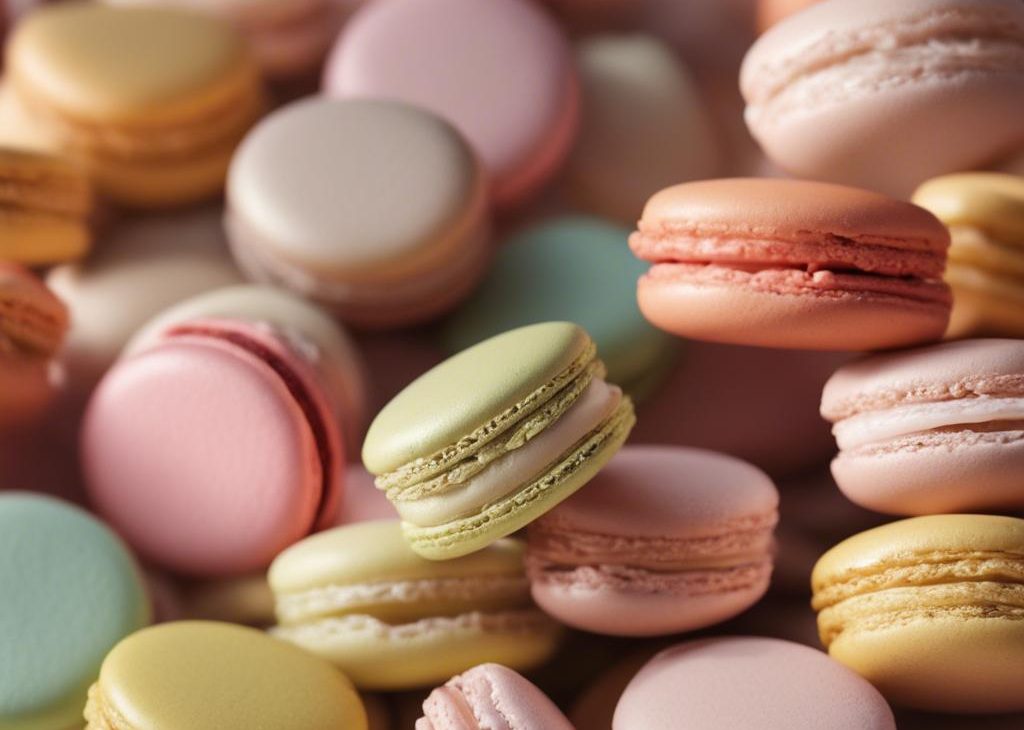

Macarons are the cookie that taught me to slow down. I have rushed the meringue, overfolded the batter, skipped the rest, and blamed the weather before admitting I was the problem. The good news is that each batch teaches something visible.
This beginner guide keeps the ingredient list tight: egg whites, cream of tartar, superfine sugar, almond flour, confectioners’ sugar, optional flavoring, optional color, and filling. The method matters more than the shopping list.
I do not promise flawless bakery shells every single time. I do promise that if I watch the batter, let the piped rounds dry, and bake until the tops no longer wobble, I get macarons I am happy to fill and share.
Why I keep coming back to this
- Aged egg whites whip more predictably for me than carton whites or freshly cracked whites.
- Cream of tartar gives the meringue a little insurance while I add the sugar.
- Sifting almond flour and confectioners’ sugar prevents bumpy shells.
- The figure-8 test is more useful than counting folds because every batch behaves differently.
- Resting the piped shells forms the skin that helps the cookies rise upward into feet.
- The short 13-minute bake means I stay nearby and check texture instead of wandering off.
What you need (and what each one is doing)
- 100 g egg whites (usually 3-4 large egg whites). Egg whites make the meringue. I age them in the refrigerator, then bring them to room temperature before whipping.
- 1/4 teaspoon cream of tartar (1g). This missing name is the stabilizer. It helps the egg whites whip steadily and hold their peaks.
- 1/2 teaspoon extract such as vanilla, almond, or coconut (optional). A small amount flavors the shells without loosening the batter.
- 80 g superfine sugar (aka caster sugar). Superfine sugar dissolves into the meringue faster than regular granulated sugar.
- 1-2 drops gel food coloring (optional). Gel color adds shade without adding much liquid. I keep it subtle for beginner batches.
- 125 g almond flour. Fine almond flour creates the tender, chewy shell. I sift it so large bits do not tear the tops.
- 125 g confectioners’ sugar. Confectioners’ sugar blends with almond flour and helps the shells dry evenly.
- desired macaron filling (buttercream, ganache, jam, or curd). The filling softens the shells as they mature. I choose something thick enough not to leak.
How I make it
Step 1 — Age and warm the egg whites
Wipe a glass or metal bowl with lemon juice or vinegar, then add the egg whites. Cover and refrigerate them for 24 hours. Before mixing, I let them come to room temperature so they whip with better volume.
Step 2 — Combine the base
Line three large baking sheets with silicone mats or parchment. If I am using parchment, I put a tiny dab of batter under the corners later so the paper does not lift while piping.
Step 3 — Whip the meringue
Beat the egg whites with cream of tartar and extract, if using, until very soft peaks form. Add the superfine sugar in three additions, beating briefly between each, then continue until the meringue is glossy and holds stiff peaks. Fold in gel color gently if using.
Step 4 — Sift and fold
Sift almond flour and confectioners’ sugar together. Fold the meringue into the dry mixture in three additions. After the last addition, I fold slowly until the batter flows like thick honey and can draw a figure 8 that sinks back in within about 10 seconds.
Step 5 — Pipe, rest, and bake
Transfer the batter to a piping bag fitted with a round tip and pipe 1.5-2 inch rounds, spaced apart. Bang the pans to release air bubbles and pop stubborn bubbles with a toothpick. Rest 30-60 minutes, then bake at 325°F (163°C) for 13 minutes.
Step 6 — Add the remaining ingredients
Let the shells cool on the baking sheet for 15 minutes before moving them. Pair similar sizes, add filling, and sandwich gently. I like eating one right away, but the texture improves after 12-24 hours in the refrigerator.
Tips from my kitchen
- Use a clean bowl. Any grease can keep egg whites from whipping properly.
- Stop at stiff peaks. Weak meringue spreads; dry overbeaten meringue folds unevenly.
- Go slowly during macaronage. It is easier to fold more than to fix overmixed batter.
- Rest by touch, not timer. The tops should feel dry and not tacky before baking.
Variations I have actually tried
- Vanilla shells: Use vanilla extract and a vanilla buttercream filling.
- Almond shells: Almond extract plus chocolate ganache is my reliable combination.
- Coconut shells: Coconut extract with lime buttercream tastes bright without changing the base.
- Jam center: Pipe a buttercream ring and add a small dot of thick jam inside.
- Color-free batch: Skip food coloring entirely while learning the batter cues.
Small details I pay attention to
I treat Beginner’s Guide to French Macarons as a recipe where the written numbers are a guide, not a reason to stop paying attention. I look for the practical cues: the way the dough feels, how the sauce coats a spoon, how the edges brown, or whether the center has actually set. Those little signs are what keep a familiar recipe from turning into a dry loaf, a pale crust, or a pan of fruit that never thickened.
I also set up my counter before I start. Ingredients measured, pan or skillet ready, towel nearby, and a clear place for cooling. That sounds fussy, but it keeps me from making rushed choices while butter is softening, dough is drying, or a hot pan is waiting. Most of my kitchen mistakes happen in the two minutes when I think I can multitask.
How I like to serve it
For the first serving of Beginner’s Guide to French Macarons, I keep things simple so I can taste what the recipe is doing. If it is baked, I let it cool long enough for the crumb, crust, or filling to settle. If it is cooked on the stove, I serve it while the texture is still lively. That first plate tells me whether I want extra salt, something creamy, something crisp, or just a cup of coffee beside it.
When I make it for other people, I add the extras at the table instead of hiding them in the recipe. A bowl of fruit, hot sauce, whipped cream, rice, butter, or chopped herbs lets everyone steer their own plate. I like recipes that can be shared without making the cook stand there explaining every bite.
Storing and serving
Filled macarons keep covered in the refrigerator for up to five days. I separate strong flavors because shells can pick up fridge smells faster than expected.
For the best texture, I chill filled macarons 12-24 hours, then let them sit at room temperature for 20 minutes before serving. The shells soften slightly and the filling tastes less cold.
Frequently asked questions
What was the missing ingredient name?
The 1/4 teaspoon, 1g ingredient is cream of tartar. It stabilizes the egg whites while they whip.
Can I skip aging the egg whites?
You can, but aging gives me more consistent shells. If I skip it, I still make sure the whites are room temperature.
Why did my macarons crack?
Common causes are under-rested shells, air bubbles, oven hot spots, or batter that was too thick. I rest until dry and bang the pans firmly.
What does overmixed batter look like?
It runs off the spatula too quickly and spreads wide after piping. If the figure 8 disappears almost immediately, it has gone too far.
Do I need a silicone mat?
No. Parchment works, though silicone mats help me keep round shapes and prevent sticking.
Can I freeze macarons?
Yes. Filled macarons freeze well in an airtight container for about one month. Thaw in the refrigerator before serving.
If you make a batch, tell me what the shells taught you; macarons always have notes.
Beginner’s Guide to French Macarons
Description
This beginner macaron guide is the version I use when I want steady shells, visible feet, and fewer surprises. I focus on aged egg whites, careful folding, resting, and a short bake.
Ingredients You’ll Need
Instructions
- Wipe a glass or metal bowl with lemon juice or vinegar. Add egg whites, cover, refrigerate for 24 hours, then bring to room temperature.
- Line 3 large baking sheets with silicone mats or parchment paper.
- Beat egg whites with cream of tartar and optional extract until very soft peaks form. Add superfine sugar in 3 additions and beat until stiff, glossy peaks form. Fold in gel food coloring if using.
- Sift almond flour and confectioners' sugar together. Fold the meringue into the dry mixture in 3 additions, then continue folding until the batter flows slowly and passes the figure-8 test.
- Pipe 1.5-2 inch rounds 1-2 inches apart. Bang pans on the counter and pop air bubbles with a toothpick.
- Rest piped shells 30-60 minutes, until dry to the touch. Meanwhile preheat the oven to 325°F (163°C).
- Bake for 13 minutes, until the shells have feet and do not wobble when lightly touched. Cool on sheets 15 minutes, then transfer to a rack.
- Fill cooled shells with desired filling. Serve right away or refrigerate 12-24 hours to mature. Store covered in the refrigerator up to 5 days.
Nutrition Facts
Servings 40
- Amount Per Serving
- Calories 30kcal
- % Daily Value *
- Total Fat 2g4%
- Trans Fat 0.0g
- Potassium 27mg1%
- Total Carbohydrate 4g2%
- Sugars 3g
- Protein 1g2%
- Calcium 8 mg
- Iron 0.1 mg
* Percent Daily Values are based on a 2,000 calorie diet. Your daily value may be higher or lower depending on your calorie needs.
Note
Missing ingredient. The unnamed 1/4 teaspoon, 1g ingredient is cream of tartar.
Sift well. Large almond flour bits can make rough shell tops.
Resting. Bake only after the tops feel dry, not sticky.
Maturing. Filled macarons taste better after a night in the refrigerator.
Frequently Asked Questions
The 1/4 teaspoon, 1g ingredient is cream of tartar. It stabilizes the egg whites while they whip.
You can, but aging gives me more consistent shells. If I skip it, I still make sure the whites are room temperature.
Common causes are under-rested shells, air bubbles, oven hot spots, or batter that was too thick. I rest until dry and bang the pans firmly.
It runs off the spatula too quickly and spreads wide after piping. If the figure 8 disappears almost immediately, it has gone too far.
No. Parchment works, though silicone mats help me keep round shapes and prevent sticking.
Yes. Filled macarons freeze well in an airtight container for about one month. Thaw in the refrigerator before serving.
You may also like...