
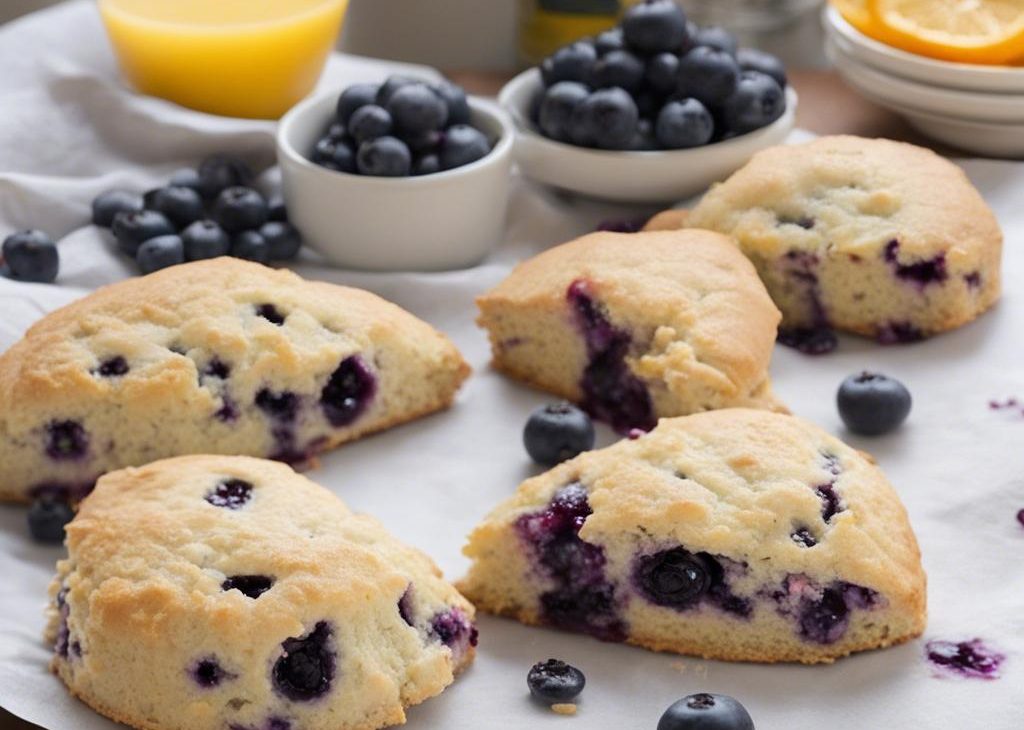
I bake these Blueberry Orange Scones when I want something small-batch and not too fussy for a weekend breakfast. They have the familiar crumbly scone edge, but the buttermilk and orange zest keep the centers tender.
The dough is wet at first, and that can feel wrong if you are used to tidy biscuit dough. I handle it with a light hand, flour the counter just enough, and cut it into wedges before the butter has time to soften too much.
The glaze is simply orange juice and powdered sugar. I spoon it over cooled scones instead of hot ones because I want a thin sweet shell, not a puddle that runs straight onto the pan.
I heat the oven to 375°F (190°C) and line a large baking sheet with parchment. Scones spread less when the pan is ready and the shaped dough can go straight into the oven.
In a large bowl, I whisk the flour, granulated sugar, salt, baking powder, and baking soda. I add the cold cubed butter and cut it in until the mixture looks like coarse crumbs with a few pea-size bits. Those bigger bits are good; they make the scones flakier.
In a small bowl, I whisk the half egg with the buttermilk, then pour it into the dry mixture. I mix with a fork just until the dough looks shaggy and wet. Overmixing is what makes scones tough, so I stop before it looks polished.
I fold in the orange zest and blueberries, then turn the dough onto a lightly floured counter. With floured hands, I pat it into a rectangle about 1 inch thick and cut it into 8 wedges. The dough is soft, so I move the wedges with a thin spatula.
The scones bake for 25 to 30 minutes, until golden brown. I let them cool before whisking the orange juice with powdered sugar and spooning the glaze over the tops. Once the glaze sets, I serve them as they are or with butter and jam.
Scones are best the day they are baked, but I keep leftovers covered at room temperature for up to 3 days or in the refrigerator for up to 5 days. To refresh one, I warm it in a 300°F (149°C) oven for a few minutes. For longer storage, I freeze baked scones for up to 1 month and glaze them after thawing.
The tender texture comes from restraint. I keep the butter cold, mix the dough only until it comes together, and stop patting as soon as I have a rough 1-inch-thick rectangle. A few cracks on the surface do not bother me; they bake into craggy edges that catch the glaze.
I also keep the blueberries to 1/2 cup as written. More berries sound tempting, but too many make this small batch wet and fragile. If I want extra fruit, I serve fresh berries alongside the scones instead of forcing more into the dough.
This is a small batch. I beat one egg, measure out half by eye, and save the rest for scrambled eggs or brushing pastry.
Yes. I add them frozen and work quickly so they do not bleed too much into the dough.
I stir a little lemon juice or vinegar into milk and let it stand for 5 minutes. It is not identical, but it works for scones.
The dough was probably overmixed or handled too much. I stop mixing when it is shaggy and pat it gently into shape.
I prefer baking them fresh, but shaped unbaked wedges can chill for a short time before baking. Baked scones also freeze well.
A warm blueberry orange scone with coffee is enough reason for me to keep buttermilk around.
These blueberry orange scones are tender, lightly sweet, and finished with a simple orange glaze. I keep the butter cold, handle the dough gently, and bake the wedges until golden.
Serving size. The batch cuts into 8 small wedges; I count 2 wedges as one serving.
Butter. Cold butter is the difference between crumbly and heavy.
Glaze. Add powdered sugar if the glaze is too thin or a drop of juice if too thick.


