
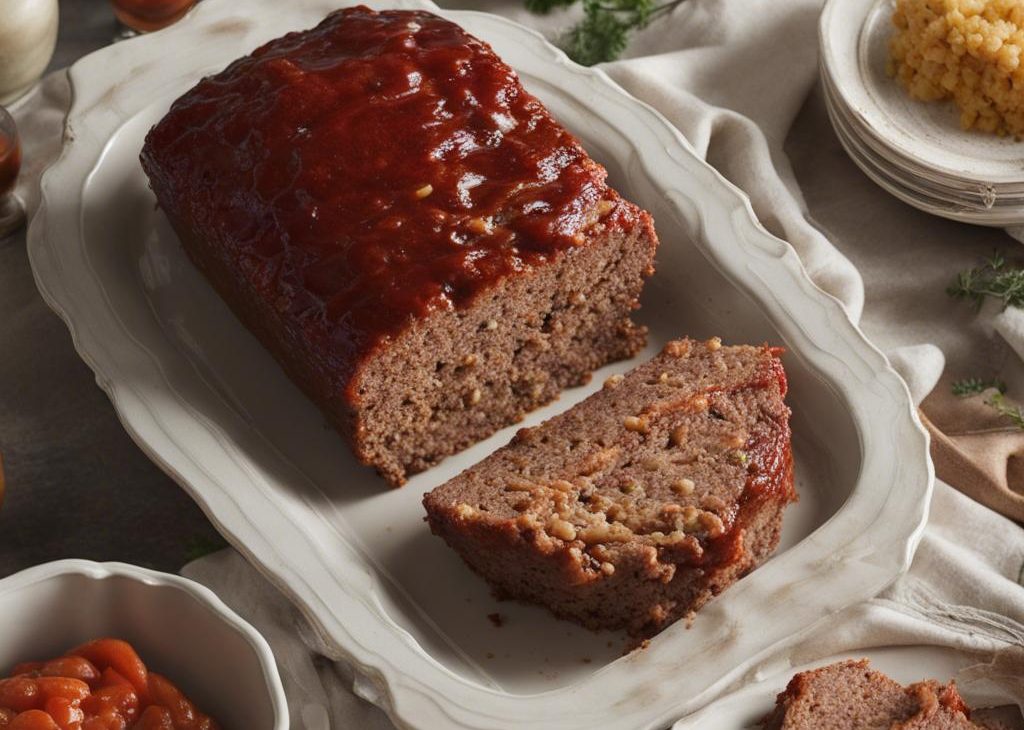
I make Brenda Gantt Meatloaf when I want a family-style meatloaf with tomato sauce tucked into the top and enough leftovers for sandwiches. The ingredient list is practical, but the recipe still asks for a little attention: the pieces need to be prepared evenly, the seasoning needs to be tasted, and the pan or pot needs to be watched instead of ignored.
I am not trying to turn Brenda Gantt Meatloaf into restaurant food. I want a dependable home recipe with the same comfort as the original idea, only written clearly enough that I can cook from it without guessing.
The detail I pay closest attention to is mixing gently and shaping 2-3 smaller loaves instead of one dense mound. When that part is handled well, the rest of the recipe feels calm. When it is rushed, I can taste it in the finished dish, so I build the method around that small bit of discipline.
Place the hamburger meat in a large bowl and break it up lightly.
Finely chop the onion and pepper, then add them to the meat.
Add 1 can tomato sauce, salt, and black pepper; beat the eggs separately and add them too.
Crush the crackers, or use bread crumbs, and mix them in gradually until the mixture holds together.
Add water to the bottom of a broiler pan or baking pan, then grease the top surface with cooking oil.
Divide the mixture into 2-3 loaves, shape them on the pan, and press a shallow valley down the center of each.
Spoon the remaining tomato sauce into the valleys and around the loaves.
Bake at 400°F for 40-45 minutes until cooked through, then rest briefly before slicing.
Leftover meatloaf keeps 3-4 days in the refrigerator. I store slices with a spoonful of tomato sauce over them, then reheat covered in a 325°F (163°C) oven or gently in the microwave. Slices freeze well for quick sandwiches.
For serving, I think about contrast. If Brenda Gantt Meatloaf is rich, I add something sharp or fresh beside it. If it is spicy, I give it something creamy. If it is soft, I like a crisp edge somewhere on the plate. That is usually enough to make the meal feel complete without adding another complicated recipe.
Crumbly meatloaf usually needs finer vegetables, enough binder, or a better rest. Dense meatloaf usually means it was mixed too aggressively. I would rather leave the mixture slightly rough than knead it smooth.
The other mistake I watch for is overcorrecting. I would rather adjust Brenda Gantt Meatloaf in small steps: a pinch of salt, a splash of liquid, a few more minutes, or a short rest. Big fixes can push a good batch too far.
Yes, but it may need longer than 40-45 minutes. Smaller loaves cook more evenly and give more sauced surface.
Plain regular crackers work well. Crush 14 crackers finely, or add bread crumbs gradually until the mixture holds.
No. The sauce seasons the meat and moistens the valleys during baking.
Use an instant-read thermometer and look for 160°F (71°C) in the center of the loaf.
Yes. Shape the loaves, cover, refrigerate, and add the final sauce right before baking.
If you make Brenda Gantt Meatloaf, leave a note with what you changed and what you kept exactly the same. I always like hearing which details mattered in another kitchen.
This Brenda Gantt meatloaf uses 3 pounds of hamburger meat, onion, pepper, eggs, crackers or bread crumbs, and tomato sauce. I bake it at 400°F for 40-45 minutes and let it rest before slicing.
Gentle hands. Stop mixing as soon as the bowl looks even.
Small loaves. Two or three loaves bake evenly.
Source salt. I read 11/2 as 1 1/2 teaspoons.
Resting helps. Slices hold together better after a pause.


