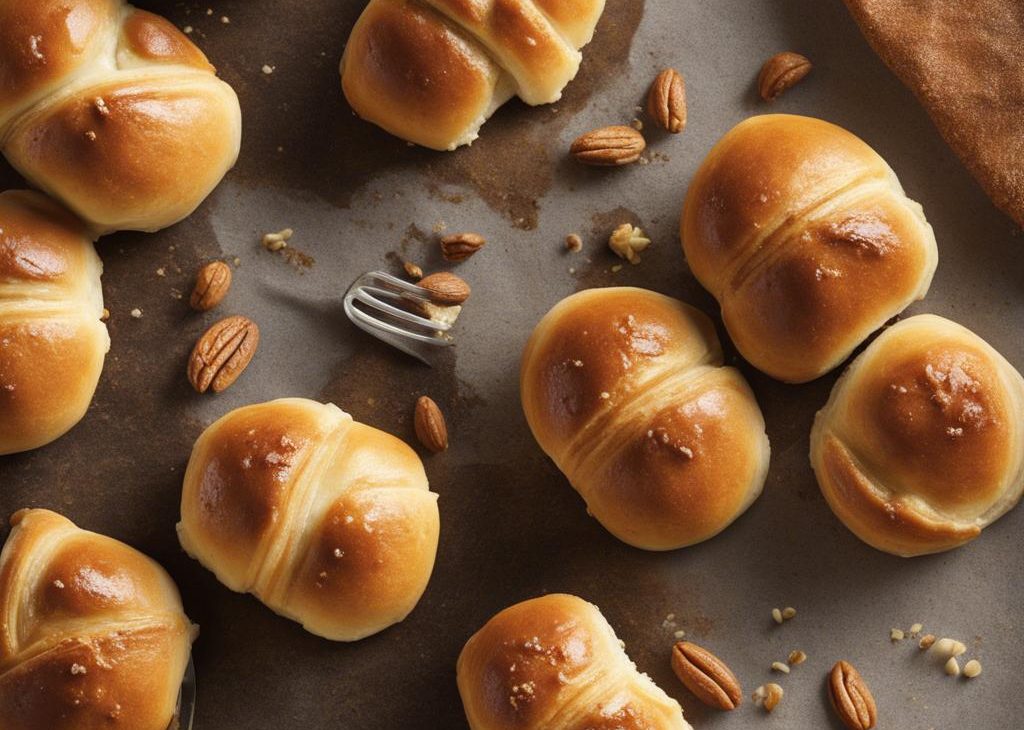
These rolls are what I bake when I want the bread basket to smell like browned butter and herbs before anyone even sits down. They are soft dinner rolls, but the sage, thyme, honey, and brown butter make them feel like they belong next to a roast or a holiday soup.
The dough is not difficult, but it does ask for time. I give it a full first rise, shape the rolls, then let them puff again before baking. Rushing yeast dough has never rewarded me.
My favorite part is the finish: reserved browned butter warmed back to liquid, mixed with a pinch of sage, and brushed over hot rolls. The tops shine, the herbs bloom, and the pan gets quiet fast.
Why these rolls are worth making
- Brown butter flavors the dough and the brushed finish.
- Honey feeds the yeast and adds gentle sweetness.
- Bread flour gives the rolls chew without making them tough.
- Fresh sage and thyme keep the flavor savory.
- The dough can be shaped into 14-16 rolls.
- They reheat well for leftovers.
Before I start
Before I start, I check my yeast and warm the milk gently. Yeast dough is forgiving in some ways, but old yeast and hot milk can ruin the batch before the flour even goes in. I want the milk warm to the touch, not steaming.
I also look at my schedule. These rolls need a first rise and a second rise, and I would rather build that time in than rush the dough. If dinner is at six, I work backward and give myself extra room for a cool kitchen.
For shaping, I clear a small work surface and keep flour nearby but not dumped everywhere. A slightly tacky dough bakes into softer rolls, so I use just enough flour to keep my hands from sticking.
What you need (and what each one is doing)
- 1/2 cup unsalted butter (8 Tbsp; 113g). I brown it slowly and scrape in the toasted bits because that is where the nutty flavor hides.
- 3/4 cup whole milk (180ml). This loosens the mixture just enough; I add it at the point the recipe calls for so the texture stays right.
- 2 and 1/4 teaspoons instant yeast (1 standard packet). This is the lift, so I check the date on the container before I start.
- 3 Tablespoons honey (64g). This adds sweetness and a darker flavor than plain syrup, so I measure it carefully.
- 1 large egg, at room temperature. Room-temperature eggs mix in more smoothly, so I set them out while I prep the pan.
- 1 teaspoon salt.
- 2 teaspoons fresh chopped sage leaves, plus extra for topping.
- 1 teaspoon fresh thyme leaves.
- 3 cups bread flour (390g). I spoon and level flour, or weigh it, so the batter stays tender instead of heavy.
- optional flaky sea salt for finishing.
How I make them
Step 1 — Brown the butter
I brown the sliced butter in a light pan until it smells nutty, then pour it into a bowl with all the browned bits. I let it cool for 10 minutes before using it in the dough.
Step 2 — Wake up the yeast
I whisk warm milk, yeast, and 1 Tablespoon honey in the mixer bowl and let it sit 5-10 minutes. A foamy top tells me the yeast is active.
Step 3 — Mix the dough
I add the remaining honey, egg, 6 Tablespoons of the browned butter, salt, sage, thyme, and 1 cup bread flour. After a short mix, I add the remaining flour and beat until the dough pulls from the sides.
Step 4 — Knead and rise
I knead with the dough hook for 5 full minutes, adding flour only a teaspoon at a time if the dough is unmanageable. Then I place it in a greased bowl and let it rise 1.5-2 hours.
Step 5 — Prepare the pan
I grease a 9x13-inch pan, punch down the dough, and divide it into 14-16 pieces. Each piece gets tucked into a smooth ball and arranged in the pan.
Step 6 — Second rise and bake
I cover the shaped rolls and let them rise 45-60 minutes. Then I bake at 350°F (177°C) for 23-27 minutes, rotating the pan halfway and tenting if the tops brown too fast.
Step 7 — Brush and finish
I warm the remaining browned butter, stir in a pinch of chopped sage, and brush it over the hot rolls. If I use flaky salt, I sprinkle it on while the butter is still glossy.
The cues I trust
Good dough feels soft and a little tacky, not dry. After kneading, it should slowly bounce back when poked. After the second rise, the rolls should look puffy and touch each other in the pan.
How I time it
When I make these for a meal, I treat the rise times as flexible windows instead of exact appointments. If the dough is moving slowly, I give it more time rather than adding heat. If it is ready early, I shape the rolls and let the second rise happen at a calm pace while the rest of dinner comes together. I also write the finish time on a scrap of paper when I start, because guessing later is how I end up cutting too soon.
Tips from my kitchen
- Check milk temperature. Warm is good; hot milk can hurt the yeast.
- Do not over-flour. Sticky dough becomes soft rolls. Too much flour makes them dense.
- Use fresh herbs. Dried herbs work in emergencies, but fresh sage is much better here.
- Bake low in the oven. A lower rack helps the centers bake before the tops get too dark.
Variations I have actually tried
- Rosemary rolls Swap thyme for finely chopped rosemary.
- Garlic butter finish Add a small grated garlic clove to the final browned butter.
- No sage Use parsley and thyme for a milder herb flavor.
- Slider buns Shape 16 smaller rolls and use them for leftover turkey or ham.
- Cheesy tops Sprinkle a little Parmesan on the rolls during the last 5 minutes of baking.
Storing and reheating
I cover leftover rolls tightly and keep them at room temperature for 2-3 days or in the refrigerator for up to 1 week. To reheat, I wrap them in foil and warm at 300°F (149°C) until soft.
How I like to serve it
I serve these warm from the pan with extra butter nearby, though they do not need much. They are especially good with soups, roasted chicken, turkey, or anything with pan juices to swipe.
Frequently asked questions
Can I knead by hand?
Yes. Knead on a lightly floured surface for 5 full minutes, adding as little flour as possible.
Can I make them ahead?
Yes. Shape the rolls, cover tightly, refrigerate overnight, then let them come to room temperature and puff before baking.
Can I use all-purpose flour?
You can, but bread flour gives a chewier, stronger roll. All-purpose rolls will be a little softer.
Why did my rolls turn dense?
Usually the dough had too much flour, the yeast was weak, or the rolls did not rise long enough.
Can I freeze them?
Yes. Freeze baked rolls, thaw at room temperature, and rewarm wrapped in foil.
If I am making these for a meal, I plan the timing first and then let the dough do its quiet work.