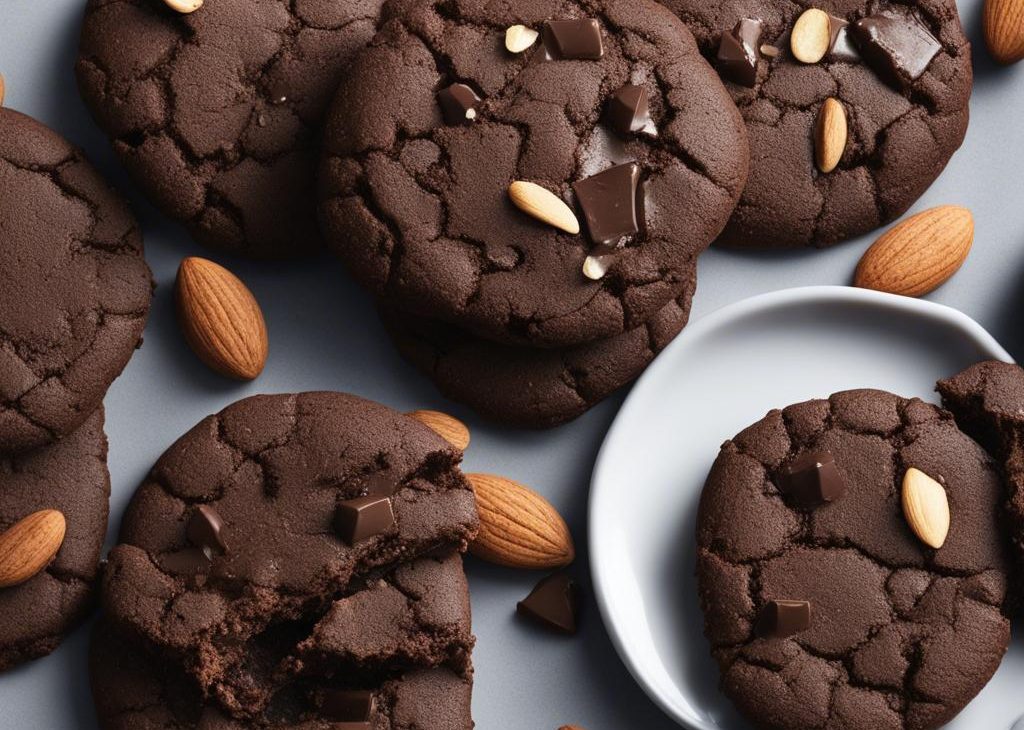
I make Dark Chocolate Almond Butter Cookies when I want something that feels homemade without pretending the little details do not matter.
What keeps me coming back is how egg, creamy almond butter, packed brown sugar carry the flavor. I measure first, clear space, and then work through the steps without trying to rush the part that needs patience.
Why I keep coming back to this
- I can taste the main ingredients clearly.
- The steps give me visual checkpoints instead of guesswork.
- The leftovers still feel like something I meant to make.
- I can measure everything before I start and then work calmly.
- Small swaps work without changing the whole personality of the recipe.
- The smell while it cooks is the nudge that brings people into the kitchen.
What you need (and what each one is doing)
- 1 large egg.
- 1 cup creamy almond butter (250g). This brings tenderness and richness; the temperature matters more than it seems.
- 1/2 cup packed brown sugar (90g). This sweetens and also helps with browning, chew, or body.
- 1 teaspoon baking soda.
- 1/4 cup unsweetened cocoa powder (21g).
- 1 cup dark chocolate chips (180g).
- 1/3 cup chocolate candy-coated sunflower seeds (optional).
How I make it
Step 1 — Set up the pan and oven
Preheat oven to 350°F (177°C) and line two large baking sheets with parchment paper or silicone baking mats.
Step 2 — Mix with attention
In a medium bowl, whisk the egg until beaten. With a big spoon or silicone spatula, or using an electric mixer, mix in/beat on medium speed the almond butter, then the brown sugar, baking soda, and cocoa powder. Beat/mix everything together very well. Depending how thick your almond butter is, you'll have to use some arm muscle! Fold in the chocolate chunks until combined.
Step 3 — Shape the cookies
Scoop the dough, about 1.5 Tablespoons of dough each (I use this medium-size cookie scoop), onto prepared baking sheets and arrange 3 inches apart. Gently press down on the dough mounds with the back of a spoon. If you find the cookie dough balls are a little oily from the almond butter (mine usually are) blot each with a paper towel. If using the sunflower seeds, press several into the tops of each cookie dough mound before baking.
Step 4 — Bake
Bake for 10 minutes. The cookies will look very soft and that's expected. For firmer cookies, bake for 12 minutes.
Step 5 — Transfer
Cool cookies for 5 minutes on the baking sheet. During this time, I like to press a few more chocolate chips into the tops of the warm cookies. (This is optional and only for looks.) Transfer to cooling rack to cool completely.
Step 6 — Store leftovers
Cover leftover cookies tightly and store at room temperature for up to 1 week.
Tips from my kitchen
- Measure flour carefully. Packed flour makes the finished batch heavy.
- Use parchment when you can. I would rather lift cleanly than pry at corners.
- Cool before judging. Many baked goods finish setting after they leave the oven.
- Watch the edges. My oven shows doneness there before the center looks dramatic.
Variations I have actually tried
- Swap half the chocolate for chopped nuts.
- Add orange zest or espresso powder with the vanilla.
- Use milk and dark chocolate together.
- Sprinkle flaky salt on warm cookies.
- Bake one test cookie before committing the whole tray.
Storing and reheating
I cool Dark Chocolate Almond Butter Cookies completely before covering it because trapped steam softens the top. Frosted, creamy, or mousse-filled pieces go in the refrigerator; plainer bakes can usually sit airtight at room temperature. For longer storage, I wrap individual portions so I can thaw only what I need.
What I serve it with
I serve these after they cool enough to show their real texture. Milk or coffee is all I add.
Frequently asked questions
Can I make this ahead?
Yes. I prep the parts the recipe allows ahead, then finish the final cook or garnish close to serving.
How do I know it is done?
I use the listed cook time of 10 minutes as a guide, then trust the visual cues in the steps.
Can I change the main ingredient?
Usually, but I change one thing at a time so I know what affected the texture.
Why did mine turn out too soft?
Most often it needed more time, more cooling, or a little less crowding in the pan.
Can I freeze leftovers?
Most baked items freeze well wrapped tightly. Crisp or sauced dishes are better refrigerated and reheated uncovered.
What I watch for after a few batches
The detail I pay attention to most is texture. I do not walk away during the moment when the recipe changes from mixed ingredients into something cooked, baked, set, or glossy. That is when a minute or two can matter more than a long list of instructions.
I also write down any change I make, even if it is only a different pan or a different brand of chocolate. The next batch is easier when I know exactly what caused a softer center, a darker edge, or a sauce that thickened faster than expected.
If you make this Dark Chocolate Almond Butter Cookies, leave a comment with what you changed or what you served with it — I like hearing the practical kitchen notes.
My last bit of advice is to make the recipe once as written before changing it heavily. After that first batch, I know where I can bend the method and where I need to leave the measurements alone.
One more note from my own kitchen: I pay attention to how the recipe feels as much as how it looks. If a batter seems unusually stiff, a sauce smells scorched, or a topping starts browning early, I slow down and use the cues in the method instead of blindly chasing the clock. That small pause has saved more batches for me than any special tool.