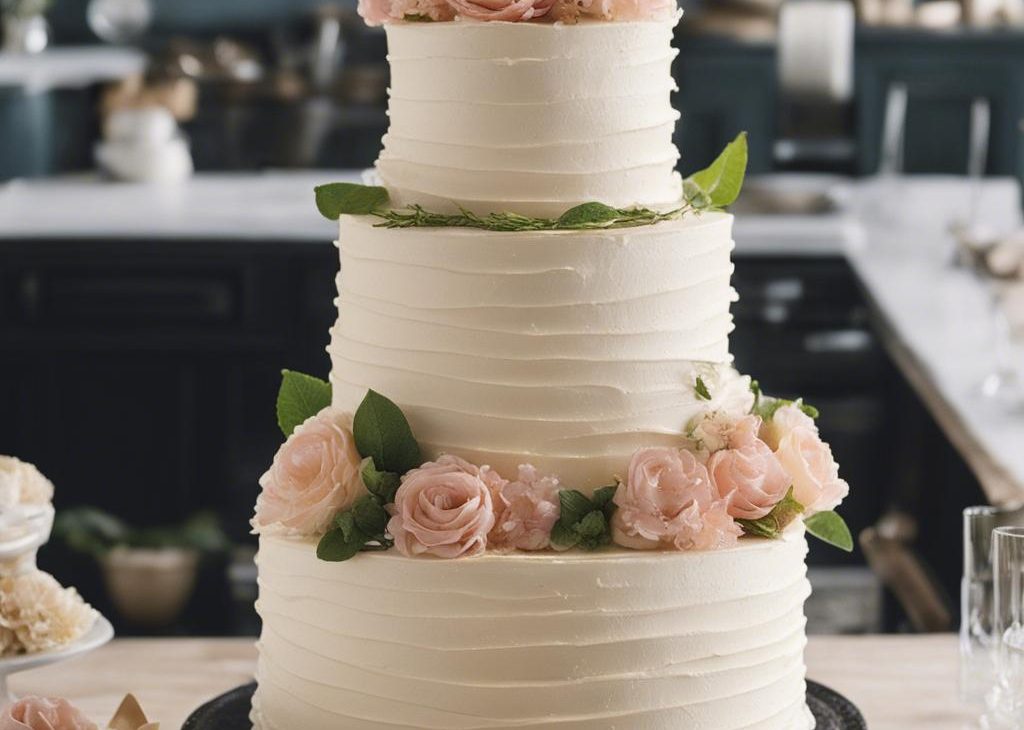
I make Simple Homemade Wedding Cake with a different mindset than a casual layer cake. I slow down, clear the counter, and treat the recipe like a set of small jobs: bake the tiers, cool them completely, make the buttercream, stack with support, then finish the outside.
The reassuring part is that none of the individual jobs is mysterious. The bottom tier uses familiar vanilla cake technique, the top tier follows the same rhythm in smaller pans, and the frosting is a sturdy buttercream that gives me time to adjust.
I do not pretend a wedding cake is a five-minute dessert. I do think a home baker can make one without panic when the pans are prepared, the ingredients are measured, and the cake has enough time to chill before assembly.
Why I like this plan
- It separates the cake into clear stages, which keeps me from rushing the decorating at the end.
- The two tiers bake at 350°F (177°C), so I am not juggling different oven temperatures.
- The ingredient list looks long because the bottom tier, top tier, filling buttercream, and final coat are all included.
- A crumb coat gives me a chance to trap loose crumbs before the outside layer goes on.
- The finished cake feels special without needing complicated piping or sugar work.
- I can bake the layers ahead, wrap them well, and assemble when the kitchen is calm.
What I measure first
- Cake flour, leaveners, and salt. I whisk the dry ingredients well so the cake bakes evenly instead of getting random pockets of baking soda or flour.
- Butter and sugar. I give them the full creaming time because that is where the batter gets its lift and fine crumb.
- Eggs, egg whites, vanilla, sour cream, and milk. I bring the cold ingredients to room temperature so the batter blends instead of looking split and heavy.
- Buttercream ingredients. I keep the butter soft but not greasy, sift or break up lumpy confectioners' sugar, and add cream slowly until the frosting spreads smoothly.
- Tools. Parchment rounds, a turntable, offset spatula, cake boards, and dowels make this feel like baking instead of a balancing act.
How I make it
Step 1 — Prepare the pans
I preheat the oven to 350°F (177°C), grease three 9x2-inch round pans, line them with parchment, and grease the parchment too. I repeat that same careful setup later for the three 6x2-inch pans, because clean release matters more here than almost anywhere.
Step 2 — Mix and bake the bottom tier
I whisk the bottom-tier dry ingredients, then beat the butter and sugar until smooth and creamy, about 3 minutes. I add the 3 eggs, 2 egg whites, and vanilla, then alternate the dry mixture with sour cream and milk. Once the batter is divided among the 9-inch pans, I bake until the centers test done and let the layers cool completely.
Step 3 — Frost the cake
I keep the oven on and prepare the 6-inch batter the same way, using the smaller set of ingredients. The layers bake for around 18-22 minutes. I check with a toothpick, cool them in the pans on racks, and do not stack or frost while any warmth remains.
Step 4 — Make the buttercream and fill
I beat the butter until creamy, add confectioners' sugar, heavy cream, vanilla, and salt, then adjust with a little more cream if it feels too stiff. I level the cooled cakes if needed, fill the layers, and apply a thin crumb coat so the loose crumbs stay put.
Step 5 — Stack, chill, and finish
I chill the crumb-coated tiers until firm, add support dowels to the bottom tier, and stack the smaller cake on its board. Then I use the final buttercream coat to smooth the sides and top. I keep the decoration simple because neat edges and a level stack already look elegant.
Tips from my kitchen
- Use parchment rounds. I do not gamble with wedding cake layers sticking to the pan.
- Cool completely. Even slightly warm cake can slide, tear, or melt the buttercream.
- Chill between coats. A cold crumb coat makes the final frosting layer much easier to smooth.
- Support the tiers. Dowels are not optional for a stacked cake; they carry the weight.
- Keep decorations light. Heavy toppings can stress the stack, so I stay simple unless I have tested the plan.
Variations I have actually tried
- Lemon: I add lemon zest to the cake batter and a small spoonful of lemon juice to the buttercream.
- Almond: I replace a little vanilla with almond extract for a bakery-style flavor.
- Berry filling: I spread a thin ring of buttercream as a dam, then add a modest layer of jam inside it.
- Textured finish: I use the back of a spoon or offset spatula for swoops instead of chasing a glass-smooth surface.
- Sheet-cake practice: I bake a small test batch first when I want to try a new flavor before making the full cake.
Storing and serving
I store the frosted tiers chilled, loosely covered once the buttercream has firmed. Before serving, I let the cake sit at room temperature long enough for the buttercream to soften slightly. Cold cake can taste muted, while warm buttercream can slump, so I aim for the middle.
Leftover slices keep best in airtight containers in the refrigerator for 3-4 days. I press a small piece of parchment against cut sides when I can; it keeps the exposed cake from drying out.
The schedule matters as much as the mixing. I like to bake the layers one day, make buttercream and crumb coat the next, then finish the outside after the cake has chilled. That rhythm gives me room to fix small problems, like a layer that needs trimming or frosting that needs a little more cream. I also keep the cake out of direct sun and away from a warm stove, because buttercream remembers every bit of heat in the room. Patience helps here.
Frequently asked questions
Can I bake the layers ahead?
Yes. I bake, cool, wrap the layers tightly, and refrigerate them for a day or freeze them for longer storage. Chilled layers are actually easier to trim and frost.
Do I need dowels?
Yes. For a stacked two-tier cake, I use dowels or another cake support system in the bottom tier. Frosting alone should not hold the weight.
Why did my buttercream look airy?
It was probably beaten fast for a long time. I switch to low speed near the end and press the frosting against the bowl with a spatula to knock out large air pockets.
Can I decorate it the same day?
Yes, but I give myself more time than I think I need. I would rather finish early and chill the cake than rush the final coat while guests are arriving.
How do I transport it?
I chill the assembled cake until firm, place it on a flat surface in the car, and drive gently. For a long trip, I transport tiers separately and stack on site.
If you make this cake, I would love to hear which part felt easier than expected and which step you would practice again.