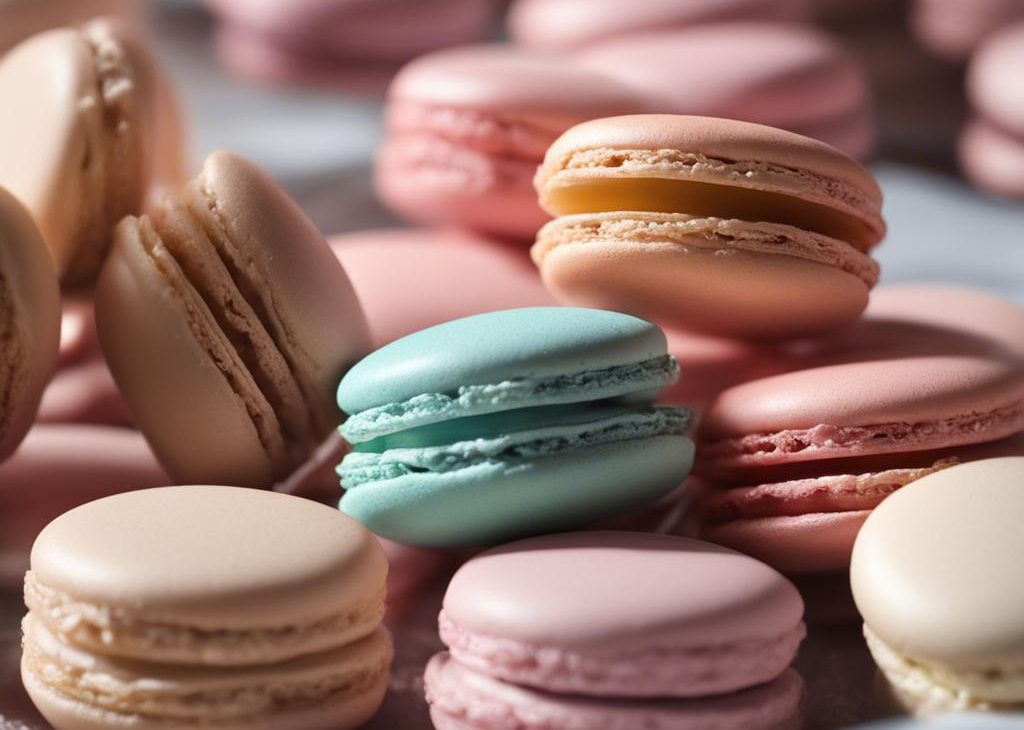

French macarons are the cookies I make when I have a quiet kitchen and enough patience to pay attention. I do not start them when I am rushing dinner, answering messages, or trying to multitask. The batter notices. A few extra folds can turn glossy batter into a puddle, and a humid counter can make the shells drag their feet before they ever reach the oven.
That is exactly why I like this step-by-step method. It breaks the cookie down into small checks: fine dry ingredients, clean egg whites, stiff peaks, gentle folding, a rest on the tray, then a short bake at 325°F (163°C). When I follow those checks instead of guessing, I get crisp tops, chewy centers, and little ruffled feet more often than not.
I still treat macarons as practice cookies. Some batches have a few lopsided shells. Some have a stubborn hollow pocket. I sandwich the good matches together, save the odd ones for snacking, and make notes for next time. That mindset keeps the process enjoyable instead of precious.
Why I respect this recipe
- The dry ingredients are pulsed first, which helps the shells bake smoother.
- The egg whites are beaten with salt, then strengthened with sifted granulated sugar.
- The batter rests before piping tools are ready, then rests again after piping to build a dry skin.
- The 1.5-inch shell size keeps the 10 minute bake realistic.
- Baking one sheet at a time makes it easier for me to judge color, feet, and texture.
- The filling is flexible, so I can use ganache, buttercream, jam, or lemon curd depending on the flavor.
What the ingredients are doing
Confectioners’ sugar sweetens the shells and blends with almond flour to create the fine, soft structure macarons need. I pulse those together for 30 seconds, then I look at the texture. If I see large almond bits, I sift or pulse again because those pieces can leave bumpy tops.
Room-temperature egg whites are the lift. I keep the bowl and beaters completely dry and grease-free because any fat can weaken the foam. Salt is tiny here, but it keeps the cookies from tasting flat. The granulated sugar or caster sugar stabilizes the meringue when it is folded in a spoonful at a time.
Flavoring or color is optional. I add only a small amount because extra liquid can loosen the batter. The filling is where I go bolder. A firm buttercream, a thick ganache, or a spoonable jam works better than anything runny.
How I make the shells
Step 1 — Add the remaining ingredients
I add the 200 g confectioners’ sugar and 100 g almond flour to a food processor or blender and pulse for 30 seconds. I do not want almond butter; I just want the mixture finer and evenly combined. Then I set it aside while I make the meringue.
Step 2 — Whip the egg whites
I beat the 120 g room-temperature egg whites with the salt on medium speed for 1 minute, then switch to high until stiff peaks form, about 3 minutes. I stop as soon as the peak stands. If I keep going, the meringue can turn dry and difficult to fold.
Step 3 — Fold with care
I fold in the sifted granulated sugar 1 tablespoon at a time, then add any flavor or color on low speed. After that, I fold the almond mixture into the meringue by hand. I scrape around the bowl, cut through the center, and turn the bowl as I go. When the batter falls from the spatula in a slow ribbon and looks smooth, sticky, and glossy, I stop.
Step 4 — Pipe, rest, and bake
I let the batter sit uncovered for 10-30 minutes while I line 2-3 baking sheets with silicone mats and fit the piping bag. I pipe 1.5-inch rounds with the bag held vertical and close to the sheet, tap the pans to release large bubbles, and let the rounds stand at least 45 minutes and up to 1 hour. They should feel dry, not sticky. Then I bake one sheet at a time at 325°F (163°C) for 10 minutes, rotating at 5 minutes.
Tips from my kitchen
- I measure by grams for macarons. Cups leave too much room for packing sugar or almond flour differently.
- I clean the bowl with a little vinegar, then dry it well, before whipping egg whites.
- I stop folding earlier than my nerves want me to. Batter keeps loosening as it is piped.
- I tap the pans firmly but not angrily. A few good taps release bubbles without flattening every round.
- I cool the shells completely on the sheet before peeling them away. Warm shells tear.
Variations I have actually tried
- Vanilla shells with vanilla buttercream are my baseline when I want to judge technique.
- A tiny pinch of cinnamon on wet shells gives a warm bakery smell without changing the batter much.
- Pink shells with raspberry jam and buttercream taste bright, but I keep the jam layer thin.
- Lemon shells with lemon curd need a buttercream ring so the curd does not slide out.
- Chocolate ganache filling works well with plain shells when I want less sweetness.
- Sprinkles can go on the wet rounds before drying, but I use a light hand so they do not weigh down the tops.
Filling and storing
I match shells by size before filling, then pipe or spoon a small amount onto one shell and press a second shell on top. I want the filling to reach the edge without spilling over. Freshly filled macarons taste good, but I like them more after a rest because the filling softens the centers.
Leftover macarons keep covered at room temperature or in the refrigerator for up to 1 week. I use the refrigerator for cream cheese, curd, or buttercream fillings. If they feel firm from the cold, I let them sit at room temperature for 10-15 minutes before serving.
Frequently asked questions
Why are my macarons hollow?
Hollows usually come from meringue that was overbeaten, batter that was under- or over-folded, or an oven that runs hot. I change one thing per batch so I can actually learn from it.
Do I have to use a kitchen scale?
For this recipe, I do. A scale saves me more frustration than any other tool.
How do I know the shells are ready to bake?
I touch one gently with a dry fingertip. If it feels tacky, I wait. If it feels dry and the surface does not smear, I preheat and bake.
Can I bake two pans at once?
I do not. One pan at a time gives me more even heat and lets me rotate at the 5 minute mark without juggling trays.
What filling should I start with?
I start with a sturdy vanilla buttercream or ganache. Runny fillings taste good but make the shells slide and soften too quickly.
The best improvement I made was writing down oven behavior after each tray. If the feet spread, if the tops browned, or if the centers stayed tacky, I note it. Macarons reward boring notes more than dramatic changes.
If your first tray is not bakery-level, do not toss the idea. I learn something from every uneven foot, hollow center, and cracked shell.
Step-by-step French macarons
Description
I make these French macarons when I can slow down and follow each cue carefully: fine almond flour, stiff egg whites, glossy folded batter, a dry shell, and a 10 minute bake. They are delicate cookies, but the method is much less stressful when I treat every batch as practice.
Ingredients You’ll Need
Instructions
- Place the confectioners' sugar and almond flour in a food processor or blender and pulse or blend for 30 seconds until thoroughly combined and fine in texture. Set aside.
- In a completely dry and grease-free bowl, beat the egg whites and salt together on medium speed for 1 minute. Switch to high speed and beat just until stiff peaks form, about 3 minutes. Do not overbeat. Gently fold in the sifted granulated sugar, 1 tablespoon at a time.
- On low speed, beat in any flavor or color at this point. Do not overmix.
- Using a metal spoon or rubber spatula, fold in the confectioners' sugar and almond flour mixture until combined. Be gentle and light-handed. Once completely combined, the mixture should be smooth, sticky, and glossy.
- Let the batter sit uncovered at room temperature for 10-30 minutes. Meanwhile, fit a piping bag with a piping tip and line 2-3 baking sheets with silicone baking mats.
- Fill the piping bag with batter and pipe evenly sized 1.5-inch rounds onto the baking sheets, holding the bag vertically and close to the sheet. Gently tap the baking sheets on the counter to remove large air bubbles. Add sprinkles, cinnamon, or edible decorations now if using.
- Let the piped rounds sit for at least 45 minutes and up to 1 hour, until they form a dry shell and do not feel sticky.
- Preheat the oven to 325°F (163°C). Bake the macarons for 10 minutes, one baking sheet at a time, rotating the pan at the 5 minute mark. Cool completely on the baking sheet before filling.
- Fill and sandwich 2 shells together to form macarons. Store leftover macarons covered at room temperature or in the refrigerator for up to 1 week.
Nutrition Facts
Servings 40
- Amount Per Serving
- Calories 37kcal
- % Daily Value *
- Total Fat 1g2%
- Trans Fat 0.0g
- Sodium 6mg1%
- Potassium 18mg1%
- Total Carbohydrate 7g3%
- Sugars 6g
- Protein 1g2%
- Calcium 7 mg
- Iron 0.1 mg
* Percent Daily Values are based on a 2,000 calorie diet. Your daily value may be higher or lower depending on your calorie needs.
Note
Use a scale. I do not rely on cup measurements for macarons because small differences show up fast.
Keep the bowl grease-free. Even a little fat can keep the egg whites from whipping properly.
Rest until dry. If a shell feels sticky, I wait before baking.
Cool before peeling. Warm macaron shells tear easily.
Frequently Asked Questions
Mine crack when the shells have not dried long enough, the oven is too hot, or large air bubbles were not tapped out.
I get the most reliable volume from fresh egg whites. Some carton whites whip, but the results vary by brand.
I prefer silicone mats for even circles and easier release, but parchment can work if it lies flat.
They keep covered at room temperature or in the refrigerator for up to 1 week, depending on the filling.
Yes, but I use a tiny amount of gel color. Too much liquid color can loosen the batter.
You may also like...