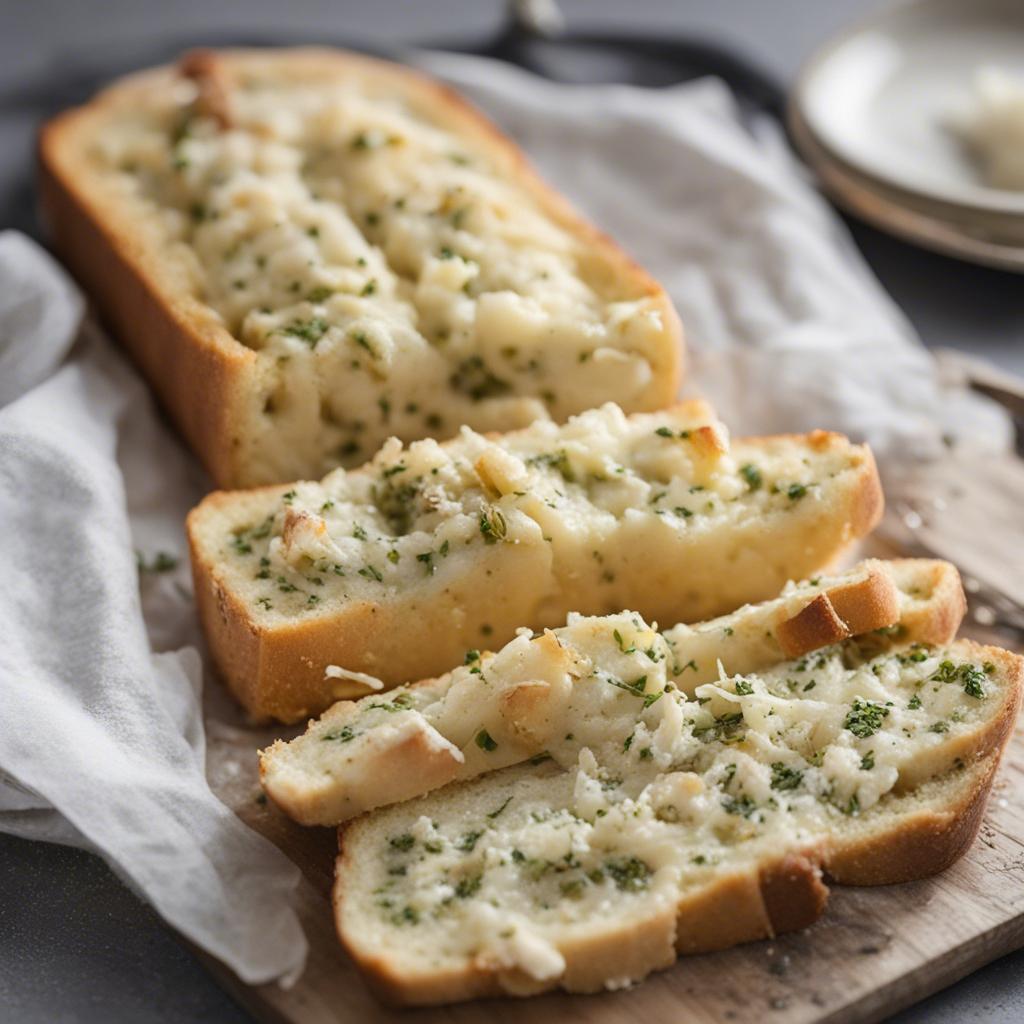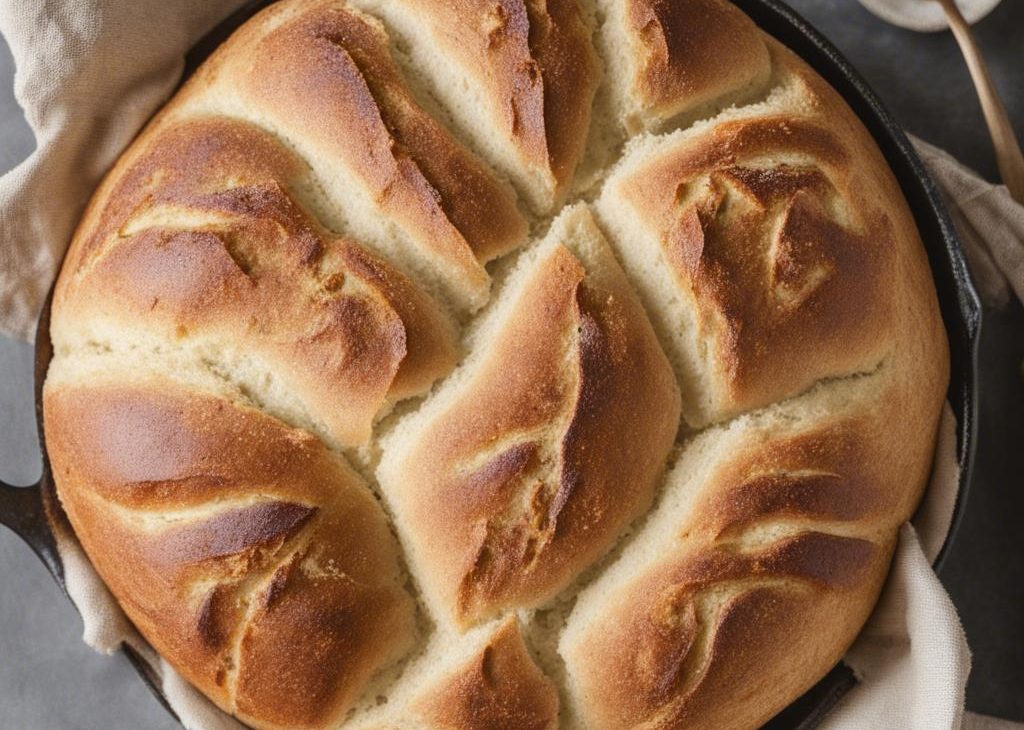

Asiago-crusted skillet bread is one of those recipes I keep in my back pocket because it solves a specific craving without asking me to pretend the kitchen is a studio. The sticky no-knead dough looks rough at first, then bakes into a chewy loaf with a crisp skillet bottom. I have made versions of it on ordinary days, and the details below are the ones I pay attention to when I want the result to be reliable.
What I like most is that the recipe has a clear personality. Asiago brings salt and nuttiness, garlic sits in the background, and black pepper gives the loaf a warm edge. I do not need extra decoration when the basics are handled well: measured ingredients, enough heat, and a little patience at the right moment.
I keep the original timing and quantities unless something in the source was obviously garbled, and I call out the spots where I watch texture, color, or temperature instead of blindly trusting the clock.
Why I keep coming back to this
- It is practical. No mixer, kneading, or special shaping is needed.
- The flavor is direct. Cheese goes inside the dough and on top for a browned crust.
- The texture matters. The crumb stays chewy while the skillet makes the base crisp.
- It fits real kitchens. A 10- to 12-inch oven-safe skillet is the only special pan.
- Leftovers have a plan. Slices toast well for soup, eggs, or sandwiches.
What you need (and what each one is doing)
- Bread flour, 3 1/4 cups (423g). The higher protein gives the loaf chew and helps the wet dough hold together.
- Coarse salt and black pepper. The bread is savory, so these seasonings need to be present from the start.
- Yeast, 2 1/4 teaspoons. One packet lifts the dough during the 3-3.5 hour rise.
- Garlic, 2 cloves. Fine mince spreads flavor through the loaf without raw bites.
- Asiago, 1 1/4 cups (125g). I put 1 cup in the dough and save 1/4 cup for the crust.
- Warm water, 1 1/2 cups (360ml). Warm water wakes the yeast and makes the dough sticky enough for no-knead bread.
How I make it
Step 1 — Add the remaining ingredients
In a large bowl I stir bread flour, salt, pepper, yeast, garlic, and 1 cup asiago, then add warm water and mix until shaggy. If it looks soupy, I add only 2 tablespoons flour. I cover it tightly and let it rise 3-3.5 hours.
Step 2 — Shape and rest
I grease a 10- to 12-inch skillet, turn the dough onto a floured counter, shape a rough ball with floured hands, and rest it in the skillet for 30 minutes.
Step 3 — Preheat the oven
I preheat to 425°F (218°C), cut a 1/2-inch slash or X in the top, and press on the remaining 1/4 cup asiago.
Step 4 — Bake and cool
I bake 30-35 minutes until golden and hollow-sounding, or 195°F (90°C) in the center, then cool on a rack for 20 minutes before slicing.
Tips from my kitchen
- Sticky is correct. Do not add flour just because the dough clings to the spoon.
- Shred cheese finely. Small shreds melt into the dough and stick better on top.
- Use the skillet. It makes the thick bottom crust that gives this loaf its character.
- Cool before cutting. Warm bread needs 20 minutes so the center does not turn gummy.
Variations I have actually tried
- Rosemary: Add 1 teaspoon finely chopped rosemary with the garlic.
- Parmesan pepper: Use parmesan and add an extra pinch of pepper.
- Chile garlic: Add 1/4 teaspoon crushed red pepper flakes.
- Everything top: Sprinkle everything seasoning over the asiago.
- Croutons: Cube day-old slices and toast at 375°F (190°C).
Storing and reheating
I keep the loaf covered at room temperature for 2-3 days or refrigerate it up to 1 week. I label leftovers when they go into the freezer because future me never remembers what is wrapped in foil.
For best texture, I reheat gently rather than blasting it. Toast slices or warm them at 325°F (163°C) for 5-7 minutes. That small step keeps the recipe tasting cooked, not merely warmed up.
What I serve with it
I serve thick slices with tomato soup, beans, chopped salad, saucy eggs, or pasta. I try to keep the sides simple so the main flavor of the recipe still has room to show up.
Frequently asked questions
Can I use all-purpose flour?
Yes, though the loaf is softer and less chewy. I use the same amount and add flour only if the dough is truly soupy.
Can I make the dough ahead?
Yes. I refrigerate the covered dough overnight, then let it come back toward room temperature before shaping.
What if I do not have a skillet?
Use a similar-size oven-safe baking dish. The crust will be less dramatic, but the loaf still bakes.
How warm should the water be?
It should feel warm, not hot, on your wrist. Hot water can weaken the yeast.
How do I know it is done?
A hollow tap is helpful, but an instant-read thermometer at 195°F (90°C) is the clearest check.
If you make this, leave a comment with the change you tried or the detail that mattered most in your kitchen. I always like hearing which small adjustments are worth repeating.
One final note from testing: I get the best results when I set everything out before starting and clean as I go. With Asiago-crusted skillet bread, that means the last few minutes are about tasting and texture instead of scrambling for a tool. It sounds small, but it makes the recipe feel calm, and calm cooking usually tastes better.
Small details I do not skip
When I make Asiago-crusted skillet bread, I take a minute to set up the ingredients before heat, batter, or dough is involved. That sounds ordinary, but it keeps me from overcooking one piece while looking for another. With ingredients like bread flour, coarse salt, freshly ground black pepper, the recipe tastes cleaner when each part is measured, trimmed, and ready before I begin.
- I read the full method first. This keeps the timing from surprising me halfway through Asiago-crusted skillet bread.
- I use the pan or glass size the recipe expects. Changing the shape changes how quickly food cooks, chills, or sets.
- I watch texture as much as time. The clock gives me a window, but color, thickness, and tenderness tell me when to move on.
- I taste where it is safe to taste. Sauces, dips, fillings, and batters without raw concerns can usually be adjusted before serving.
- I write down the useful change. If a swap works, I note it immediately because I will not remember the exact amount later.
I also give the finished Asiago-crusted skillet bread a short pause before serving when the recipe allows it. Bread slices cleaner, sauces settle, muffins firm up, and fried foods stop sputtering. That little rest is not wasted time; it is usually the difference between food that looks rushed and food I am happy to put on the table.
Asiago-crusted skillet bread
Description
This no-knead asiago skillet bread bakes up chewy in the middle with a crisp, cheese-crusted bottom. I stir the sticky dough by hand, let time do the work, and finish it in a hot skillet.
Ingredients You’ll Need
Instructions
- In a large bowl, stir together the bread flour, salt, pepper, yeast, garlic, and 1 cup (100g) asiago. Add warm water and mix until shaggy and sticky. Cover tightly and rise 3-3.5 hours.
- Grease a 10- to 12-inch oven-safe skillet. Shape dough on a floured surface, place in skillet, cover, and rest 30 minutes.
- Preheat oven to 425°F (218°C).
- Score a 1/2-inch slash or X, top with remaining 1/4 cup (25g) asiago, and press lightly.
- Bake 30-35 minutes until golden and hollow-sounding, or 195°F (90°C) in the center.
- Cool on a rack for 20 minutes before slicing.
- Store covered 2-3 days at room temperature or 1 week refrigerated.
Nutrition Facts
Servings 1
- Amount Per Serving
- Calories 1496kcal
- % Daily Value *
- Total Fat 7g11%
- Saturated Fat 1g5%
- Trans Fat 0.0g
- Sodium 3829mg160%
- Potassium 446mg13%
- Total Carbohydrate 299g100%
- Dietary Fiber 11g44%
- Sugars 1g
- Protein 50g100%
- Calcium 83 mg
- Iron 20.1 mg
* Percent Daily Values are based on a 2,000 calorie diet. Your daily value may be higher or lower depending on your calorie needs.
Note
Sticky dough is normal. Resist adding extra flour unless it puddles.
Use fine shreds. They melt and cling better.
Cool first. The crumb sets as it rests.
Toast leftovers. The crust comes back best in dry heat.
Frequently Asked Questions
Yes, though the loaf is softer and less chewy. I use the same amount and add flour only if the dough is truly soupy.
Yes. I refrigerate the covered dough overnight, then let it come back toward room temperature before shaping.
Use a similar-size oven-safe baking dish. The crust will be less dramatic, but the loaf still bakes.
It should feel warm, not hot, on your wrist. Hot water can weaken the yeast.
A hollow tap is helpful, but an instant-read thermometer at 195°F (90°C) is the clearest check.
You may also like...