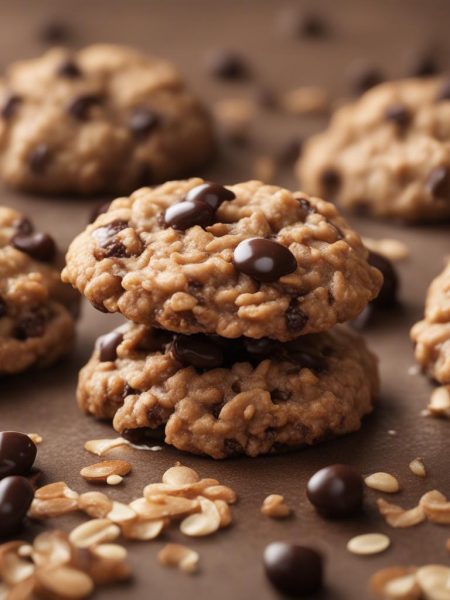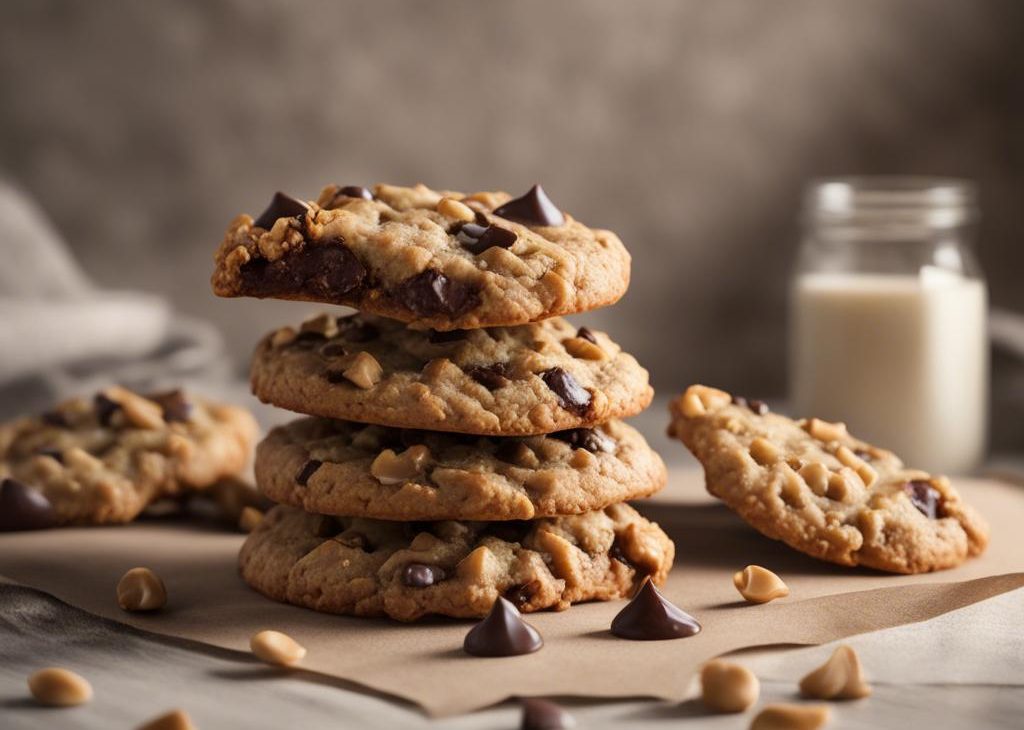

These are the cookies I make when I cannot decide between peanut butter cookies, oatmeal cookies, and chocolate chip cookies. I do not choose; I put all three ideas in one bowl and let the dough chill just long enough to behave in the oven.
The first batch taught me why the short chill matters. I was impatient, baked a tray right away, and got cookies that tasted good but spread more than I wanted.
They are big, bumpy cookies with soft centers and chewy edges. I like them slightly underbaked in the middle because they finish setting on the hot pan, and that keeps the peanut butter from tasting dry.
Why I keep coming back to this
- It uses a full cup of creamy peanut butter, so the flavor is clear and not just a background note.
- Two cups of oats add chew without making the cookies taste like breakfast bars.
- The brown sugar gives moisture, while the smaller amount of granulated sugar helps the edges brown.
- A 20-minute chill is enough for same-day cookies, but the dough can wait up to 4 days.
- The 2-tablespoon scoop makes cookies that feel bakery-sized without being hard to bake through.
- The centers look soft when they come out, which is exactly how I get a tender cookie after cooling.
What I use and what each part does
- Flour, baking powder, baking soda, and salt. This dry base gives the cookies enough structure to hold all the oats, peanut butter, and chocolate.
- Unsalted butter with brown and granulated sugar. I cream these well so the cookies lift and the edges set.
- Eggs, vanilla, and creamy peanut butter. Room-temperature eggs mix in faster, and a standard creamy spread gives the most reliable dough.
- Old-fashioned oats. I use rolled oats for chew; quick oats make the centers softer than I like.
- Semi-sweet chocolate chips. The full 2 1/2 cups looks like a lot, but the dough is big enough to carry them.
How I make it
Step 1 — Whisk the dry bowl
I whisk the flour, baking powder, baking soda, and salt in a medium bowl and set it aside.
Step 2 — Beat until smooth
I beat the softened butter for about 1 minute, then beat in the brown sugar and granulated sugar for about 2 minutes until creamy.
Step 3 — Add peanut butter and eggs
I beat in the eggs, creamy peanut butter, and vanilla on high speed for about 1 minute, scraping the bowl so the peanut butter is fully mixed.
Step 4 — Add oats and chips
I mix the dry ingredients into the wet ingredients on low speed. Add the oats, then beat in the chocolate chips. The dough will be thick and sticky.
Step 5 — Chill the dough
I cover and chill the dough for at least 20 minutes and up to 4 days. If chilled longer than 1 hour, let it sit at room temperature for at least 30 minutes before scooping.
Step 6 — Scoop the cookies
I preheat the oven to 350°F (177°C). Line baking sheets with parchment paper. Scoop 2 tablespoons of dough per cookie and space them 3 inches apart.
Step 7 — Bake soft
I bake for 12-14 minutes until the sides are lightly browned and the centers still look soft. Cool on the baking sheet for 5 minutes, then move to a wire rack.
What I watch for
I watch the dough temperature more than anything. If it feels greasy or slack, the cookies spread; if it is chilled and thick, they bake up tall.
I also pull the tray while the centers look soft. The cookies keep cooking on the hot sheet for 5 minutes, and that rest is what keeps the centers chewy.
My make-ahead rhythm
When I am making Big Fat Peanut Butter Oatmeal Chocolate Chip Cookies on a busy day, I break the work into small jobs instead of trying to race through the whole recipe. I measure the ingredients, set out the bowls and pans, and handle anything that needs cooling, draining, chilling, or resting before I start the final mix. That little bit of order keeps me from rushing the step that actually decides the texture.
I also keep the key numbers where I can see them: prep time, cook time, serving count, pan size, oven temperature, and any chill time tucked into the directions. It sounds fussy until my hands are sticky or floury and I do not want to scroll with my knuckle. More than once, that habit has saved me from missing a short rest or pulling a pan too early.
If I am serving guests, I do one quiet taste or texture check before the dish leaves the kitchen. For a salad or sauce, I check salt and acid after chilling. For baked recipes, I check the center, not just the edges. For fried food, I taste the first piece and adjust the heat before committing the whole batch.
I would rather pause for five minutes than fix a rushed dish at the table. That pause might mean letting dough relax, giving a chilled salad one more toss, wiping moisture from a vegetable, or letting a hot pan settle before cutting in. None of those moves are dramatic, but they are the small kitchen habits that make the recipe taste deliberate instead of hurried. I also keep a clean spoon nearby for tasting, because guessing at the end is how I miss the one pinch of salt or splash of acid that would have made the whole dish clearer. I write any adjustment in the margin for next time, because future me never remembers as well as I think I will.
Tips from my kitchen
- Use room-temperature eggs. Cold eggs can make the butter firm up in little bits.
- Do not skip the chill. Even 20 minutes helps these stay big and thick.
- Pull them while soft. The cookies finish setting during the 5-minute rest on the baking sheet.
- Press extra chips on top. I do this while they are warm when I want a nicer-looking cookie plate.
Variations I have actually tried
- Peanut crunch: replace 1/2 cup of the chocolate chips with chopped roasted peanuts.
- Dark chocolate: use bittersweet chips if I want the cookies less sweet.
- Salted top: sprinkle a few flakes of salt on each dough ball before baking.
- Lunchbox size: scoop 1 tablespoon per cookie and start checking at 9 minutes.
- Peanut butter cup pieces: fold in chopped cups for half of the chips for a sweeter batch.
Storing and reheating
I keep the baked cookies covered at room temperature for up to 1 week. A slice of sandwich bread in the container keeps them softer, though I remove it if the cookies start feeling too moist.
The dough also freezes well. I scoop balls onto a lined pan, freeze until solid, then bag them. I bake from frozen at 350°F (177°C), adding 1-2 minutes.
How I like to serve it
These are rich cookies, so I usually serve them with cold milk or coffee and call it enough. For a birthday tray, I bake them a little smaller and mix them with plain chocolate chip cookies so the peanut butter does not take over the whole platter.
Frequently asked questions
Can I use natural peanut butter?
I do not recommend the oily, stir-style kind here. A creamy no-stir peanut butter gives the most reliable thick dough.
Can I use quick oats?
You can, but the cookies lose some chew. I prefer old-fashioned rolled oats because they hold their shape.
Why are my cookies dry?
They may have baked too long or had too much flour. I spoon and level flour, and I pull the cookies while the centers still look soft.
How long can I chill the dough?
The dough can chill up to 4 days. If it is very firm, I let it sit at room temperature for at least 30 minutes before scooping.
Can I halve the recipe?
Yes. Halve every ingredient and use 1 large egg. The bake time stays about the same for 2-tablespoon scoops.
If you bake a batch, tell me whether you went classic chocolate chip or added peanuts; I always want the crunchy version after one bite.
Big Fat Peanut Butter Oatmeal Chocolate Chip Cookies
Description
These thick peanut butter oatmeal chocolate chip cookies are chewy at the edges, soft in the centers, and loaded with oats and chocolate. I chill the dough briefly so the cookies bake up tall instead of spreading into thin rounds.
Ingredients You’ll Need
Instructions
- Whisk the flour, baking powder, baking soda, and salt in a medium bowl and set it aside.
- Beat the softened butter for about 1 minute, then beat in the brown sugar and granulated sugar for about 2 minutes until creamy.
- Beat in the eggs, creamy peanut butter, and vanilla on high speed for about 1 minute, scraping the bowl so the peanut butter is fully mixed.
- Mix the dry ingredients into the wet ingredients on low speed. Add the oats, then beat in the chocolate chips. The dough will be thick and sticky.
- Cover and chill the dough for at least 20 minutes and up to 4 days. If chilled longer than 1 hour, let it sit at room temperature for at least 30 minutes before scooping.
- Preheat the oven to 350°F (177°C). Line baking sheets with parchment paper. Scoop 2 tablespoons of dough per cookie and space them 3 inches apart.
- Bake for 12-14 minutes until the sides are lightly browned and the centers still look soft. Cool on the baking sheet for 5 minutes, then move to a wire rack.
Nutrition Facts
Servings 32
- Amount Per Serving
- Calories 244kcal
- % Daily Value *
- Total Fat 14g22%
- Saturated Fat 7g35%
- Trans Fat 0.2g
- Cholesterol 16mg6%
- Sodium 131mg6%
- Potassium 158mg5%
- Total Carbohydrate 28g10%
- Dietary Fiber 2g8%
- Sugars 18g
- Protein 4g8%
- Calcium 26 mg
- Iron 1.6 mg
* Percent Daily Values are based on a 2,000 calorie diet. Your daily value may be higher or lower depending on your calorie needs.
Note
Use room-temperature eggs. Cold eggs can make the butter firm up in little bits.
Do not skip the chill. Even 20 minutes helps these stay big and thick.
Pull them while soft. The cookies finish setting during the 5-minute rest on the baking sheet.
Press extra chips on top. I do this while they are warm when I want a nicer-looking cookie plate.
Frequently Asked Questions
I do not recommend the oily, stir-style kind here. A creamy no-stir peanut butter gives the most reliable thick dough.
You can, but the cookies lose some chew. I prefer old-fashioned rolled oats because they hold their shape.
They may have baked too long or had too much flour. I spoon and level flour, and I pull the cookies while the centers still look soft.
The dough can chill up to 4 days. If it is very firm, I let it sit at room temperature for at least 30 minutes before scooping.
Yes. Halve every ingredient and use 1 large egg. The bake time stays about the same for 2-tablespoon scoops.