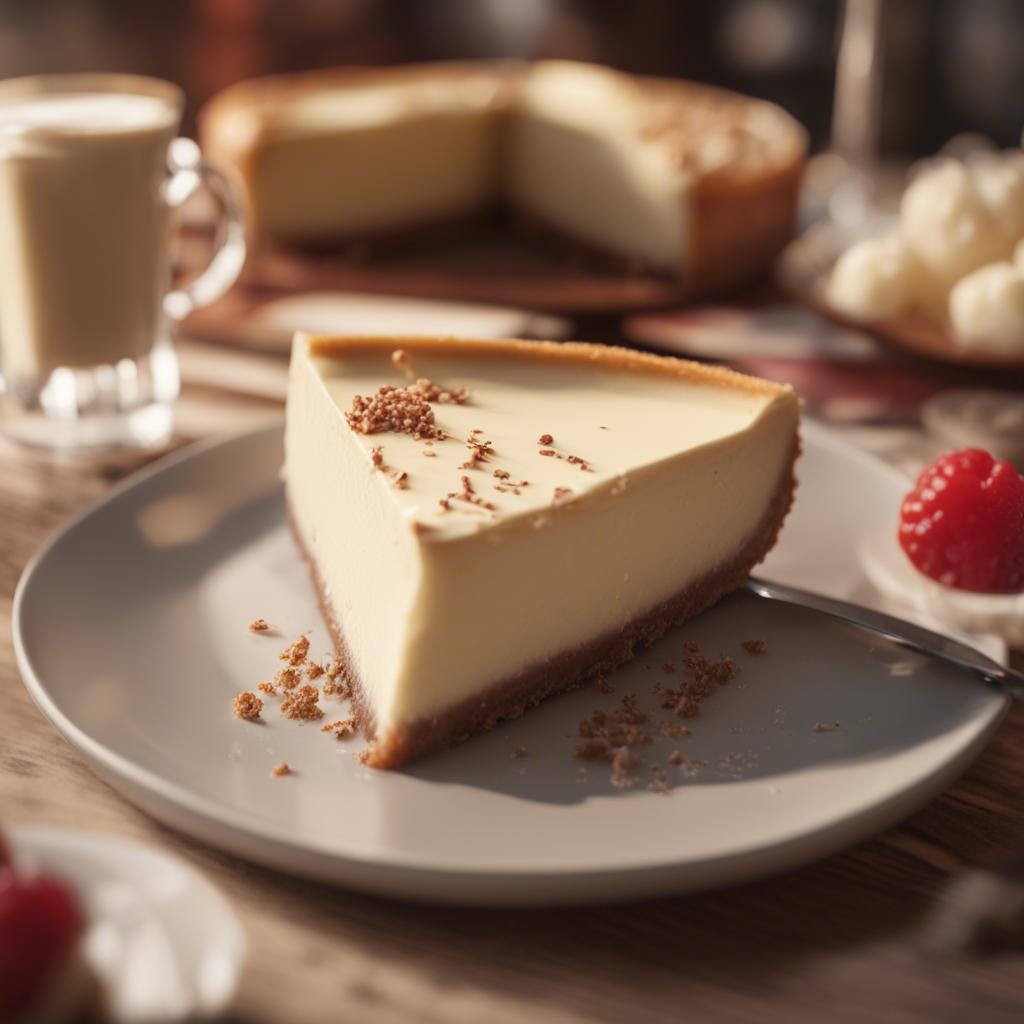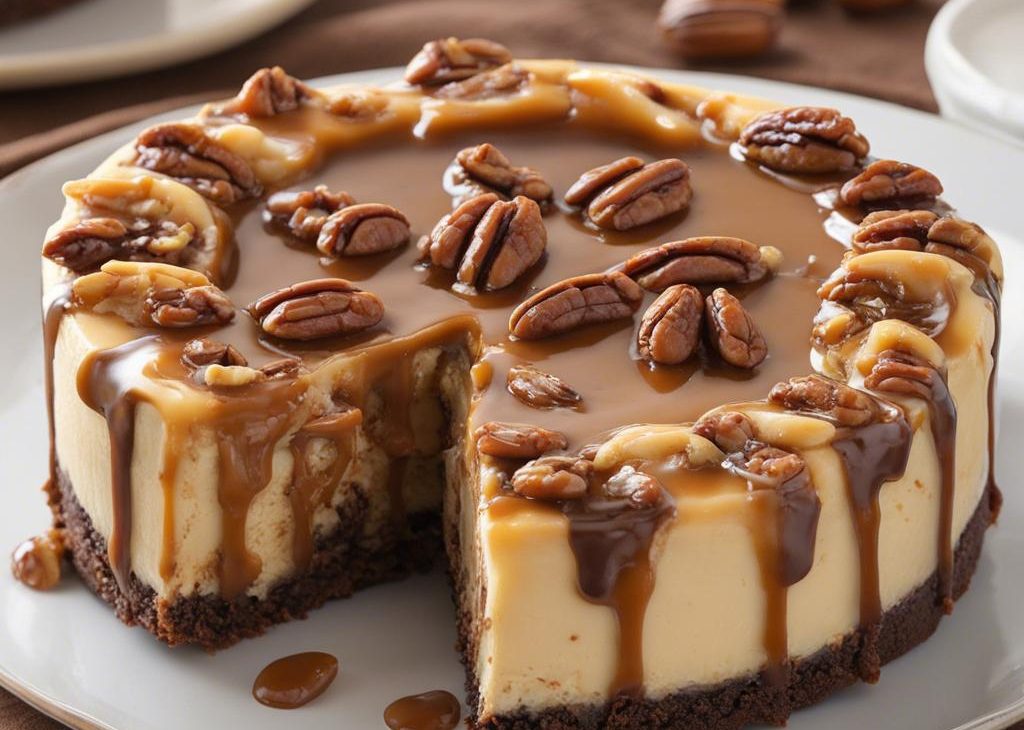

I make Caramel Turtle Cheesecake when I want something dependable, homemade, and worth repeating. I set out my ingredients before I start, keep the measurements practical, and write down the cues I actually watch while cooking.
I keep this version practical: I want the Caramel Turtle Cheesecake to taste right, look right, and be repeatable on a normal day. The timing is a guide, but I pay just as much attention to texture, aroma, color, and how the mixture moves in the pan or blender — those details save dinner more often than a timer does.
Why I make this recipe
- It gives me a reliable homemade version of Caramel Turtle Cheesecake without extra fuss or confusing shortcuts.
- The ingredient list is clear, so I am not guessing halfway through cooking.
- I can make it ahead or hold leftovers without losing the main texture.
- The method uses simple visual cues, which matters when ovens, pans, and produce behave differently.
Ingredients I pay attention to
- 22 regular Oreo cookies. about 250g.
- 4 Tablespoons unsalted butter, melted. 56g.
- 1/2 cup chopped pecans or chocolate chips. 60g; crust layer.
- 32 ounces brick-style cream cheese, softened. 904g.
- 1 cup packed light or dark brown sugar. 200g. I measure this carefully, because baking ingredients decide structure.
- 1 cup sour cream, at room temperature. 240g.
- 1 teaspoon pure vanilla extract. It rounds out the sweetness so the recipe does not taste one-dimensional.
- 1 teaspoon fresh lemon juice. optional. The acidity brightens the entire dish and keeps it from tasting heavy.
- 3 large eggs, at room temperature. It binds the wet and dry ingredients and adds a slight richness.
- 1/4 cup salted caramel sauce. 73g; swirl.
- 1/4 cup salted caramel sauce. 73g; topping.
- 4 ounces semi-sweet chocolate, chopped. 113g.
- 1/2 cup chopped pecans. 60g.
- flaky sea salt. optional.
How I make it
Step 1 — Preheat the oven
I lower oven rack to the lower third position and preheat to 350°F (177°C). Wrap aluminum foil around the bottom and tightly around the outside walls of an ungreased 9-inch springform pan.
Step 2 — Prepare the pan
In a food processor or blender, pulse the whole Oreos into a fine crumb. You should have about 2 cups (packed) crumbs, or 250g. Combine the Oreo crumbs and melted butter together in a medium bowl. Pour the mixture into the prepared pan. With medium pressure using your hand, pat the crumbs down into the bottom and partway up the sides of the pan; you can use the flat bottom of a small measuring cup to help smooth it all out if needed. Pre-bake the crust for 10 minutes. Remove from the oven and place.
Step 3 — Beat until smooth
Using a handheld or stand mixer fitted with a paddle attachment, beat the cream cheese and brown sugar together on medium-high speed in a large bowl until the mixture is smooth and creamy, about 2 minutes. Add the sour cream, vanilla extract, and lemon juice, and then beat until fully combined. On medium speed, add the eggs one at a time, beating after each addition until just blended. After the final egg is incorporated into the batter, stop mixing. To help prevent the cheesecake from deflating and cracking, avoid over-mixing the batter as best you.
Step 4 — Microwave
I pour/spoon about half (just eyeball it) of the cheesecake batter into the crust, using a spoon or offset spatula to smooth it into an even layer. If using homemade caramel, make sure it’s pourable consistency by warming it in the microwave, as it thickens considerably when made ahead and refrigerated. Drizzle about 1/4 cup (75g) caramel sauce over the top, then use a knife to gently swirl it with the batter. Add the remaining batter, again smoothing the surface into an even layer. The caramel swirl bakes into the cheesecake, so you won’t really see.
Step 5 — Bake
I bake cheesecake for 55-70 minutes or until the center is almost set. If you notice the cheesecake browning too quickly on top, tent it with aluminum foil halfway through baking. I usually bake it for 30 minutes, tent it with foil, and bake for another 35 minutes. When it’s done, the center of the cheesecake will slightly wobble if you gently tap the pan. Turn the oven off and open the oven door slightly. Let the cheesecake sit in the oven as it cools down for 1 hour. Remove from the oven, then cool cheesecake.
Step 6 — Melt the chopped chocolate
I melt the chopped chocolate, either in a double boiler or the microwave. Microwave in 20-second increments, stirring after each until completely melted. Drizzle chocolate on top of the chilled cheesecake. The chocolate will set almost immediately, because the cheesecake is cold. Top with pecans. Again, if using homemade caramel or any caramel sauce that’s been refrigerated, make sure it’s pourable consistency by warming it in the microwave. Drizzle the caramel on top. The caramel helps keep the pecans in place. Finally, lightly sprinkle flaky sea salt on top, if desired. Using a clean sharp knife,.
Tips from my kitchen
- Measure flour and sugar carefully.
- Do not rush chilling or cooling when the recipe calls for it.
- Use parchment or a properly prepared pan for easy release.
- Let baked goods finish setting before slicing or moving.
Variations I have tried
- Add toasted nuts for crunch.
- Use dark chocolate or extra salt to balance sweetness.
- Make it a day ahead for cleaner slices.
- Serve with whipped cream, ice cream, or coffee.
- Freeze individual portions for later.
Storing and making ahead
I let the recipe cool completely before covering. Most baked desserts keep best tightly covered, and individual slices or cookies freeze more neatly than a whole decorated dessert.
Frequently asked questions
Can I make this ahead?
Yes. I prep the parts that benefit from resting, chilling, or slow cooling first. If texture matters, I wait to add crisp toppings, drizzles, ice, or fresh garnishes until serving.
What should I watch most closely?
I watch the cue that changes fastest: browning for baked recipes, thickness for sauces, tenderness for meats, and texture for drinks. A timer helps, but the food gives the final answer.
Can I change the heat or sweetness?
Yes. I adjust in small amounts, then taste again. It is easy to add more sugar, vinegar, salt, chile, or liquid; it is much harder to take it back out.
What if my result seems too thick?
I loosen it gradually. For sauces and soups I use water or stock; for drinks I use the main liquid; for batters and fillings I only adjust if the recipe already allows it.
How do I keep the best texture?
I do not rush cooling, chilling, or resting. Those quiet minutes are often when cookies firm up, pies set, cheesecakes smooth out, and sauces cling properly.
If you make this Caramel Turtle Cheesecake, I would love to hear what you changed. I keep notes every time I cook, because the small real-life adjustments — the pan size, the ripeness, the extra minute on the stove — are what make a recipe dependable.
Caramel Turtle Cheesecake
Description
I make caramel turtle cheesecake when I want something dependable, homemade, and worth repeating. I set out my ingredients before I start, keep the measurements practical, and write down the cues I actually watch while cooking.
Ingredients You’ll Need
Instructions
- Lower oven rack to the lower third position and preheat to 350°F (177°C). Wrap aluminum foil around the bottom and tightly around the outside walls of an ungreased 9-inch springform pan.
- In a food processor or blender, pulse the whole Oreos into a fine crumb. You should have about 2 cups (packed) crumbs, or 250g. Combine the Oreo crumbs and melted butter together in a medium bowl. Pour the mixture into the prepared pan. With medium pressure using your hand, pat the crumbs down into the bottom and partway up the sides of the pan; you can use the flat bottom of a small measuring cup to help smooth it all out if needed. Pre-bake the crust for 10 minutes. Remove from the oven and place the wrapped springform pan inside a large roasting pan. Sprinkle 1/2 cup pecans or chocolate chips in a single layer on top of the warm crust, and set aside while you make the filling.
- Using a handheld or stand mixer fitted with a paddle attachment, beat the cream cheese and brown sugar together on medium-high speed in a large bowl until the mixture is smooth and creamy, about 2 minutes. Add the sour cream, vanilla extract, and lemon juice, and then beat until fully combined. On medium speed, add the eggs one at a time, beating after each addition until just blended. After the final egg is incorporated into the batter, stop mixing. To help prevent the cheesecake from deflating and cracking, avoid over-mixing the batter as best you can. You will have close to 6 cups of batter. At this point, get a kettle or pot of water heating up for the water bath. You need 1 inch of hot water in your roasting pan for the water bath, so make sure you boil enough.
- Pour/spoon about half (just eyeball it) of the cheesecake batter into the crust, using a spoon or offset spatula to smooth it into an even layer. If using homemade caramel, make sure it's pourable consistency by warming it in the microwave, as it thickens considerably when made ahead and refrigerated. Drizzle about 1/4 cup (75g) caramel sauce over the top, then use a knife to gently swirl it with the batter. Add the remaining batter, again smoothing the surface into an even layer. The caramel swirl bakes into the cheesecake, so you won't really see it when you cut into the dessert.
- If needed for extra visuals, see my How to Make a Cheesecake Water Bath; the visual guide will assist you in this step. Boil a pot of water. You need 1 inch of water in your roasting pan for the water bath, so make sure you boil enough. I use an entire kettle of hot water. Place the pan inside of a large roasting pan. Carefully pour the hot water inside of the pan and place in the oven. (Or you can place the roasting pan in the oven first, then pour the hot water in. Whichever is easier for you.).
- Bake cheesecake for 55-70 minutes or until the center is almost set. If you notice the cheesecake browning too quickly on top, tent it with aluminum foil halfway through baking. I usually bake it for 30 minutes, tent it with foil, and bake for another 35 minutes. When it's done, the center of the cheesecake will slightly wobble if you gently tap the pan.
- Turn the oven off and open the oven door slightly. Let the cheesecake sit in the oven as it cools down for 1 hour. Remove from the oven, then cool cheesecake completely at room temperature. Once completely cooled, refrigerate the cheesecake for at least 4 hours or overnight.
- Use a knife to loosen the chilled cheesecake from the rim of the springform pan, then remove the rim.
- Melt the chopped chocolate, either in a double boiler or the microwave. Microwave in 20-second increments, stirring after each until completely melted. Drizzle chocolate on top of the chilled cheesecake. The chocolate will set almost immediately, because the cheesecake is cold. Top with pecans. Again, if using homemade caramel or any caramel sauce that's been refrigerated, make sure it's pourable consistency by warming it in the microwave. Drizzle the caramel on top. The caramel helps keep the pecans in place. Finally, lightly sprinkle flaky sea salt on top, if desired.
- Using a clean sharp knife, cut into slices for serving. For neat slices, wipe the knife clean and dip into warm water between each slice.
- Cover and store leftover cheesecake in the refrigerator for up to 5 days.
Nutrition Facts
Servings 12
- Amount Per Serving
- Calories 461kcal
- % Daily Value *
- Total Fat 39g60%
- Saturated Fat 21g105%
- Trans Fat 1.0g
- Cholesterol 105mg35%
- Sodium 264mg11%
- Potassium 190mg6%
- Total Carbohydrate 26g9%
- Dietary Fiber 1g4%
- Sugars 24g
- Protein 6g12%
- Calcium 102 mg
- Iron 1.4 mg
* Percent Daily Values are based on a 2,000 calorie diet. Your daily value may be higher or lower depending on your calorie needs.
Note
Measure before starting.
Use the visual cues, not only the clock.
Cool or rest fully when directed.
Taste and adjust at the end.
Frequently Asked Questions
Yes. I prep components ahead and finish any crisp, fresh, chilled, or drizzled parts close to serving for the best texture.
Yes — adjust salt, sweetness, acid, or heat in small amounts and taste between additions.
Cool completely, cover well, and refrigerate. Reheat gently or serve chilled depending on the recipe.
Follow the visual cues as closely as the time. Texture, browning, thickness, and doneness matter most.
Many portions freeze well, especially baked goods, sauces, soups, and cooked meats. Wrap tightly and thaw gently.
You may also like...