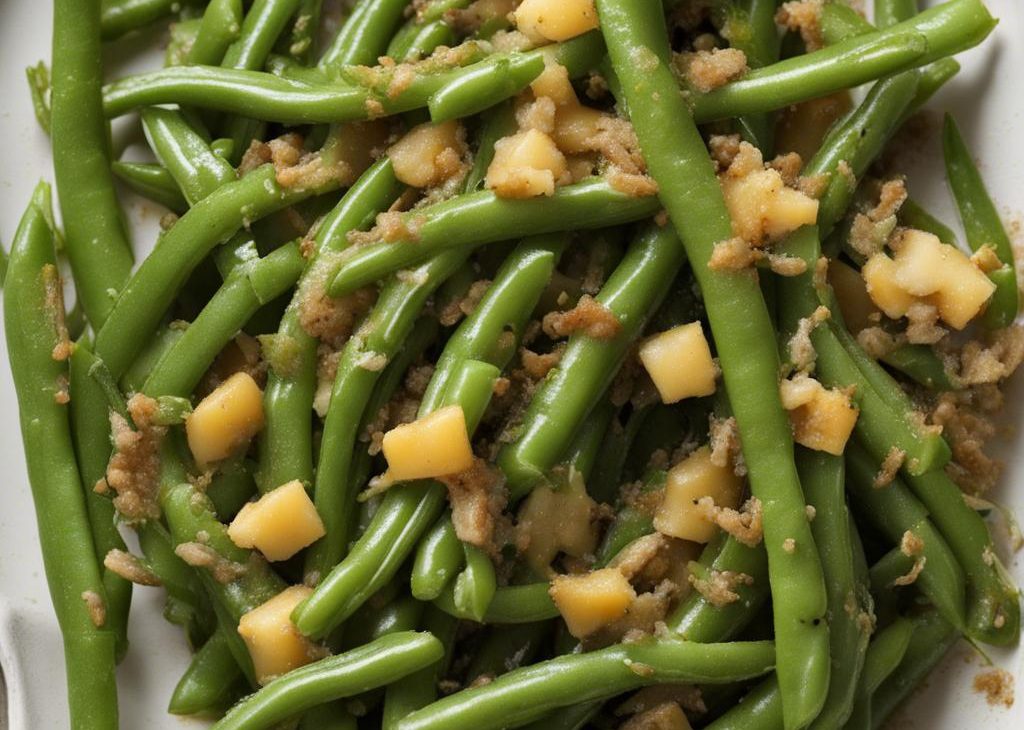

I make these Cheddar-style green beans when I want a side dish that feels a little more cared for than plain steamed vegetables. The skillet time is short, but onion, garlic, butter, and cheddar make the beans taste like they belong next to a full dinner plate.
The first time I tested this, I added the cheese too early and watched it cling to the skillet instead of the beans. Now I cook the beans until tender, turn off the heat, and finish with cheddar right before serving.
It is a small-batch recipe for 2 servings, which I like for weeknights because nothing gets lost in the refrigerator. If I need more, I scale the pan up instead of crowding the beans.
Why I keep coming back to this
- It respects the source. I keep the listed amounts and times close, then focus on clean prep and better pacing.
- The flavor has a clear direction. Cheddar-style green beans tastes best when the main ingredient is not buried under random extras.
- I can prep in stages. Measuring, chopping, chilling, or cooling ahead makes the final cooking feel calm.
- The texture is easy to read. I watch for bubbling, crisp edges, a set center, or glossy dressing instead of trusting the clock blindly.
- It scales with care. If I make more, I use a wider pan or extra bowl rather than piling everything deeper.
- Leftovers are manageable. I know how to store it without ruining the best part of the dish.
What you need and why it matters
- frozen cut green beans (1 packaged portion). This is where the fresh snap and color come from, so I avoid burying it under too much sauce.
- 1 garlic clove (minced). This makes the dish taste finished rather than flat, even though the amount is small.
- salt and pepper (to taste).
- 1 tablespoon onion (finely chopped).
- 1 teaspoon butter. This controls body and tenderness, so I measure instead of guessing.
- 2 tablespoons shredded cheddar cheese. This brings richness and salt; I keep the temperature gentle so it melts or blends smoothly.
How I make it
Step 1 — Prep the ingredients
I blanch the frozen cut green beans in boiling water just until they lose their icy edge and turn brighter. I take a minute here to clear the counter because rushing the first step usually costs me time later.
Step 2 — Prepare the pan
I drain the beans well, shaking the colander so extra water does not thin out the butter in the skillet.
Step 3 — Melt the butter
I melt 1 teaspoon butter in a large skillet over medium heat, then cook 1 tablespoon chopped onion and the minced garlic clove for about 5 minutes.
Step 4 — Season to taste
I add the drained beans, season with salt and pepper, and cook about 10 minutes, until the beans are tender but not dull.
Step 5 — Check the texture
I take the skillet off the heat and scatter 2 tablespoons shredded cheddar over the warm beans right before serving. I do the last visual check before serving, because that is when small fixes are easiest.
Tips from my kitchen
- Blanching first keeps the centers from tasting frozen after the skillet step.
- I drain the beans longer than I think I need to; watery beans make the cheese slide off.
- A fine shred of cheddar melts faster than a thick shred.
- I season after the beans hit the skillet because frozen beans can carry extra surface moisture.
Variations I have actually tried
- Add: a pinch of crushed red pepper with the garlic for a little heat.
- Swap: cheddar for Monterey Jack when I want a milder side.
- Use: fresh trimmed green beans; I simmer them a few minutes longer before the skillet.
- Add: crisp bacon bits at the end for a smoky version.
- Finish: with lemon zest if the plate already has something rich.
Storing and reheating
I store leftovers in a shallow container for up to 3 days. I reheat them in a skillet over medium-low heat; the microwave works, but the cheese softens more evenly in a pan.
If the dish has a crisp top or crust, I reheat it uncovered in the oven or air fryer. If it is creamy, saucy, or chilled, I use gentle heat and stop as soon as it loosens. That small choice keeps leftovers from tasting like a different recipe.
What I serve with it
I serve these with roasted chicken, meatloaf, pork chops, or a baked potato supper. They also work beside scrambled eggs when I want a savory breakfast plate.
Small checks that make the difference
I do not treat the printed time as the only signal. I look at color, thickness, steam, and how the food moves when I nudge it. That habit has saved me from pale fried food, loose cheesecake filling, watery salad, and sauce that needed one more minute. The recipe still stays simple; I just give myself permission to observe before calling it done.
I also check the serving dish before the final step. Warm foods go onto a warm plate when I can manage it, cold salads go into a chilled bowl, and fried pieces get a rack or paper towel instead of a flat plate that traps steam. None of that changes the ingredient list, but it changes how the first bite lands.
If something tastes muted, I do not automatically add more of everything. I ask whether it needs salt, acid, heat, or rest. Salt sharpens, acid wakes up richness, heat should stay in the background unless the dish is meant to be spicy, and rest lets dairy, crumbs, or dressing settle. That little pause is usually enough.
I keep a clean spoon or small fork nearby for tasting, even with simple recipes. It sounds obvious, but it stops me from seasoning by habit. Some cheeses are saltier, some dressings are sweeter, and some cocoa powders taste darker than others. A quick taste keeps the recipe grounded in the actual ingredients on my counter.
When I write the recipe down for myself, I note the pan, bowl, or skillet that worked best. Size matters more than it gets credit for. Crowding traps moisture, shallow pans brown faster, and tall pans need patience. Remembering that detail helps me repeat the same result the next time.
I would rather slow down for two minutes than fix a rushed mistake for twenty. That is especially true with dairy, chocolate, fried coatings, and salads. Gentle heat, dry greens, chilled centers, and a rested cake all come from paying attention before the recipe looks finished.
I keep that habit even on busy nights, because a calm finish makes the dish taste more deliberate, more useful, and easier to repeat later.
Frequently asked questions
Can I make it ahead?
Yes. I prep the parts that can sit without losing texture, then finish the hot, crisp, or dressed step close to serving.
Can I change the seasoning?
Yes, but I change one direction at a time. I add heat, herbs, or extra garlic separately so the main flavor still comes through.
How do I keep the texture right?
I follow the visual cues more than the clock. If the center is loose, the coating is pale, or the sauce is thin, I give it more time.
What should I do with leftovers?
I cool leftovers quickly and cover them tightly. Crisp foods go back in the oven; creamy foods get gentle heat and a stir.
Can I double the recipe?
Usually, yes. I use a wider pan or two pans instead of making one deep pan, because extra depth changes cooking time.
If you make Cheddar-style green beans, tell me what you changed or what you served with it; I always like hearing the practical kitchen notes.
Cheddar-style green beans
Description
I make these cheddar-style green beans when I want a side dish that feels a little more cared for than plain steamed vegetables. The skillet time is short, but onion, garlic, butter, and cheddar make the beans taste like they belong next to a full dinner plate. I keep the method practical, preserve the source quantities, and point out the texture cues I use at home.
Ingredients You’ll Need
Instructions
- I blanch the frozen cut green beans in boiling water just until they lose their icy edge and turn brighter.
- I drain the beans well, shaking the colander so extra water does not thin out the butter in the skillet.
- I melt 1 teaspoon butter in a large skillet over medium heat, then cook 1 tablespoon chopped onion and the minced garlic clove for about 5 minutes.
- I add the drained beans, season with salt and pepper, and cook about 10 minutes, until the beans are tender but not dull.
- I take the skillet off the heat and scatter 2 tablespoons shredded cheddar over the warm beans right before serving.
Note
Blanching first keeps the centers from tasting frozen after the skillet step.
I drain the beans longer than I think I need to; watery beans make the cheese slide off.
A fine shred of cheddar melts faster than a thick shred.
I season after the beans hit the skillet because frozen beans can carry extra surface moisture.
Frequently Asked Questions
Yes. I prep the parts that can sit without losing texture, then finish the hot, crisp, or dressed step close to serving.
Yes, but I change one direction at a time. I add heat, herbs, or extra garlic separately so the main flavor still comes through.
I follow the visual cues more than the clock. If the center is loose, the coating is pale, or the sauce is thin, I give it more time.
I cool leftovers quickly and cover them tightly. Crisp foods go back in the oven; creamy foods get gentle heat and a stir.
Usually, yes. I use a wider pan or two pans instead of making one deep pan, because extra depth changes cooking time.