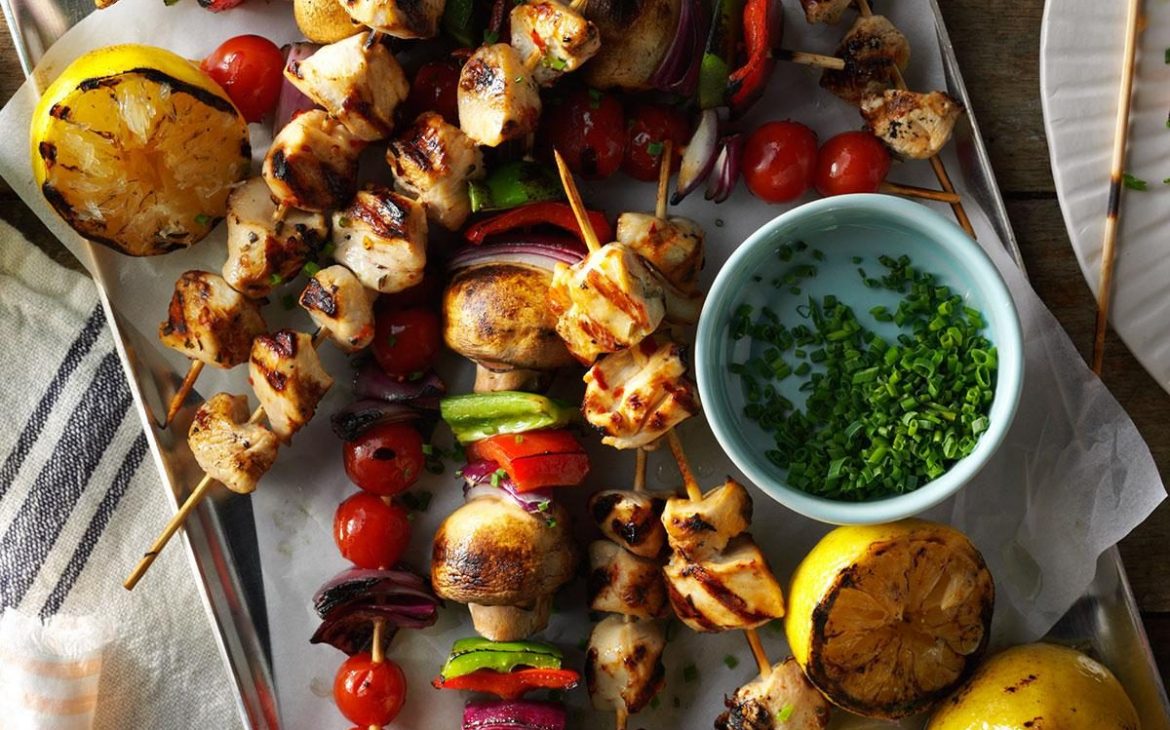

These Zoes Kitchen-Style Steak Kabobs are my answer when I want grilled steak but not a heavy steakhouse plate. The cubes of top sirloin pick up a savory marinade, the peppers blister at the edges, and the red onion turns sweet enough that I always wish I had added one more piece to each skewer.
The marinade is a little bit Mediterranean and a little bit steakhouse: olive oil, red wine vinegar, lemon, oregano, soy sauce, Worcestershire, and two kinds of garlic. I know soy sauce is not traditional in every kabob conversation, but it brings salt and umami that work beautifully with sirloin.
I keep the pieces close to 1 inch so the steak and vegetables finish together. If the steak cubes are much smaller than the peppers, the meat overcooks first. If they are huge, the vegetables are done while the center is still too rare for some people at my table.
Why I keep coming back to this
- Top sirloin has enough beefy flavor without needing a long cook time.
- The marinade uses acid, salt, herbs, and oil in a balanced way.
- Bell peppers and red onion make the skewers colorful and naturally sweet.
- Kabobs cook quickly once the grill is hot.
- The recipe scales well for a small dinner or a backyard platter.
- An 8-minute rest gives me time to warm pita or toss a salad before serving.
What you need (and what each one is doing)
- Olive oil, red wine vinegar, lemon, and oregano. These make the marinade bright and herb-forward without hiding the steak.
- Soy sauce and Worcestershire. I use both for deep savory flavor. Because they are salty, I season with salt carefully.
- Granulated garlic, minced garlic, and onion powder. The powders spread through the marinade, while minced garlic gives fresher bite.
- Top sirloin, 1/2 pound. I trim any tough edges and cut it into 1-inch cubes.
- Bell peppers. Red, green, and yellow peppers bring color and sweetness. I cut them close to the steak size.
- Red onion. It chars nicely and turns mellow on the grill.
How I make it
Step 1 — Whisk the marinade
I whisk the oil, sauces, vinegar, lemon, garlic, onion powder, oregano, salt, and pepper in a bowl big enough to hold the steak. I taste a drop before adding the meat; it should be salty and bright.
Step 2 — Marinate the steak
I add the steak cubes and stir until every side is coated. One hour works, but overnight gives a deeper flavor if I planned ahead.
Step 3 — Thread the skewers
I thread steak, peppers, and onion onto skewers, leaving a little breathing room between pieces so heat can circulate. If I use wooden skewers, I soak them first.
Step 4 — Grill and turn
I grill over medium-high heat for 8-10 minutes, turning frequently. I look for browned edges, tender vegetables, and steak cooked the way my table likes it.
Step 5 — Let it rest
I move the skewers to a platter and rest them for 8 minutes. The rest is short, but it keeps juices from running everywhere.
Tips from my kitchen
- Do not pack skewers too tightly. Crowded pieces steam instead of char.
- Oil the grill grates. A clean, oiled grate keeps steak from tearing.
- Use metal skewers when possible. They are sturdy and do not need soaking.
- Cut vegetables flat-sided. Flat pieces sit better on the grill and char more evenly.
Variations I have actually tried
- Chicken kabobs: use chicken breast or thighs and cook to 165°F (74°C).
- Vegetable-heavy: add mushrooms or zucchini chunks to the skewers.
- Spicier: add crushed red pepper to the marinade.
- Herb swap: use parsley and thyme if oregano is not available.
- Bowl dinner: slide everything off the skewers over rice with cucumber and yogurt sauce.
How I store and reheat it
I refrigerate leftover steak and vegetables in an airtight container for up to 3 days. I remove them from the skewers first so reheating is easier.
To reheat, I warm them gently in a skillet or covered in a 325°F (163°C) oven. The microwave works, but I use short bursts so the steak does not toughen.
Make-ahead rhythm
When I make this on a busier day, I separate the parts that can wait from the parts that need to happen close to serving. Chopped vegetables, measured dry ingredients, mixed sauces, and chilled doughs are all friendly to a head start. Crisp toppings, hot pans, final garnishes, and anything poured over ice are the pieces I save for last.
That small bit of planning keeps the recipe from feeling rushed. I would rather have a bowl covered in the refrigerator or a pan already lined than discover, at the noisy part of dinner, that I still need to chop, measure, and hunt for parchment. The food tastes better when I am not racing it or myself.
- Early prep: I measure dry ingredients, chop sturdy vegetables, or mix sauces when the kitchen is quiet.
- Last-minute work: I save frying, grilling, icing, crisp toppings, and ice-filled drinks for the moment closest to serving.
- Clean reset: I clear the cutting board before cooking so the final steps feel calm instead of crowded.
What I serve it with
I serve these kabobs with rice, warm pita, cucumber tomato salad, hummus, or roasted potatoes. A spoonful of tzatziki or plain yogurt with lemon is especially good beside the charred peppers.
For two servings, the recipe feels generous with sides. If I am feeding hungry grill people, I double the steak and marinade.
Where I pay attention
I do not need restaurant equipment for Zoes Kitchen-Style Steak Kabobs, but I do need to watch the small cues. I check texture, temperature, and timing before I move on, because those details decide whether the finished recipe tastes intentional or merely assembled. That is especially true with simple recipes, where there is not a long ingredient list to hide behind.
I also taste at the point where tasting makes sense. Sauces get adjusted after chilling, soups after simmering, baked goods after cooling, and grilled or fried foods after they have rested long enough not to burn my mouth. That habit has saved more dinners for me than any fancy tool in the drawer.
- Texture first: I look for smooth, crisp, tender, thick, or set before I trust the clock completely.
- Heat control: I would rather cook a minute longer at steady heat than scorch the outside and hope the inside catches up.
- Final seasoning: I make the last salt, pepper, lemon, or sweetener adjustment near the end, when the recipe tastes closest to how it will be served.
When I write the timing down, I still leave room for common sense. Pans, ovens, blenders, grills, and even the size of chopped vegetables change the last few minutes, so I watch the food instead of walking away.
Frequently asked questions
How long should I marinate the steak?
At least 1 hour is my minimum. Overnight gives stronger flavor, but I do not go much longer because the acid can change the texture.
Can I cook these without a grill?
Yes. I use a grill pan or broil the skewers on a foil-lined pan, turning often.
What temperature should steak kabobs be?
I cook to preference, but I start checking around 130°F (54°C) for medium-rare pieces.
Can I make these gluten-free?
Yes, if I use gluten-free soy sauce or tamari and check the Worcestershire label.
Why are my vegetables burning before the steak cooks?
The heat may be too high or the steak cubes may be too large. I keep everything close to 1 inch and turn often.
If you grill them, tell me whether you served them with rice, pita, or straight from the skewer.
Description
These Zoes Kitchen-style steak kabobs use top sirloin, bell peppers, red onion, and a lemony soy-red wine vinegar marinade. I give the steak at least an hour so the cubes grill juicy and flavorful.
Ingredients
Instructions
- Whisk the olive oil, Worcestershire sauce, onion powder, red wine vinegar, granulated garlic, soy sauce, minced garlic, lemon juice, oregano, salt, and pepper in a large bowl.
- Add the steak cubes and turn until coated. Refrigerate for at least 1 hour or overnight.
- Preheat the grill to medium-high heat.
- Thread the steak, bell peppers, and red onion onto metal skewers or wooden skewers soaked in water for 30 minutes.
- Grill the kabobs for 8-10 minutes, turning frequently, until the steak is cooked to your liking and the vegetables are lightly charred.
- Rest for 8 minutes before serving with your favorite sides.
Nutrition Facts
Servings 2
- Amount Per Serving
- Calories 346kcal
- % Daily Value *
- Total Fat 17.8g28%
- Saturated Fat 4.2g22%
- Cholesterol 101mg34%
- Sodium 424mg18%
- Potassium 647mg19%
- Total Carbohydrate 10.1g4%
- Sugars 4.7g
- Protein 35.9g72%
- Calcium 35 mg
- Iron 22 mg
* Percent Daily Values are based on a 2,000 calorie diet. Your daily value may be higher or lower depending on your calorie needs.
Note
Cut evenly. One-inch pieces cook at the same pace and stay on the skewers better.
Marinate at least 1 hour. The steak tastes much better when the marinade has time to work.
Soak wooden skewers. Thirty minutes in water helps keep them from burning too quickly.
Rest the meat. The 8-minute rest keeps the steak juicier when I slide it off the skewers.
Frequently Asked Questions
At least 1 hour is my minimum. Overnight gives stronger flavor, but I do not go much longer because the acid can change the texture.
Yes. I use a grill pan or broil the skewers on a foil-lined pan, turning often.
I cook to preference, but I start checking around 130°F (54°C) for medium-rare pieces.
Yes, if I use gluten-free soy sauce or tamari and check the Worcestershire label.
The heat may be too high or the steak cubes may be too large. I keep everything close to 1 inch and turn often.