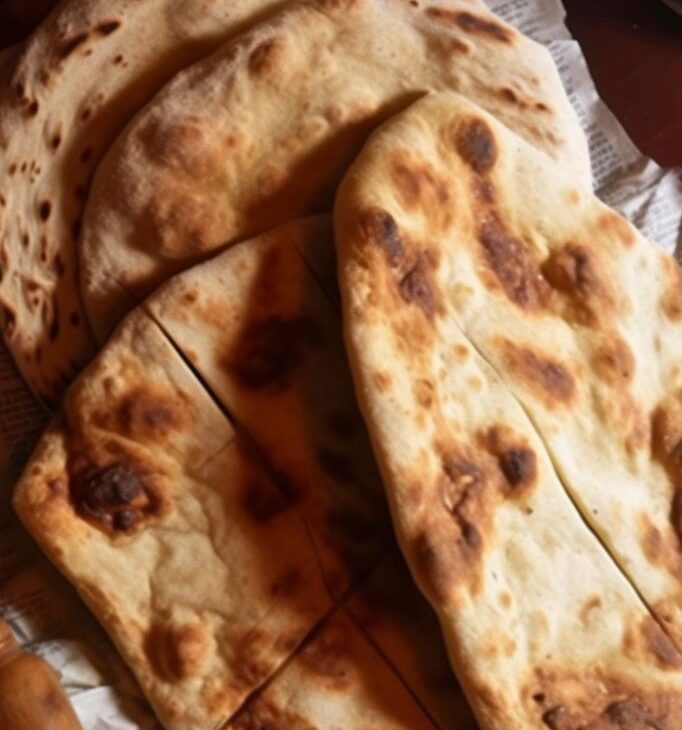

I make this flatbread when I want bread without yeast, a mixer, or a long afternoon of waiting. It is only wheat flour, cold water, salt, and olive oil, but the result feels useful and honest. I like tearing it warm at the table instead of slicing it neatly.
I do not treat this as an exact historical reconstruction. I treat it as a plain, ancient-style skillet bread that fits the idea of everyday bread: simple ingredients, hand mixed dough, quick cooking, and a soft stack wrapped in a towel.
The first time I rushed the rest, the dough snapped back and cooked into stiff rounds. Now I give it the full rest, keep the heat at medium, and let steam soften the stack. Those small habits make the bread flexible enough to fold.
Why I keep this flatbread in my back pocket
- No yeast or baking powder is needed, so I can make it from pantry basics.
- The dough is forgiving and easy to knead by hand.
- It cooks quickly in a dry heavy skillet.
- The flavor is plain enough for soups, beans, eggs, honey, or cheese.
- Resting the dough does most of the texture work.
- It makes 8 pieces, which is enough for dinner without a week of leftovers.
What I use and why it matters
- 2 cups wheat flour.
- 3/4 cup cold water.
- 1/2-1 teaspoon salt. The note I use for it is start with 1/2 teaspoon and add more to taste.
- 2 tablespoons organic olive oil.
How I make the flatbreads
Step 1 — Mix and knead
I stir the flour and salt, add the water and olive oil, and knead until the dough feels smooth rather than shaggy.
Step 2 — Rest the dough
I cover the bowl and leave it alone for at least 30 minutes so the flour hydrates and the dough relaxes.
Step 3 — Divide the dough
I divide the dough into 8 pieces, roll each into a ball, and press or roll each one thin on a lightly floured surface.
Step 4 — Cook
I cook each round over medium heat for about 2 minutes per side, looking for browned spots and a surface that no longer looks doughy.
What I watch while it cooks
The main thing I watch is heat. If the skillet is too hot, the outside blisters before the center cooks; if it is too cool, the bread dries out while waiting to brown. I want steady browning, a few dark spots, and a bread that bends after resting under the towel.
I also keep my tools ready before the busy part starts. That may sound small, but it keeps me from overcooking garlic, letting dough dry out, or scrambling for a pan while something hot is already waiting. This is especially true with recipes that move quickly once the skillet or sauce is hot.
Tips from my kitchen
- Do not skip the rest. I have tried, and the dough fights back.
- Roll thinner than expected. Thick rounds can taste doughy.
- Use a towel. Stacking the breads under cloth keeps them soft.
- Adjust water by feel. Whole wheat flour can need a teaspoon more on dry days.
Variations I have actually tried
- Herb flatbread: I add chopped rosemary or thyme to the dough.
- Sesame side: I press sesame seeds into one side before cooking.
- Garlic oil: I warm the oil with garlic, cool it, then mix the dough.
- Softer bread: I replace 1/2 cup wheat flour with all-purpose flour.
- Honey finish: I brush warm rounds with a little honey for breakfast.
How I store leftovers
These are best warm, but I cool leftovers completely and wrap the stack tightly. They keep at room temperature for 1 day or in the refrigerator for up to 3 days.
To reheat, I sprinkle a few drops of water over a flatbread and warm it in a skillet for 30-45 seconds per side. The microwave works, but the skillet brings back a better edge.
What I serve with it
I serve this with bean soup, lentils, eggs, hummus, olives, feta, or a little dish of olive oil. It is also good beside stew when I want bread that can scoop up the last spoonfuls without competing with the main dish.
The little details I do not skip
Because the ingredient list is so short, I treat the dough like the main character instead of a side task. I feel it after mixing, after resting, and again before each round hits the skillet. If it feels dry and cracks at the edges, I add water by wetting my fingertips rather than pouring from a cup. If it feels sticky, I dust the counter lightly and keep moving. That hands-on check has saved more batches than any timer.
I also cook one test round before shaping all 8. The first bread tells me whether the skillet is too hot, whether the dough needs to be thinner, and whether I want a pinch more salt on the finished stack. It is a small cook’s privilege: the test round rarely makes it to the table, because I usually tear it open and taste it while standing at the stove.
Frequently asked questions
Is this bread historically exact?
No. I see it as a simple inspired flatbread, not a documented archaeological recipe.
Can I use all-purpose flour?
Yes. It makes a softer, milder bread. I still like some wheat flour for flavor.
Why is my dough tough?
It probably needed more rest or a small splash of water. Whole wheat flour keeps absorbing moisture as it sits.
Can I bake these?
A hot stone can work, but I prefer the skillet because it keeps the bread flexible.
Can I make the dough ahead?
Yes. Refrigerate it up to 24 hours, then let it sit at room temperature for 20 minutes before shaping.
If you make this bread, tell me what you served it with; I am always looking for simple meals that need warm flatbread.
Bread Jesus Ate
Description
This simple skillet flatbread uses wheat flour, cold water, salt, and olive oil. I rest the dough, press it thin, and cook each round until lightly browned.
Ingredients You’ll Need
Instructions
- Mix the wheat flour, cold water, salt, and olive oil. Knead until smooth, cover, and rest at least 30 minutes.
- Divide into 8 pieces, roll into balls, and flatten into circles.
- Cook in a heavy skillet over medium heat for about 2 minutes per side, until lightly golden.
- Serve warm, stacked in a towel so the breads stay soft.
Nutrition Facts
Servings 8
- Amount Per Serving
- Calories 143kcal
- % Daily Value *
- Total Fat 4g7%
- Saturated Fat 1g5%
- Trans Fat 0.0g
- Sodium 1mg1%
- Potassium 33mg1%
- Total Carbohydrate 24g8%
- Dietary Fiber 1g4%
- Protein 3g6%
- Calcium 5 mg
- Iron 1.5 mg
* Percent Daily Values are based on a 2,000 calorie diet. Your daily value may be higher or lower depending on your calorie needs.
Note
Rest the dough. Thirty minutes makes shaping easier.
Use medium heat. High heat burns before the middle cooks.
Keep covered. A towel softens the edges.
Salt gently. Start low if serving salty dips.
Frequently Asked Questions
No. I see it as a simple inspired flatbread, not a documented archaeological recipe.
Yes. It makes a softer, milder bread. I still like some wheat flour for flavor.
It probably needed more rest or a small splash of water. Whole wheat flour keeps absorbing moisture as it sits.
A hot stone can work, but I prefer the skillet because it keeps the bread flexible.
Yes. Refrigerate it up to 24 hours, then let it sit at room temperature for 20 minutes before shaping.
You may also like...