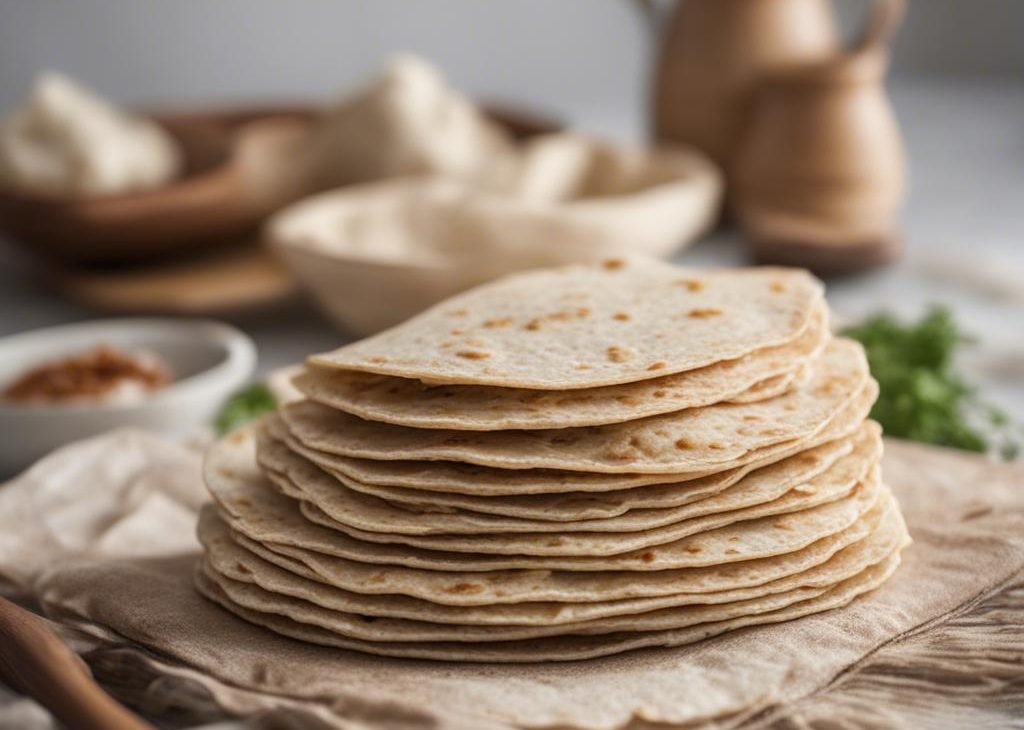

I started making these Brown Rice Tortillas because the packaged gluten-free wraps I bought kept cracking around the filling. These are smaller and more rustic than store-bought tortillas, but they bend when warm and taste lightly nutty from the brown rice flour.
The dough is different from wheat dough. It will not stretch the same way, and kneading it harder does not make it more elastic. The trick is letting the psyllium hydrate for 15 minutes and rolling each small ball between parchment or on a lightly dusted board.
I use them for quick tacos, egg wraps, and little quesadillas. They are best warm from the skillet, but I have learned how to stack and reheat them so they stay pliable for a few days.
Why I keep coming back to this
- The ingredient list is short and naturally gluten free.
- Psyllium husk powder gives structure without eggs or dairy.
- Brown rice flour adds a mild, whole-grain flavor that works with savory fillings.
- Arrowroot starch softens the texture so the tortillas are not gritty.
- The dough rests only 15 minutes, which is enough for a weeknight batch.
- Small tortillas are easier to roll and flip than one large wrap.
What you need (and what each one is doing)
- Brown rice flour, 1/2 cup. This is the main flour. I use a finely milled brand so the tortillas do not feel sandy.
- Arrowroot starch, 1/4 cup. It lightens the dough and helps the tortillas bend when warm.
- Psyllium husk powder, 3/4 teaspoon. A small amount makes the dough hold together. Too much can make the tortillas gummy.
- Salt, 1/2 teaspoon. Brown rice flour needs seasoning, especially if the fillings are simple.
- Lime zest, 1/2 teaspoon. Optional, but I like it with tacos because it adds a fresh note without adding liquid.
- Avocado oil, 1 1/2 Tablespoons. Oil keeps the dough from drying out and helps the tortillas brown lightly.
- Warm to boiling water, 3/8 cup. Hot water wakes up the psyllium and starch. I add it all at once and stir quickly.
How I make it
Step 1 — Whisk together
I combine the brown rice flour, arrowroot, psyllium, salt, and lime zest in a bowl and whisk until the psyllium is evenly dispersed. This prevents rubbery little clumps later.
Step 2 — Add oil and water
I stir in the avocado oil first, then pour in the hot water. The dough comes together quickly and looks a little rough. I scrape the bowl well so no dry flour hides at the bottom.
Step 3 — Rest the dough
I cover the bowl with a damp towel for 15 minutes. During this time the psyllium absorbs moisture and the dough becomes easier to handle.
Step 4 — Portion small balls
I split the dough in half, roll each half into a log, and cut each log into 8 pieces. Small pieces are easier to roll thin without tearing.
Step 5 — Roll and cook
I preheat a skillet to medium, about 375°F (190°C), then roll one ball into a 6-7-inch round. Each tortilla cooks for about 1 1/2 minutes per side. Brown spots are good; hard, dry edges mean the heat is too high.
Step 6 — Cook the mixture
As each tortilla finishes, I slide it onto a plate and cover it with a damp towel. The trapped steam softens the edges while I cook the rest.
Tips from my kitchen
- Use powder, not whole husks. Whole psyllium does not hydrate as evenly in this quick dough.
- Roll small. Six inches is easier than trying to make burrito-size wraps from gluten-free dough.
- Keep the towel damp. A dry towel does not steam the stack and the edges firm up.
- Adjust heat as you go. If the first tortilla scorches before it bends, I lower the burner a notch.
- Rewarm before folding. Cold gluten-free tortillas crack more easily than warm ones.
Variations I have actually tried
- Coconut oil: I swap it for avocado oil when I want a slightly richer tortilla.
- No lime: I leave out the zest for sandwich wraps or quesadillas.
- Smoky version: I add a small pinch of smoked paprika to the dry ingredients for bean tacos.
- Herb tortillas: I add 1 teaspoon finely chopped cilantro or parsley after the dough rests.
- Thicker flatbreads: I roll the balls a little smaller and cook them slightly longer for dipping.
Little details I do not skip
- I read the method before touching a bowl. A few of these recipes move quickly once heat, dough, filling, or frosting is involved, and I cook better when I know the next two steps.
- I set out the measured ingredients. It keeps me from hunting for vanilla, salt, parchment, a towel, or a pan while butter is browning or batter is waiting.
- I trust texture along with the clock. Times matter, but I also watch for the dough, filling, sauce, or topping to look and feel the way the step describes.
- I let things cool or rest when the recipe asks. That pause is usually when structure develops, slices clean up, frosting behaves, or flavors settle.
- I make one small note after cooking. If my oven runs hot, my skillet browns fast, or a dough needs another minute, I write it down for next time.
Storing and serving
I cool the tortillas completely, stack them with parchment between any that feel tacky, and refrigerate them in an airtight container for up to 5 days. To reheat, I wrap a few in a damp paper towel and microwave 15-20 seconds, or warm them one at a time in a dry skillet.
How I like to serve it
My favorite use is a soft taco with black beans, avocado, cabbage, and salsa. I also use the small tortillas for breakfast eggs because the brown rice flavor works well with salty cheese and hot sauce.
My prep rhythm
I do best when I separate the recipe into setup, cooking, and finishing instead of treating it as one long job. I clear a landing spot for hot pans or finished pieces, put a cooling rack nearby when needed, and keep a clean towel within reach. If the recipe includes chilling, freezing, filling, frosting, or slicing, I plan that time before I promise dessert or dinner. I also taste or smell when it makes sense: brown butter should smell nutty, fruit should smell ripe, and frosting should taste balanced before it goes on anything. I check the serving dish early, too, because a finished dessert or warm stack of tortillas waits for no one while I search for the right plate. When I am making a recipe for guests, I give myself a small buffer instead of aiming to finish at the exact minute everyone wants to eat. That extra cushion keeps me from cutting too soon, frosting too warm, or rushing a pan off the heat. I would rather serve five minutes later than fix a rushed mistake. That sounds fussy, but it makes the actual cooking feel calm and keeps small problems from turning into big ones.
Frequently asked questions
Why did my tortillas crack?
They were probably rolled too dry, cooked too long, or folded cold. I keep the dough covered and rewarm the tortillas before bending.
Can I make them larger?
I have made 8-inch rounds, but they are harder to move to the skillet. For reliable results, I keep them small.
Can I skip psyllium?
I would not. It is the binder that replaces gluten in this dough.
Can I use white rice flour?
It works, but the flavor is milder and the texture can feel a bit starchier.
Do they freeze?
Yes. I freeze them with parchment between layers, then reheat from frozen in a covered skillet or microwave with a damp towel.
I treat the first tortilla as my heat test, and once the skillet is dialed in, the rest of the batch moves quickly.
Brown Rice Tortillas
Description
I started making these brown rice tortillas because the packaged gluten-free wraps I bought kept cracking around the filling. These are smaller and more rustic than store-bought tortillas, but they bend when warm and taste lightly nutty from the brown rice flour. The dough is different from wheat dough. It will not stretch the same way, and kneading it harder does not make it more elastic. The trick is letting the psyllium hydrate for 15 minutes and rolling each small ball between parchment or on a lightly dusted board.
Ingredients You’ll Need
Instructions
- Whisk brown rice flour, arrowroot starch, psyllium husk powder, salt, and lime zest, if using, in a large bowl.
- Add 1 1/2 Tablespoons avocado oil or melted coconut oil and mix until the dry ingredients look evenly moistened.
- Pour in the warm to boiling water and stir with a spoon or spatula until the dough gathers into a ball.
- Cover the dough with a damp towel and rest 15 minutes so the psyllium can hydrate.
- Divide the dough in half, roll each half into a log, and cut each log into 8 equal pieces for 16 small dough balls.
- Preheat a skillet or griddle over medium heat, about 375°F (190°C). Roll one dough ball into a 6-7-inch round.
- Cook each tortilla about 1 1/2 minutes per side, adjusting heat as needed, then stack under a damp towel. Serve warm or refrigerate in an airtight container up to 5 days.
Nutrition Facts
Servings 4
- Amount Per Serving
- Calories 101kcal
- % Daily Value *
- Total Fat 5g8%
- Saturated Fat 1g5%
- Trans Fat 0.0g
- Sodium 239mg10%
- Potassium 17mg1%
- Total Carbohydrate 12g4%
- Protein 2g4%
- Calcium 2 mg
- Iron 0.7 mg
* Percent Daily Values are based on a 2,000 calorie diet. Your daily value may be higher or lower depending on your calorie needs.
Note
Hydrate the psyllium. The 15-minute rest is what makes the dough easier to roll.
Keep them warm. Stacking under a damp towel helps the edges stay pliable.
Roll gently. Gluten-free dough tears if forced too thin at the edges.
Reheat with moisture. A damp towel in the microwave brings back flexibility.
Frequently Asked Questions
They were likely too dry, overcooked, or folded cold. Keep the dough covered and warm tortillas before folding.
I do not recommend it. Psyllium is the binder that gives the gluten-free dough structure.
Yes, but the flavor is milder and the texture can be a little starchier.
Yes. Freeze with parchment between layers and reheat with a damp towel.
You can, but small 6-7-inch tortillas are much easier to roll and flip.
You may also like...