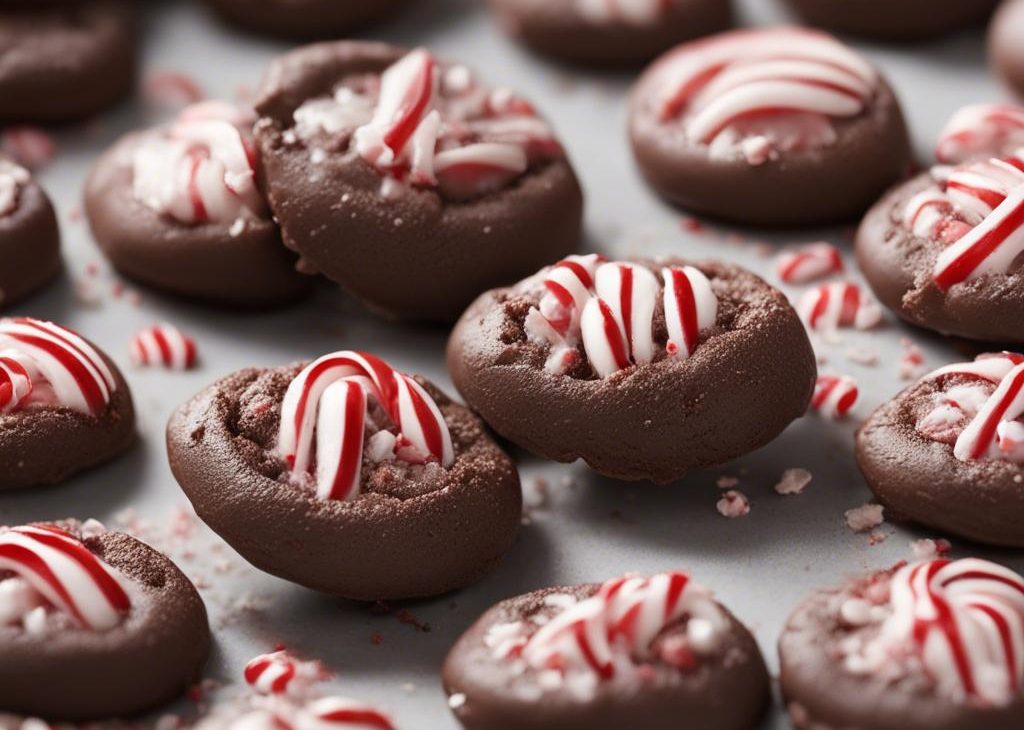

Chocolate Peppermint Thumbprints is the kind of recipe I make when I want chocolate to be the main point, not a quiet background note. I make it the way I would talk someone through it across my own counter: what I measure carefully, what I do not rush, and where the texture can go wrong if I get distracted.
I measure the amounts carefully because the balance matters here. When an ingredient seems minor, I still give it its place; chocolate recipes have a way of showing every shortcut.
What I like about Chocolate Peppermint Thumbprints is that it gives a clear payoff for the work. Some steps are quick, some need patience, but none of them are there just to make the recipe look longer.
Why I keep coming back to this
- I can taste the main chocolate flavor clearly instead of just sweetness.
- The quantities are specific enough that I do not have to guess in the middle of cooking.
- I can make parts of it ahead when the recipe needs chilling or cooling.
- The texture gives me a useful cue: set edges, glossy chocolate, thick filling, or a clean skewer.
- The recipe is flexible enough for small variations without losing its identity.
- I like that leftovers store predictably when I cool and cover them properly.
What you need (and what each one is doing)
- 1 1/2 cups all-purpose flour (188g). I use it because it gives structure so the finished recipe holds together after cooling.
- 1/2 cup unsweetened natural cocoa powder (41g).
- 1/2 teaspoon baking soda. I use it because it handles the lift, and I measure it level so the flavor stays clean.
- 1/4 teaspoon salt. I use it because it keeps the sweet flavors from tasting flat.
- 1/2 cup unsalted butter, softened (8 Tbsp; 113g). I use it because it adds richness and keeps the texture from feeling dry or chalky.
- 1/2 cup packed brown sugar (100g).
- 2/3 cup granulated sugar, divided (135g).
- 1 large egg, at room temperature. I use it because it binds the batter and helps the texture set.
- 1 teaspoon pure vanilla extract.
- 1/2 teaspoon peppermint extract.
- 2 teaspoons milk.
- 1 4-ounce semi-sweet chocolate bar, chopped (113g).
- 1/2 cup heavy cream (120ml).
- 1/8 teaspoon peppermint extract.
- 1/4 cup crushed candy canes (2 large candy canes). I use it because it has a supporting job that I notice when it is missing.
How I make it
Step 1 — Whisk the dry ingredients
Whisk the flour, cocoa powder, baking soda, and salt together in medium bowl. Set aside.
Step 2 — Beat until smooth
In a large bowl using a handheld or stand mixer fitted with a paddle attachment, beat the butter, brown sugar, and 1/3 cup (67g) granulated sugar together on medium-high speed until smooth and creamy, about 2 minutes. Add the egg, vanilla extract, and peppermint extract.
Step 3 — Shape the cookies
Roll balls of dough, a little less than 1 Tablespoon each (about 1 inch balls), and roll each into remaining 1/3 cup (67g) granulated sugar. Place dough balls onto a large lined baking sheet. Using your thumb or the end of a spatula (see post above),.
Step 4 — Chill and prepare
Chill the shaped cookies for at least 2 hours in the refrigerator or 1 hour in the freezer (or up to 4 days in the refrigerator). Cover them if chilling for longer than 3 hours.
Step 5 — Preheat and prepare
Preheat oven to 350°F (180°C). Line a baking sheet with parchment paper or a silicone baking mat. Remove chilled and shaped cookies from the refrigerator. Divide between both baking sheets, spacing the cookies about 2-3 inches apart. This recipe yields about 30 cookies, so you’ll have.
Step 6 — Bake and check
Bake for 12-14 minutes or until the edges are set. The cookies will still look and feel a little soft. Remove from the oven. The indents will have lost some shape or have puffed up, so use the end of a spatula to make an indent.
Step 7 — Transfer
Allow cookies to cool on the baking sheets for 5 minutes, then transfer to a wire rack to cool completely before filling with ganache.
Step 8 — Bring to a boil
Place chocolate into a heat-proof bowl. Heat the cream in a small saucepan until it begins to gently simmer. (Do not let it come to a rapid boil—that’s too hot!) Pour over chocolate and let it sit for 2-3 minutes to gently soften the chocolate. Slowly.
Step 9 — Garnish and finish
Spoon 1/2 – 1 teaspoon of ganache into each indentation. I fit about 3/4 teaspoon into each. Sprinkle ganache with crushed candy canes. Ganache will thicken inside the cookies and set on the tops after a few hours, but will still be creamy when you bite.
Step 10 — Wrap up
Cookies stay fresh covered at room temperature for up to 3 days or in the refrigerator for up to 1 week.
Tips from my kitchen
- Read the full recipe first. I do this before starting because several chocolate recipes move quickly once heat is involved.
- Measure before mixing. Small amounts like salt, extract, cocoa, and leavening change the final flavor more than they look like they will.
- Watch texture, not just time. I use the clock as a guide, but I trust visual cues more.
- Let it cool when the recipe says to cool. Warm chocolate, warm cake layers, or warm bars can undo careful work.
- Use an oven thermometer if bakes run odd. A few degrees can change chocolate cakes and cookies quickly.
Variations I have actually tried
- Darker chocolate: I use bittersweet chocolate when I want less sweetness and a stronger cocoa edge.
- Salted finish: A few flakes of salt on top make the chocolate taste deeper.
- Nut swap: When nuts are part of the recipe, I keep the same amount and swap only for a similar chopped nut or butter.
- Fruit note: Raspberries, strawberries, banana, or orange zest can brighten rich chocolate if the base recipe suits it.
- Mini portions: I make smaller pieces for trays, but I start checking doneness earlier.
Storing and making ahead
I cool everything completely before storing. Trapped warmth creates condensation, and condensation is how crisp edges soften, chocolate blooms, and bars get sticky.
For make-ahead planning, I separate the components when possible: cake layers wrapped on their own, fillings chilled in a bowl, or candies stored between sheets of parchment. It makes serving day calmer.
How I like to serve it
I serve Chocolate Peppermint Thumbprints in the portion size listed in the recipe card, then let the texture decide the temperature. Creamy desserts taste best cold, cakes taste better after a short sit at room temperature, and crisp snacks need an airtight container until the last minute.
If I am serving this with other desserts, I keep the plate simple. Chocolate already brings plenty of flavor, so coffee, milk, berries, whipped cream, or a salty crunch is usually enough.
Frequently asked questions
Can I make this ahead?
Yes, and I often do. I follow the cooling or chilling cues in the recipe, then store it covered so the texture stays close to freshly made.
Can I change the chocolate?
Usually yes, as long as I use the same amount and a chocolate I like eating. Very sweet chocolate makes the final recipe sweeter, while bittersweet chocolate makes it more intense.
What is the most common mistake?
Rushing the rest time is the mistake I see most. Chocolate and baked goods need time to set, cool, or firm up before they cut, dip, or stack neatly.
How do I know it is done?
I look for the cue in the instructions: set edges, a clean skewer, a thickened filling, a dry macaron shell, or chocolate that has fully set. The timer gets me close, but the cue decides.
Can I freeze it?
Many chocolate cakes, bars, and candies freeze well when wrapped tightly. Creamy mousse and some fresh garnishes do not thaw as nicely, so I freeze only the sturdy parts.
If you make Chocolate Peppermint Thumbprints, I would genuinely like to know which variation you tried and what texture cue helped you most.
Chocolate Peppermint Thumbprints
Description
Chocolate Peppermint Thumbprints is built around all-purpose flour, unsweetened natural cocoa powder, baking soda, salt. I walk through the texture cues, storage, variations, and troubleshooting I rely on so the recipe comes out consistently in a home kitchen.
Ingredients You’ll Need
Instructions
- Whisk the flour, cocoa powder, baking soda, and salt together in medium bowl. Set aside.
- In a large bowl using a handheld or stand mixer fitted with a paddle attachment, beat the butter, brown sugar, and 1/3 cup (67g) granulated sugar together on medium-high speed until smooth and creamy, about 2 minutes. Add the egg, vanilla extract, and peppermint extract and beat on high speed until combined, about 1 minute. Scrape down the sides and up the bottom of the bowl and beat again as needed to combine. Pour the dry ingredients into the wet ingredients, add the milk, and mix on low until combined. The cookie dough will be thick.
- Roll balls of dough, a little less than 1 Tablespoon each (about 1 inch balls), and roll each into remaining 1/3 cup (67g) granulated sugar. Place dough balls onto a large lined baking sheet. Using your thumb or the end of a spatula (see post above), make an indent into each cookie. If you find that the balls are cracking when you make an indent, use your hands to push back together. No worries there!).
- Chill the shaped cookies for at least 2 hours in the refrigerator or 1 hour in the freezer (or up to 4 days in the refrigerator). Cover them if chilling for longer than 3 hours.
- Preheat oven to 350°F (180°C). Line a baking sheet with parchment paper or a silicone baking mat. Remove chilled and shaped cookies from the refrigerator. Divide between both baking sheets, spacing the cookies about 2-3 inches apart. This recipe yields about 30 cookies, so you’ll have a 3rd batch with only a few cookies on the sheet.
- Bake for 12-14 minutes or until the edges are set. The cookies will still look and feel a little soft. Remove from the oven. The indents will have lost some shape or have puffed up, so use the end of a spatula to make an indent again into the warm cookies.
- Allow cookies to cool on the baking sheets for 5 minutes, then transfer to a wire rack to cool completely before filling with ganache.
- Place chocolate into a heat-proof bowl. Heat the cream in a small saucepan until it begins to gently simmer. (Do not let it come to a rapid boil—that’s too hot!) Pour over chocolate and let it sit for 2-3 minutes to gently soften the chocolate. Slowly stir until completely combined and chocolate has melted. Stir in the peppermint extract. Taste and add another drop if desired. (It’s potent so don’t go overboard!) Allow to cool for at least 10 minutes before spooning into cookies.
- Spoon 1/2 - 1 teaspoon of ganache into each indentation. I fit about 3/4 teaspoon into each. Sprinkle ganache with crushed candy canes. Ganache will thicken inside the cookies and set on the tops after a few hours, but will still be creamy when you bite into the cookies.
- Cookies stay fresh covered at room temperature for up to 3 days or in the refrigerator for up to 1 week.
Nutrition Facts
Servings 30
- Amount Per Serving
- Calories 97kcal
- % Daily Value *
- Total Fat 5g8%
- Saturated Fat 3g15%
- Trans Fat 0.2g
- Cholesterol 13mg5%
- Sodium 41mg2%
- Potassium 34mg1%
- Total Carbohydrate 13g5%
- Dietary Fiber 1g4%
- Sugars 8g
- Protein 1g2%
- Calcium 7 mg
- Iron 0.5 mg
* Percent Daily Values are based on a 2,000 calorie diet. Your daily value may be higher or lower depending on your calorie needs.
Note
My main note. I measure carefully and use texture cues before changing timing.
Cooling matters. I do not cut, dip, stack, or cover until the recipe has had time to set.
Chocolate quality shows. I use chocolate and cocoa I already like because there are not many places for dull flavor to hide.
Storage is part of the recipe. I cover tightly and separate layers with parchment when pieces might stick.
Frequently Asked Questions
Yes. I follow the chilling or cooling directions, then cover tightly until serving.
Usually, as long as the amount stays the same and the chocolate melts well.
Texture. I look for set edges, glossy melted chocolate, a thick filling, or a clean skewer depending on the recipe.
I cool completely, cover tightly, and refrigerate when the recipe includes cream, filling, or soft frosting.
Most sturdy cakes, bars, cookies, and candies freeze well; mousse and fresh garnishes are better refrigerated.
You may also like...