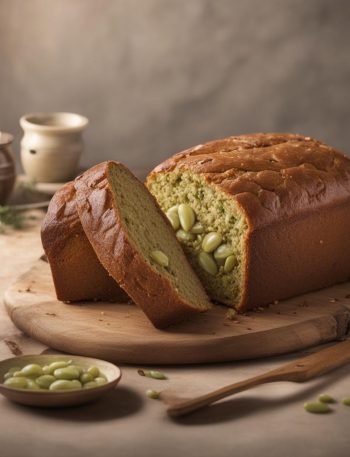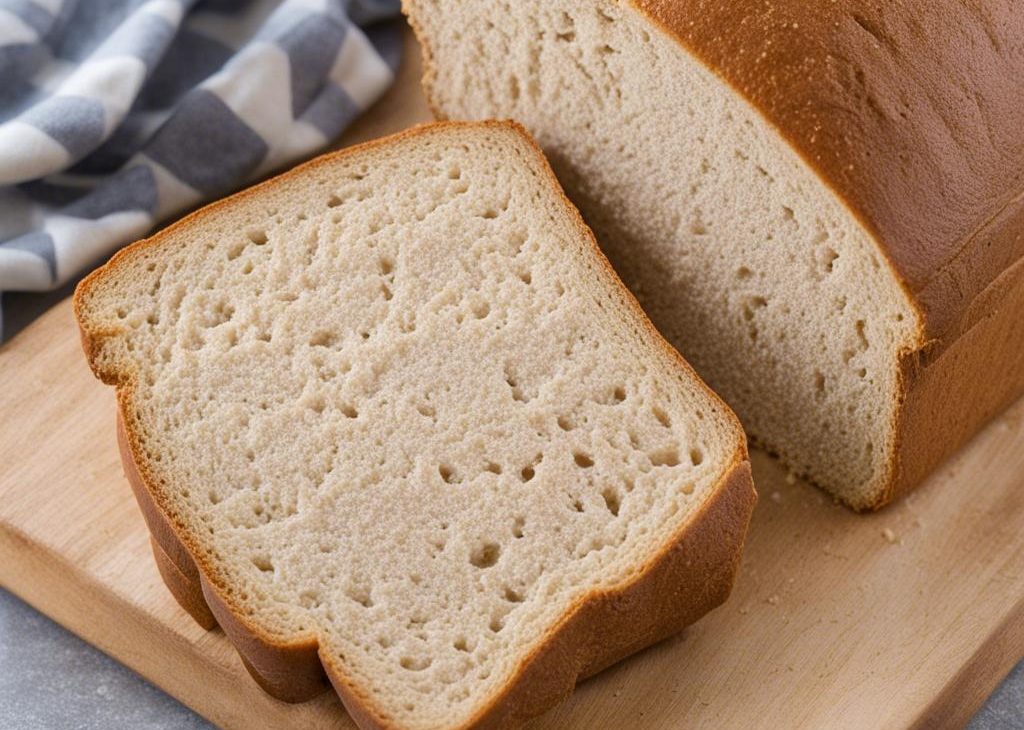

This whole wheat bread is the loaf I make when I want sandwich bread with real chew and flavor, not a soft loaf that tastes mostly like air. It takes time, but most of that time is waiting for the dough to rise. The actual hands-on work is manageable, even on a quiet weekday at home.
The recipe starts with a thick batter, almost like a sponge, made from water, milk, yeast, and 2 cups of flour. That first rise gives the flour time to hydrate and makes the finished loaf softer. The first time I skipped patience with whole wheat dough, the bread was tight and dry; this method fixed that for me.
I use the combination of whole wheat flour and bread flour when I want the tallest loaf, but the flavor is hearty either way. Honey, butter, and a tiny spoon of lemon juice or apple cider vinegar help the crumb stay tender without making the bread taste sweet or sour.
Why this loaf is worth the long rise
- The first batter-style rest hydrates the flour and keeps the bread from tasting coarse.
- Honey lightly sweetens the loaf without pushing it into dessert territory.
- Butter gives the slices a soft, flexible crumb that works for toast and sandwiches.
- The lemon juice or apple cider vinegar is tiny, but it helps brighten the wheat flavor.
- A 9×5-inch pan makes one sturdy loaf that slices neatly once cooled.
- The bread keeps up to 1 week at room temperature when wrapped tightly.
What you need (and what each one is doing)
- Water, 1 cup (240ml), and whole milk, 1/3 cup (80ml). The liquid should feel warm, not hot. Too much heat can weaken the yeast before the dough even starts.
- Yeast, 2 1/4 teaspoons (7g). I use instant or active dry yeast. If my kitchen is cold, the first rise may take closer to 2 hours.
- Whole wheat flour, 2 cups (260g). This is the hearty base. I spoon and level it or weigh it because packed flour makes a dry loaf.
- Honey, 3 Tablespoons (63g). Honey feeds the yeast a little and rounds out the wheat flavor.
- Unsalted butter, 3 Tablespoons (43g). Softened butter enriches the dough. I add it with the second round of ingredients so it does not slow the sponge.
- Lemon juice or apple cider vinegar, 1 teaspoon. I do not taste it in the finished bread, but it helps the loaf feel lighter.
- Bread flour, 1 1/3 cups (173g). Bread flour gives extra strength and a higher rise. More whole wheat flour can be used for a denser, fully whole-grain loaf.
- Salt, 1 1/4 teaspoons. Salt controls flavor and yeast activity. I add it after the sponge so the yeast gets an easy start.
- Optional oat topping. A beaten egg white and 1 Tablespoon whole oats make the top look bakery-style, but the loaf is good without it.
How I make the loaf
Step 1 — Whisk together
In a large bowl or stand mixer bowl, I whisk the 1 cup water, 1/3 cup whole milk, and 2 1/4 teaspoons yeast. I stir in the 2 cups whole wheat flour until a thick batter forms, cover it lightly, and let it double at room temperature for 60-90 minutes. In a cool kitchen, I allow up to 2 hours.
Step 2 — Add the remaining ingredients
I add the 3 Tablespoons honey, 3 Tablespoons softened butter, 1 teaspoon lemon juice or apple cider vinegar, 1 1/3 cups bread flour, and 1 1/4 teaspoons salt. With a dough hook, I mix on medium speed about 3 minutes, until the dough pulls from the bowl. By hand, I use a sturdy spoon and patience.
Step 3 — Knead the dough
I knead with the mixer for 8-10 full minutes, or by hand on a lightly floured surface for the same amount of time. The dough should feel soft and a little tacky. If it sticks badly, I add flour 1 Tablespoon at a time, stopping as soon as it is manageable.
Step 4 — Let the dough rise
I place the dough in a lightly greased bowl, turn it once to coat, cover it, and let it rise in a warm spot for 1.5-2 hours, until about doubled. I look at the dough more than the clock because yeast has its own schedule.
Step 5 — Shape for the pan
I grease a 9×5-inch loaf pan. After punching down the risen dough, I roll it into a rough 8×15-inch rectangle, then roll it into an 8-inch log. The edges do not need to be flawless; I just pinch the seam and set it seam-side down in the pan.
Step 6 — Preheat the oven
I cover the shaped loaf until it rises about 1 inch above the pan, usually 45-60 minutes. I preheat the oven to 350°F (177°C) with a rack in the lower position. If using the topping, I brush with beaten egg white and sprinkle 1 Tablespoon oats right before baking.
Step 7 — Cool before slicing
I bake 36-40 minutes, tenting with foil around the 20-minute mark if the top browns quickly. The loaf should sound hollow when tapped, or read 195-200°F (90-93°C) in the center. I cool it briefly in the pan, then remove it to a rack and wait before slicing.
Tips from my kitchen
- Do not use a hand mixer. This dough is too thick and heavy. A stand mixer, wooden spoon, or hands are safer choices.
- Keep the dough slightly tacky. Extra flour is tempting, but too much makes whole wheat bread dry.
- Watch the rise, not only the clock. My dough rises faster in summer and slower in winter.
- Use the lower oven rack. It helps the loaf bake through before the top gets too dark.
- Cool before slicing. Warm bread smells impossible to resist, but cutting too soon can make the crumb gummy.
Variations I have actually tried
- All whole wheat: replace the bread flour with whole wheat flour for a denser, nuttier loaf.
- Seeded top: add sesame seeds or sunflower seeds with the oat topping.
- Maple version: swap honey with maple syrup. The loaf is slightly less rich but still soft.
- Dairy-free: use unsweetened plant milk and a dairy-free butter stick. The flavor changes a little, but the dough still rises.
- Toast loaf: slice, freeze, and toast straight from frozen for weekday breakfasts.
Storing and make-ahead notes
I wrap the cooled loaf tightly and keep it at room temperature for up to 1 week. The cut side dries first, so I press parchment or wrap directly against it before closing the bag.
For longer storage, I slice the loaf and freeze it. A frozen slice can go straight into the toaster, which is one of the main reasons I make homemade bread even during busy weeks.
What I serve it with
I use this for toast with salted butter, peanut butter sandwiches, grilled cheese, breakfast sandwiches, and French toast. The flavor is sturdy enough for savory fillings but still gentle enough for jam.
Frequently asked questions
Can I make this bread without a stand mixer?
Yes. I mix with a sturdy spoon and knead by hand for 8-10 full minutes. It takes effort, but the dough should become smoother and spring back slowly when poked.
Why is my dough sticky?
Whole wheat dough should be a little tacky. Add flour only 1 Tablespoon at a time. If I add too much, the finished loaf turns dry and heavy.
Can I use active dry yeast?
Yes. The rise may be a bit slower, but the same 2 1/4 teaspoons (7g) amount works. Let the dough tell you when it has doubled.
How do I know the bread is baked through?
The most accurate sign is an internal temperature of 195-200°F (90-93°C). A hollow sound when tapped is helpful, but a thermometer removes the guesswork.
Why did my loaf split on one side?
It may have been under-proofed or shaped too tightly in one spot. I let it rise about 1 inch above the pan before baking and pinch the seam evenly.
If you bake this loaf, tell me whether you used the bread flour version or went all whole wheat.
8-Ingredient Whole Wheat Bread
Description
A hearty 8-ingredient whole wheat bread with honey, butter, and a soft sandwich-style crumb. The dough rises slowly, bakes in a 9x5-inch pan, and makes excellent toast.
Ingredients You’ll Need
Instructions
- Whisk water, whole milk, and yeast in a large bowl or stand mixer bowl. Add 2 cups (260g) whole wheat flour and stir into a thick batter. Cover and let double, about 60-90 minutes or up to 2 hours.
- Add honey, softened butter, lemon juice or apple cider vinegar, 1 1/3 cups flour, and salt. Mix with a dough hook or sturdy spoon until the dough pulls from the sides, about 3 minutes.
- Knead with the mixer or by hand for 8-10 full minutes. Add flour only 1 Tablespoon at a time if the dough is too sticky.
- Place in a greased bowl, turn to coat, cover, and rise 1.5-2 hours until about doubled.
- Grease a 9x5-inch loaf pan. Punch down dough, roll into an 8x15-inch rectangle, roll into an 8-inch log, and place in the pan.
- Cover and rise 45-60 minutes, until about 1 inch above the pan. Preheat oven to 350°F (177°C) with a lower rack. Brush with beaten egg white and oats if using.
- Bake 36-40 minutes, tenting with foil around 20 minutes if browning quickly, until hollow-sounding or 195-200°F (90-93°C). Cool before slicing.
Nutrition Facts
Servings 1
- Amount Per Serving
- Calories 1971kcal
- % Daily Value *
- Total Fat 44g68%
- Saturated Fat 24g120%
- Trans Fat 1.5g
- Cholesterol 98mg33%
- Sodium 2443mg102%
- Potassium 1204mg35%
- Total Carbohydrate 358g120%
- Dietary Fiber 33g132%
- Sugars 57g
- Protein 52g104%
- Calcium 214 mg
- Iron 17.7 mg
* Percent Daily Values are based on a 2,000 calorie diet. Your daily value may be higher or lower depending on your calorie needs.
Note
Do not use a hand mixer. The dough is too heavy.
Knead long enough. The full 8-10 minutes builds structure.
Tent if needed. Foil around the 20-minute mark protects a fast-browning top.
Cool before slicing. Warm bread can turn gummy under the knife.
Frequently Asked Questions
Yes. I mix with a sturdy spoon and knead by hand for 8-10 full minutes. It takes effort, but the dough should become smoother and spring back slowly when poked.
Whole wheat dough should be a little tacky. Add flour only 1 Tablespoon at a time. If I add too much, the finished loaf turns dry and heavy.
Yes. The rise may be a bit slower, but the same 2 1/4 teaspoons (7g) amount works. Let the dough tell you when it has doubled.
The most accurate sign is an internal temperature of 195-200°F (90-93°C). A hollow sound when tapped is helpful, but a thermometer removes the guesswork.
It may have been under-proofed or shaped too tightly in one spot. I let it rise about 1 inch above the pan before baking and pinch the seam evenly.
You may also like...